Predicting that catastrophe is just around the next corner is an old game for the global warming crowd. [some emphasis, links added]
From Al Gore to Rep. Alexandria Ocasio-Cortez to King Charles to United Nations Secretary-General Antonio Guterres, the forecasts of doom have been raining down on us for decades.
That we are able to note this today is remarkable, because one crank is sure that 2026 is the year of our extinction.
“I can’t imagine there will be a human on the planet in 10 years,” Guy McPherson said when asked in 2016 how much time the human race had.
“We’re headed for a temperature in that span that is at or near the highest temperature experienced on Earth in the last 2 billion years.”
McPherson predicted an “exponential change” in the global temperature was coming hard and fast.
So is this fellow an escaped mental patient?
No. He’s an academic, now, according to his website, a University of Arizona professor emeritus of natural resources and the environment.
He’s also a certified grief-recovery specialist, which seems like a good business to be in for anyone who causes emotional trauma by predicting that the end of humanity is nigh. At least one person blames McPherson for “most of my anxiety.”
Three years ago, Richard Lindzen, also a professor emeritus (of earth, atmospheric, and planetary sciences at the Massachusetts Institute of Technology), told an interviewer that McPherson was “entitled to any science fiction he wishes to produce, but there’s no scientific evidence [establishing his claims]. These are scare stories. I think once people realize the public is amenable to scare stories, they get carried away.”
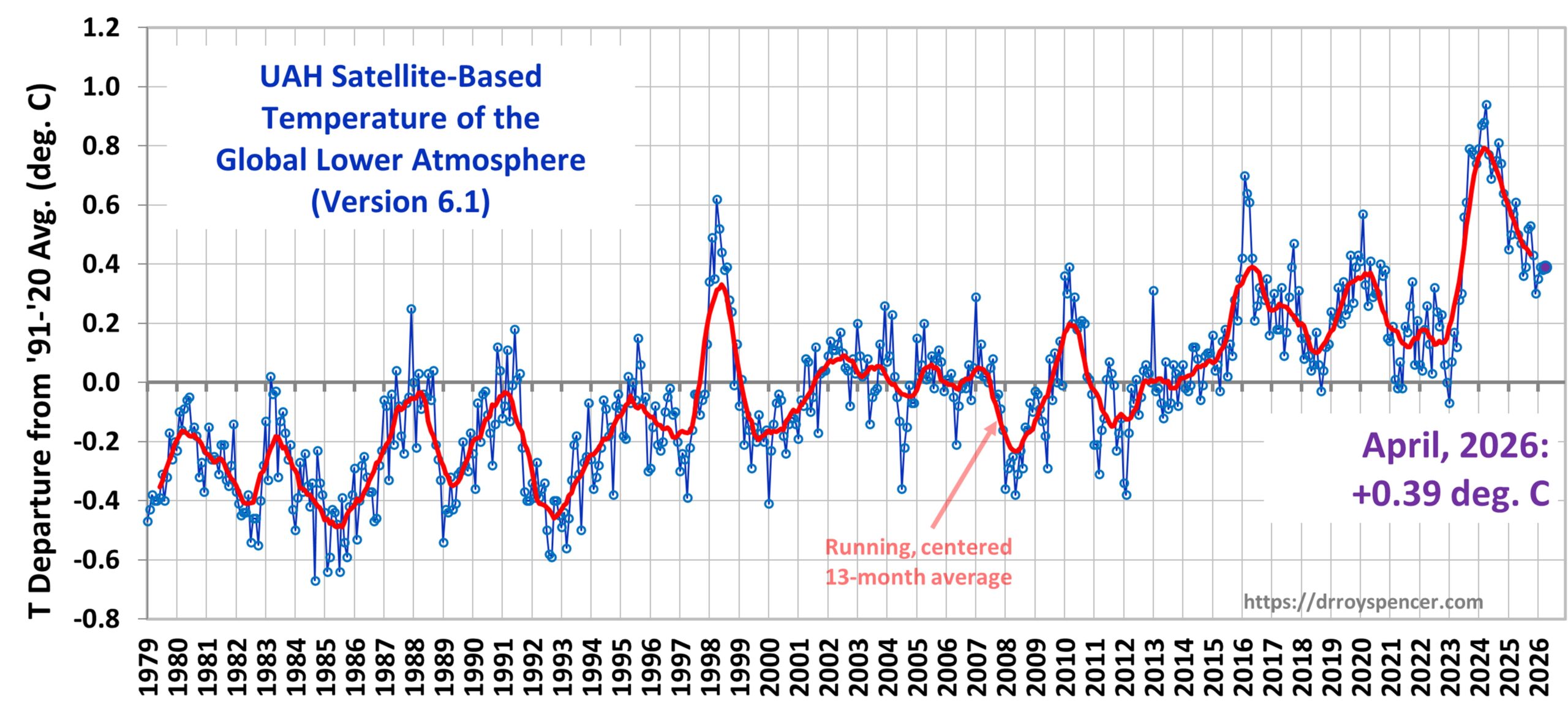
The record shows that there has been no exponential increase in the global temperature since McPherson got carried away a decade back.
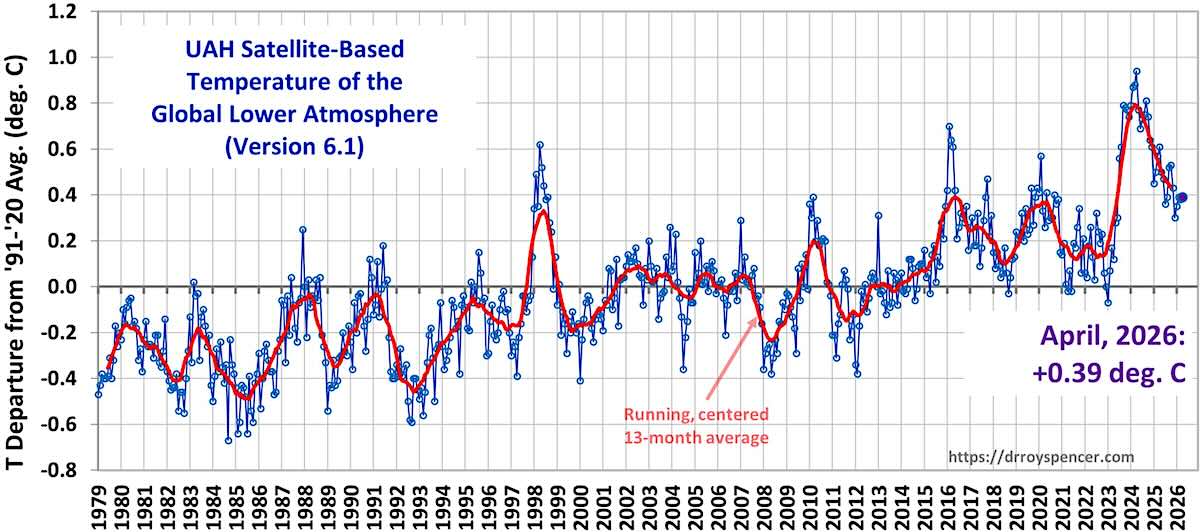
Measurements made by satellites in the lower troposphere show that temperatures today are roughly where they were in 2016, and have in fact fallen since 2024, when they were not quite 1.5 degrees Celsius higher than they were in 1979, when the satellite record began.
Read rest at Issues & Insights