


House Judiciary Committee Chairman Jim Jordan (R-OH) and Subcommittee on Courts Chairman Rep. Darrell Issa (R-CA) are accelerating their investigation into climate activists, plaintiffs’ attorneys, and “improper attempts by the Environmental Law Institute and its Climate Judiciary Project to influence federal judges.” [some emphasis, links added]
The committee sent letters to Michael Burger, the Executive Director of the Sabin Center for Climate Change Law at Columbia Law School, Jordan Diamond, the President of the Environmental Law Institute (ELI), and Vic Sher of Sher Edling, the law firm supporting many of the climate lawsuits around the country.
The committee is seeking more information on their efforts to communicate biased and subjective information to judges who may soon rule on climate litigation.
It’s a significant escalation in an investigation into an influence campaign that included Jordan and Issa sending letters in January to the Judicial Conference of the United States, the Federal Judicial Center, and plaintiffs’ attorneys David Bookbinder and Roger Worthington, and an initial letter to ELI in August 2025.
The Investigation Continues
The first letter, addressed to Michael Burger of the Sabin Center, raises concerns over the Center’s actions and their impacts on the judicial process:
“The Sabin Center and its staff, which are producing materials to be used to bias federal judges about novel climate-related legal theories, appear to be working with allied parties to bring climate-related litigation in federal court.
“This information raises serious concerns about the integrity and independence of the judicial process and federal courts, as well as issues with improper ex parte contact with courts.”
The second letter, addressed to Jordan Diamond of the ELI, criticizes a lack of compliance with the earlier oversight requests and reiterates the calls for copies of records for expenses paid to judges for attendance at training programs, transcripts and video recordings of training sessions, and communications relating to the curriculum at trainings.
The final letter, addressed to Vic Sher of Sher Edling, highlights the substantial overlap in staffing and funding between the law firm, ELI, and the CJP.
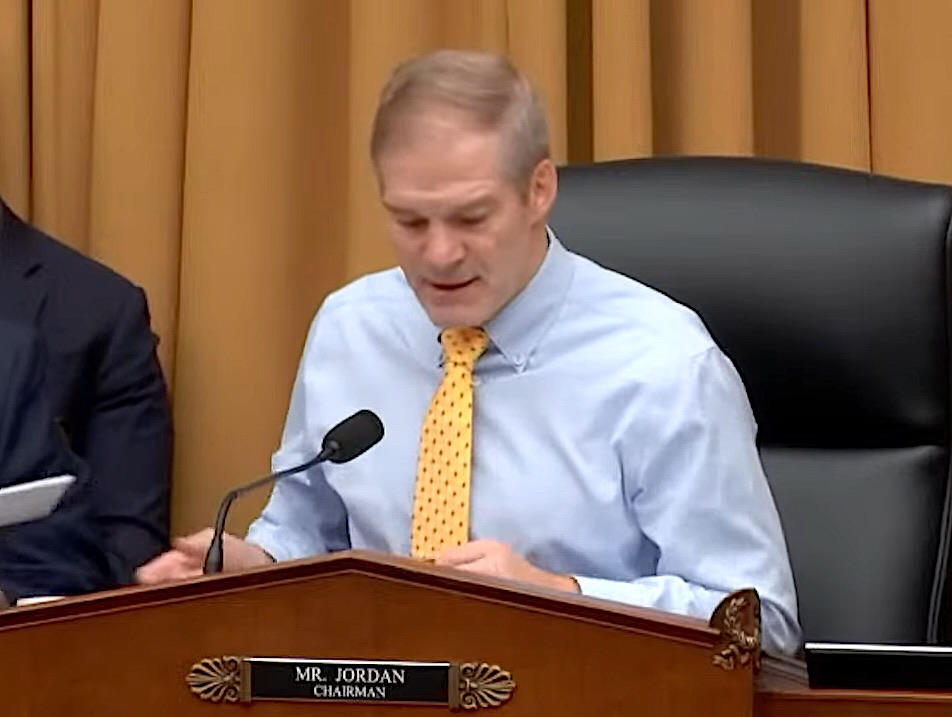
The letter alleges that Michael Bruger, who, in addition to serving as the Executive Director of the Sabin Center, is Of Counsel at Sher Edling, may have ghostwritten parts of a chapter on Climate Science in the FJC’s Reference Manual:
“Although the chapter is formally credited to two other authors, a textual analysis found substantial similarity between the chapter and a 2020 law journal article that Mr. Burger wrote with those same two authors about causation in climate change litigation. The analysis found the textual similarity between the two documents to be about 47.8 percent, suggesting that Mr. Burger was, in effect, an undisclosed third author of the since-removed chapter meant to influence federal judges.”
It emphasizes that similar overlaps exist around funding:
“The New Venture Fund (“NVF”) – a left-wing dark money group that funds hundreds of progressive activist organizations – donated more than $2.3 million to Sher Edling, LLP and more than $1.2 million to ELI in 2024 alone, according to publicly available information.”
“This information suggests that the same left-wing dark money group bankrolling climate litigants is also funding the entity predisposing the judges who will decide those cases on the very legal and scientific theories those cases advance.”
A False Guise of Neutrality
Soon after the letters were sent, the Wall Street Journal’s editorial board released a scathing piece, writing:
“It seems clear Sher Edling was attempting to hide biased research behind the Federal Judicial Center’s reputation for neutrality. The goal is to tilt judges in support of dubious climate suits that could yield jackpot jury verdicts.”
The editorial board has repeatedly covered the ongoing controversy surrounding ELI, CJP, and FJC, including a piece in March on the Federal Judicial Center’s now retracted chapter on climate science, pointing out how Burger’s involvement in the climate litigation campaign raises serious ethical concerns as he serves as Of Counsel at Sher Edling, as Executive Director at Columbia’s Sabin Center, and as a reviewer and potential ghost writer of the FJC’s climate chapter:
“The manual is a tool to help judges make unbiased assessments about scientific testimony, but it was hijacked by progressive climate advocates…But ghost writing in a scientific review violates ethical guidelines for attribution.
What’s Next
The letters ask for a host of documents, including communications around CJP judicial education programs, information on the drafting and review of the Reference Guide on Climate Science for the FJC Manual, and documents on the participation of Sabin Center personnel in CJP activities.
These letters, as well as the letters sent by Reps. Jordan and Issa, back in January, showed that congressional leaders remain focused on their investigation into the coordinated climate litigation campaign.
Read more at EID Climate





One generic complaint after another with no quotes to show us what is right and what is wrong
It seems you read a different column than I did because it laid out one argument after another why the chapter regarding science needs to be removed.