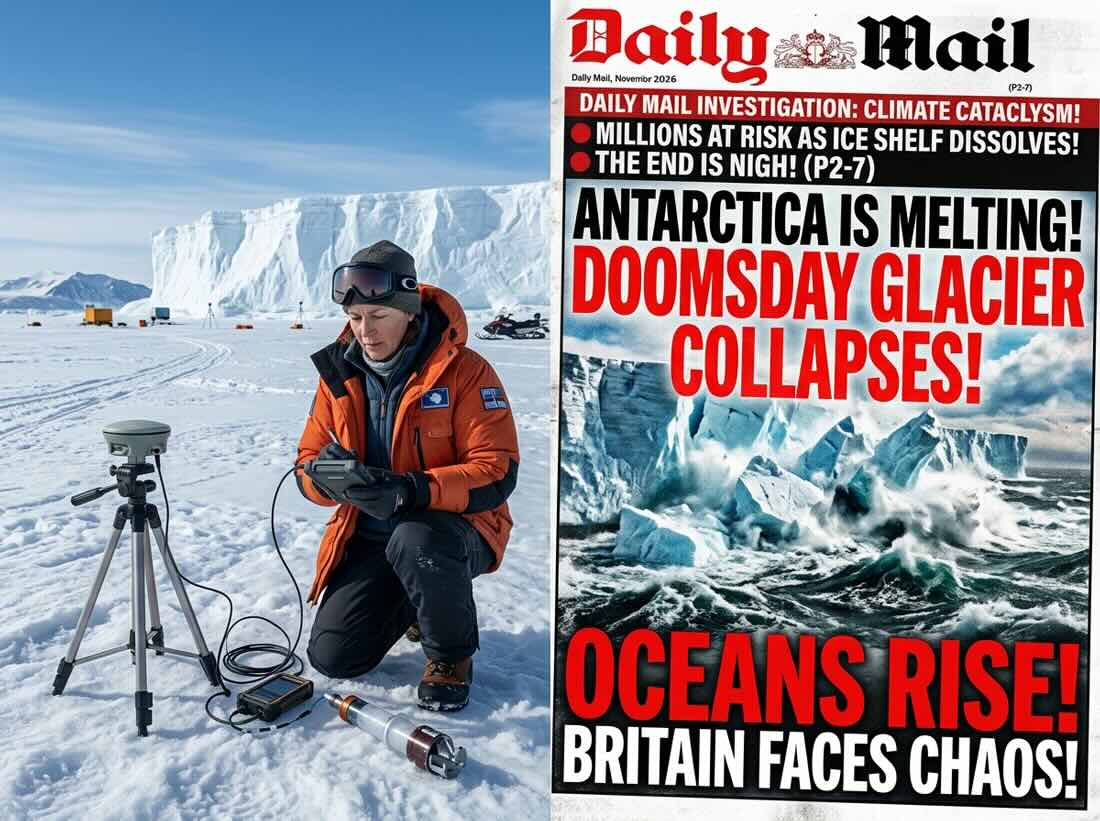
A recent Daily Mail (DM) article, “Rapidly melting Antarctic ice shelves may cause global sea levels to rise even FASTER than expected – leaving millions at risk of being plunged underwater, study warns,” cites a study by Norwegian researchers examining the East Antarctic Ice Shelf, suggesting it may soon collapse. [some emphasis, links added]
The claim is unsubstantiated and likely wrong.
Instead of reporting just the facts, the DM turned basic scientific uncertainty in the present into a projection far into the future, predicting doomsday by the year 2300, and saying “millions at risk of being plunged underwater.”
It’s virtually impossible to predict climate conditions 225 years in the future, but even if the ice shelf did collapse centuries from now, humans would have enough time to adapt or prepare. There is no present crisis, as is being implied by the DM.
“Rapidly melting ice shelves in Antarctica could trigger global sea levels to rise even faster than expected, scientists have warned,” write DM. “Norwegian researchers have discovered that deep channel–like grooves beneath the ice are trapping swirling eddies of relatively warm ocean water.
“That warm water melts ice beneath the surface 10 times faster than normal, threatening the structural integrity of the entire ice shelves.
“If the Antarctic shelves were significantly weakened or even started to collapse, it would release the gigatonnes of ice currently being held back in the ice sheet,” DM writes.
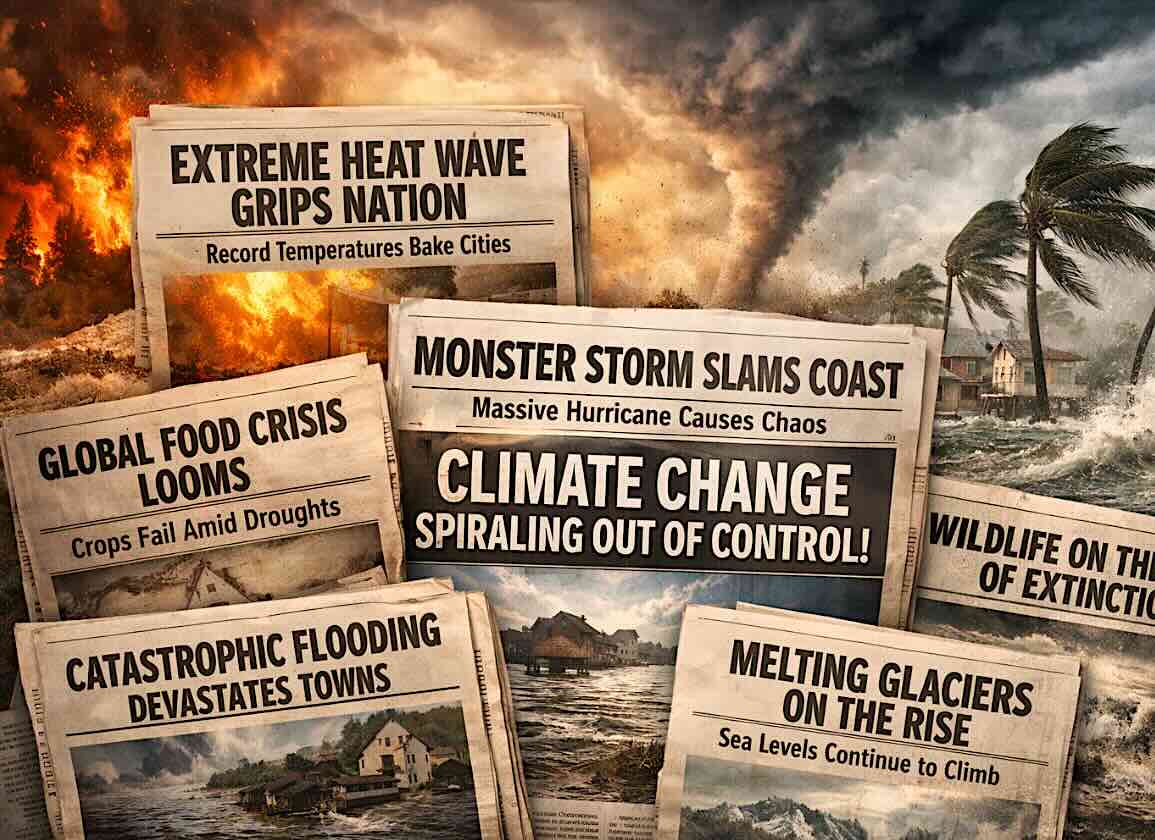
The DM article is a near-perfect specimen of hyperbolic climate reporting.
The DM ignored what the science actually said and took genuinely interesting research and reprocessed it into a pure climate scare story, without explaining any of the caveats that came with the science.
The recent discovery of deep channels beneath ice shelves trapping warm ocean eddies and accelerating basal melt is real and scientifically noteworthy. What the DM did with this finding is something else entirely.
The leap from “we discovered something we didn’t fully know about” to “sea levels could rise 30 meters by 2150” does not appear in the scientific paper as a confident projection; rather, it is a worst-case scenario that the researchers said they “cannot rule out.”
“Cannot rule out” is not a forecast. It is an admission of large uncertainty meriting further study, but not scary headlines suggesting such outcomes are likely.
The fact that none of these projections will likely materialize failed to give the DM pause, as it would be a serious journalistic analysis. Instead, the DM treated it as a headline generator. Their choice was not based on scientific judgment; it was an editorial one, made in the service of audience engagement.
What the DM’s coverage buried entirely is the fact that we are only learning about these sub-ice channels right now because we have only recently developed the technology and methodology to observe conditions beneath Antarctic ice shelves at all.
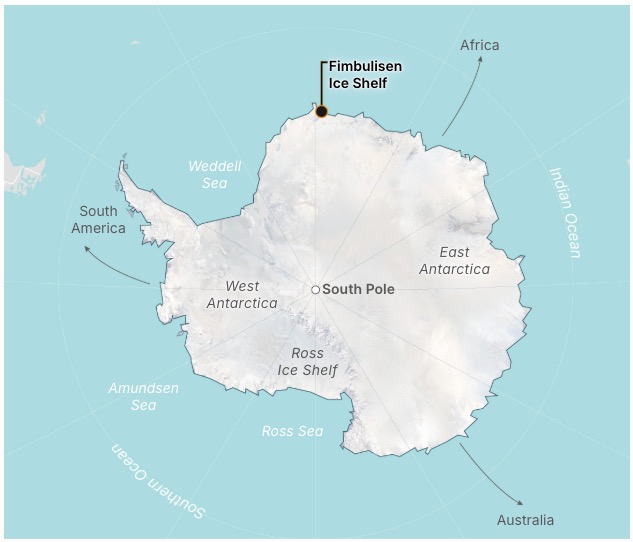
At this stage, we have no idea whether or not such channels are and have been a permanent feature of the Fimbulisen Ice Shelf, how long they have been in existence, and how they have affected the ice shelf over time.
The Fimbulisen Ice Shelf case study used a combination of detailed topographical mapping and computer modeling, rather than decades of accumulated direct observational data, to reach its conclusions. We have Antarctic satellite data going back just about 40 years, which is barely a blink in geological time. Sub-shelf observational records are even shorter.
The models generating these projections are based on assumptions that, by the researchers’ own acknowledgment, are still being revised as new processes, such as these channeled melt eddies, come to light.
None of that context appeared prominently in the DM’s coverage because context deflates alarmism, and deflated alarmism does not perform well online.
Specifically, the history of Antarctic ice science is a history of revisions, recalibrations, and surprises in both directions. Researchers have repeatedly been caught flat-footed by the complexity of this system.
East Antarctica, which contains the vast majority of the continent’s ice, was long considered stable or, as NASA studies from 2015 and 2025 suggested, experienced an increase in ice mass, even as ice sheets in West Antarctica shrank.
Now this study points to East Antarctica’s Fimbulisen Shelf as potentially vulnerable. The West Antarctic Ice Sheet was the focus of alarmism for years, until findings emerged complicating those projections.
The science-to-media pattern repeats: a study is released suggesting possibly troubling findings, the media announces a crisis, the models get revised or new data, sometimes contradictory, come in, and the crisis gets walked back or moderated in the scientific literature (though rarely in the press), and then a new crisis emerges to generate headlines.
Antarctic glaciology is, by the candid admission of scientists within the field, still moving from basic exploration and mapping toward complex predictive modeling.
That is adolescent science being asked by the media to speak with authority on century-scale outcomes. The researchers often resist that framing in their papers. The media impose it anyway, because the alternative story does not trend or generate as many clicks.
The ice will tell its story over years and decades of careful observation. The media’s job should be to report that story faithfully, uncertainty and all. Instead, outlets like the Daily Mail are writing the ending before the data exists to scare their readers and motivate anti-fossil fuel political action.
That is not a scientific failure. It is clickbait-motivated journalistic malfeasance, and it deserves to be named as such.
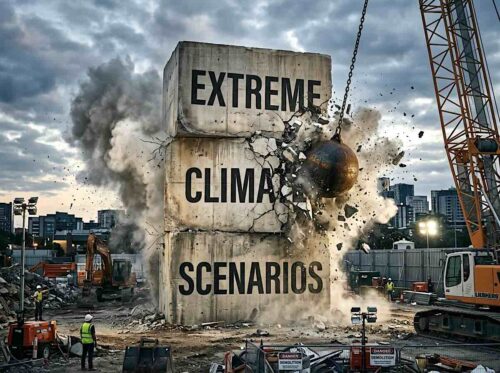
Top: Satirical image of hyperbolic climate reporting. AI-generated.
Read more at Climate Realism