

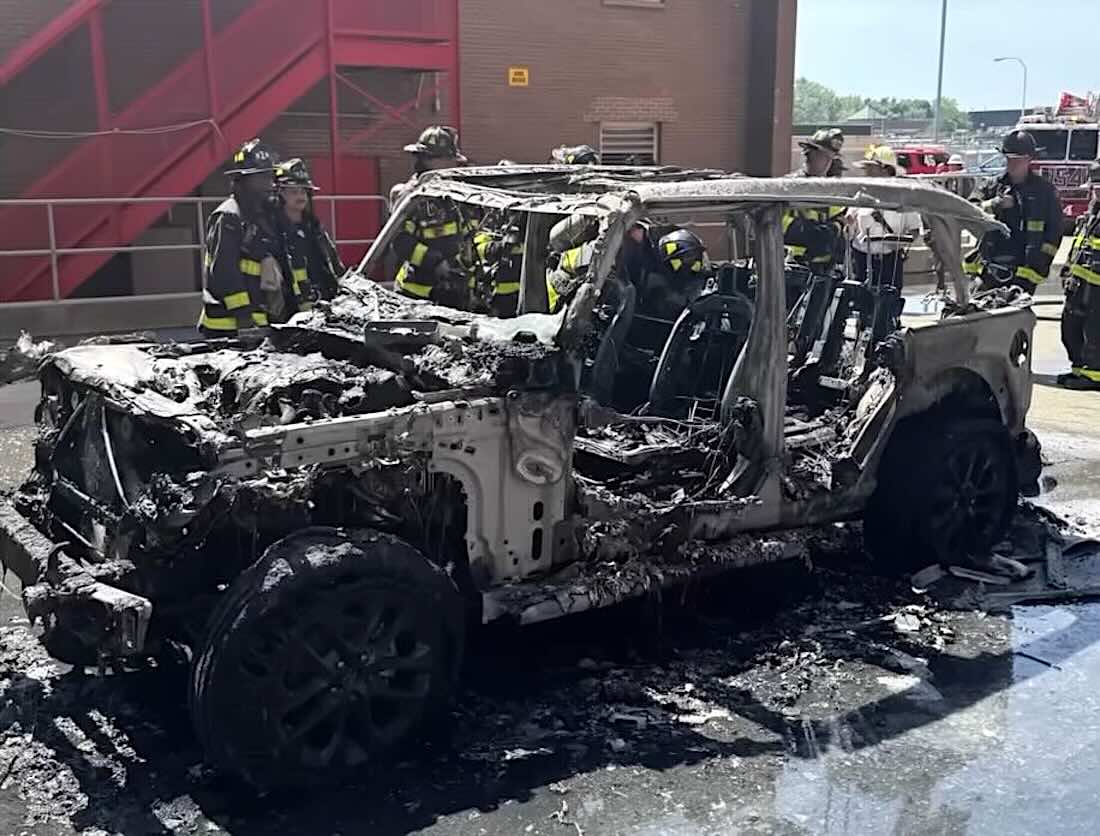
Forget the slow burn of traffic — electric vehicles are catching fire amid a surge in recalls over models that can burst into flames even while parked. [some emphasis, links added]
Sarah Lammersen’s plug-in hybrid Jeep Wrangler caught fire while her daughter was still driving it, days after her partially electric car model was recalled, according to the Washington Post.
Jeep recalled more than 200,000 plug-in hybrid vehicles in November 2025 due to a risk that their batteries could catch fire while parked or driving.
“FCA US LLC confirms that a remedy for the recall of certain 2020-2025 Jeep® Wrangler 4xe and 2022-2026 Jeep Grand Cherokee 4xe SUVs is available to customers. The solution consists of a software update to the high-voltage battery pack control module that will improve diagnostic capability for early detection of internal battery separator damage,” a spokesperson for Jeep parent company Stellantis told the Daily Caller News Foundation.
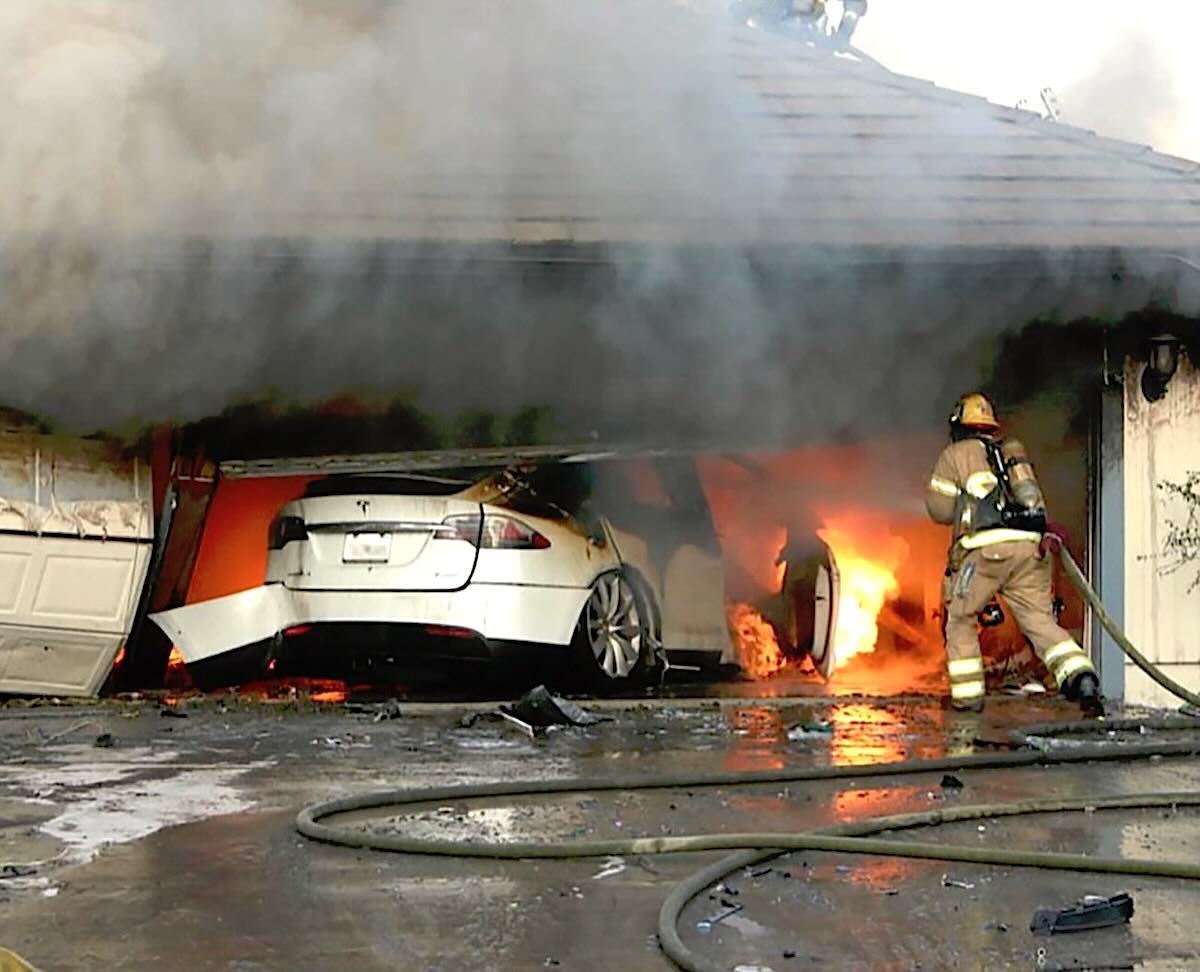
The 2025 Jeep recall is part of a growing problem involving vehicles that can pose a fire hazard even after drivers turn them off.
An estimated 3.2 million vehicles currently have an outstanding “park outside” recall, according to vehicle history provider Carfax.
”Since the initial recall actions, the company’s engineers have continued to analyze field data and battery performance, leading to a deeper understanding of the factors involved,” the Stellantis spokesperson added.
“That insight has guided development of a more comprehensive remedy designed to address the condition. While the earlier actions reflected the best information available at the time, this latest step reflects the company’s continued efforts to learn, adapt and provide effective solutions.”
National Highway Traffic Safety Administration (NHTSA) created its “park outside” designation in 2015 to highlight recalls involving fire risks severe enough that owners should keep their vehicles away from homes and other structures, according to the Post.
The agency later added a dedicated warning to its online recall listings in 2022.
The problem extends beyond EV batteries. Modern vehicles contain an increasing number of electrical systems that remain energized even when the engine is turned off, creating opportunities for fires involving wiring, starter relays, seat motors and other components, per the outlet.
“They’re known as ‘key-off fires,’” former NHTSA investigator Frank Borris told the Post. “The engine is off, but the circuits are still hot, and they stay hot all the time.”
“There is a lot more electronics in vehicles today, and that means more stuff can go wrong,” Borris added.
The risk has prompted increasingly urgent warnings from federal regulators. NHTSA announced a “park outside” warning this summer affecting roughly a million Jeeps over an electrical connection problem involving power-steering pumps.
Owners facing the warnings can also be stuck waiting months before automakers have repairs available, leaving drivers to determine where they can safely store their vehicles.
“What if you live in a condo with a parking garage? What are you going to do?” Sean Kane, president of Safety Research and Strategies, told the Post.
Michael Brooks, executive director of the Center for Auto Safety, warned that fires involving parked cars can be especially dangerous because nobody may be nearby when they begin.
“It can be a giant disaster when cars catch fire, and no one is there to see it,” Brooks told the Post.
Top image via StacheD Training/YouTube screencap.
Read more at Daily Caller






It is an OLD nightmare, not a new one. Anyone who buys one at this time deserves what they reap.