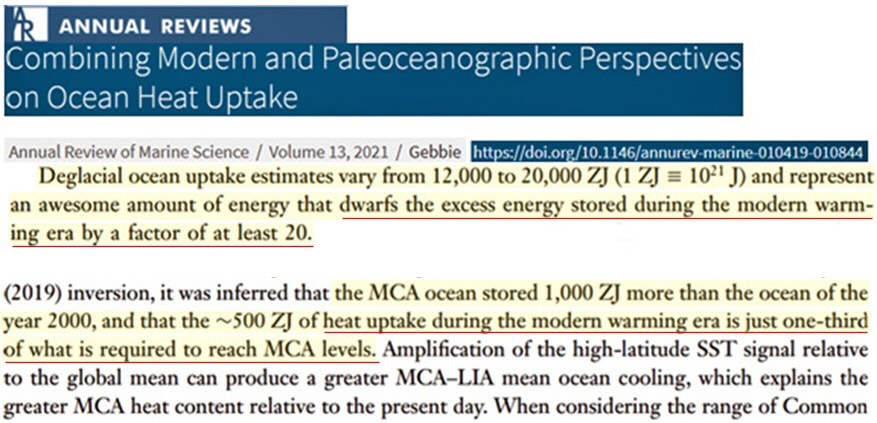
Deglaciation periods, such as the one occurring from about 14,000 to 6,000 years ago, are estimated to have had ocean heat uptake rates of 12,000-20,000 zettajoules (ZJ). [some emphasis, links added]
This range of excess energy absorption is 20-30 times greater than the rate of global ocean heat uptake today. (Gebbie, 2021).
During the Medieval Warm Period, or Medieval Climate Anomaly (MCA), the ocean heat uptake rates had dipped to about 1,500 ZJ. Today (AD 2000), the global ocean heat uptake has fallen to just 500 ZJ.
In other words, even with the warming since 1750, we are still only about a third of the way back to the ocean heat content values achieved 1,000 years ago, when CO2 was 275 ppm.
“…the ~500 ZJ of heat uptake during the modern warming era is just one-third of what is required to reach MCA levels.”
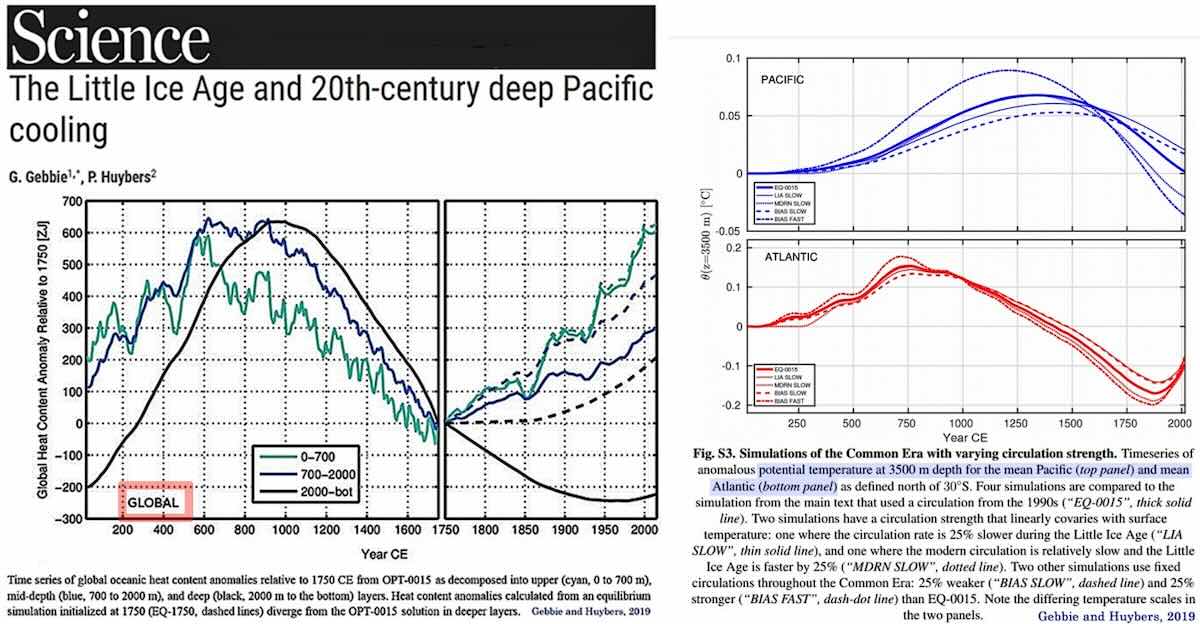
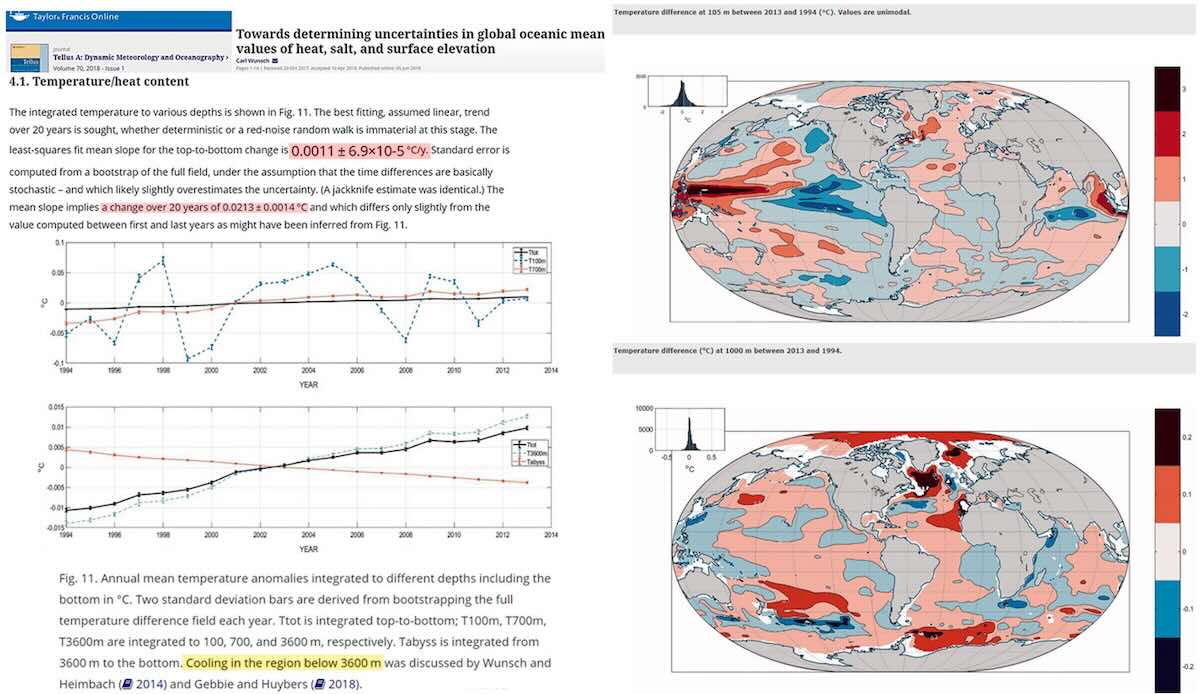
Placing ocean heat uptake rates into a temperature context, the top-to-bottom ocean is currently (1994-2013) warming at just 0.0011°C per year (Wunsch, 2018).
This annual warming rate is little more than one-thousandth of a degree.
We are supposed to believe this rate is both alarming and unprecedented. It is neither.
Top image by Gonzalo de Martorell from Pixabay
Read more at No Tricks Zone