• Privacy Policy
  • About Us
  • Contact Us
Climate Change Dispatch
  • Home
  • Videos
  • Who We Are
  • Facts Vs. Fearmongering
    • Real science vs Junk Science
      • 1100-plus Peer-Reviewed Studies
      • Michael Crichton: Aliens Cause Global Warming
      • Climate change and its causes
      • Climate Science Primer
      • CO2 is not pollution
      • Deceptive Surface Temperature Records
      • Editorial: Great Global Warming Hoax
      • Rules for Climate Radicals: Part 1
      • Rules for Climate Radicals: Part 2
      • Rules for Climate Radicals: Part 3
      • Why CO2 Is A Minor Player In Global Climate
      • Why Politicized Science Is So Dangerous
    • Facts Not Fear
      • A Simple Question For Climate Alarmists
      • Climate Change – The Facts
      • Climate Change Fears Are Empirically Baseless
      • Global Warming 101
      • Global Warming Q&A
      • Understanding The Medieval Warm Period
      • Ocean Cycles and Climate
      • Overview of Plate Climatology Theory
      • Precautionary Principle
      • Should We Celebrate Carbon Dioxide?
      • The Skeptics Handbook
      • Weather Versus Climate
      • Why I’m a GW skeptic
      • Winning the climate debate with facts
      • Why Aliens Cause Global Warming
    • Greenhouse FAQs
      • CO2, Plants, & Industry
      • How much have temps changed?
      • How much have temps changed?
      • How much have temps changed?
      • Is global warming real?
      • Measuring temperature
      • Swimming in CO2?
      • Scientists urge caution?
      • Today’s warming trend
      • Variations in temperature
    • Gore’s Greatest Goofs
      • Deconstructing the Truth
      • Fact-Checking Al Gore’s Latest Predictions
      • How Gore Created The Global Warming Hoax
    • Inside Real Climate
      • Closer look at the 97% Consensus
      • GW’s Amazing Story
      • IPCC gets failing grade
      • Real Climate Exposed!
      • Truth about Real Climate
      • We’ve Been Conned
      • What is there a 97% consensus about?
    • Behind the IPCC
      • 1,000 Scientists Dissent
      • Climategate: Caught Green-Handed!
      • Climategate Inquiries
      • Climategate Inquiries 2
      • NIPCC Report Now Available
      • Understanding the Climategate Inquiries
  • Submissions
  • Contact Us
No Result
View All Result
  • Home
  • Videos
  • Who We Are
  • Facts Vs. Fearmongering
    • Real science vs Junk Science
      • 1100-plus Peer-Reviewed Studies
      • Michael Crichton: Aliens Cause Global Warming
      • Climate change and its causes
      • Climate Science Primer
      • CO2 is not pollution
      • Deceptive Surface Temperature Records
      • Editorial: Great Global Warming Hoax
      • Rules for Climate Radicals: Part 1
      • Rules for Climate Radicals: Part 2
      • Rules for Climate Radicals: Part 3
      • Why CO2 Is A Minor Player In Global Climate
      • Why Politicized Science Is So Dangerous
    • Facts Not Fear
      • A Simple Question For Climate Alarmists
      • Climate Change – The Facts
      • Climate Change Fears Are Empirically Baseless
      • Global Warming 101
      • Global Warming Q&A
      • Understanding The Medieval Warm Period
      • Ocean Cycles and Climate
      • Overview of Plate Climatology Theory
      • Precautionary Principle
      • Should We Celebrate Carbon Dioxide?
      • The Skeptics Handbook
      • Weather Versus Climate
      • Why I’m a GW skeptic
      • Winning the climate debate with facts
      • Why Aliens Cause Global Warming
    • Greenhouse FAQs
      • CO2, Plants, & Industry
      • How much have temps changed?
      • How much have temps changed?
      • How much have temps changed?
      • Is global warming real?
      • Measuring temperature
      • Swimming in CO2?
      • Scientists urge caution?
      • Today’s warming trend
      • Variations in temperature
    • Gore’s Greatest Goofs
      • Deconstructing the Truth
      • Fact-Checking Al Gore’s Latest Predictions
      • How Gore Created The Global Warming Hoax
    • Inside Real Climate
      • Closer look at the 97% Consensus
      • GW’s Amazing Story
      • IPCC gets failing grade
      • Real Climate Exposed!
      • Truth about Real Climate
      • We’ve Been Conned
      • What is there a 97% consensus about?
    • Behind the IPCC
      • 1,000 Scientists Dissent
      • Climategate: Caught Green-Handed!
      • Climategate Inquiries
      • Climategate Inquiries 2
      • NIPCC Report Now Available
      • Understanding the Climategate Inquiries
  • Submissions
  • Contact Us
No Result
View All Result
Climate Change Dispatch
No Result
View All Result

Climate Expert: The Misinformation In The IPCC, Part 1

by Roger Pielke Jr.
March 29, 2023, 9:48 AM
in News and Opinion
Reading Time: 9 mins read
A A
2

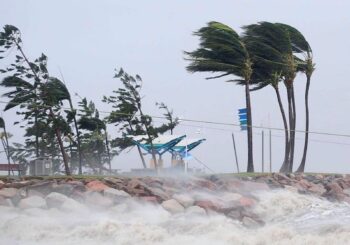
cyclone windsToday, in the first of two posts, I explain how the IPCC made several misleading claims related to tropical cyclones.

The IPCC’s failures are both obvious and undeniable.

I will walk you through them in detail. Once again, I conclude that the IPCC needs reform. Mistakes can creep into massive assessments, to be sure, but the failures I document below are unacceptable. [emphasis, links added]

The first failure never rose above the depths of Chapter 11 of its AR6 Working Group 1 (WG1) report. The second is a bit technical and is much more significant – having made its way into the Summaries for Policymakers (SPMs) of both WG1 and the Synthesis Report released last week.

Before proceeding, let me reiterate that the IPCC is not just one report or one group of people. It is many things and comprised of many different people. Its products are of uneven quality, and even individual chapters in the same report can be of very different scientific quality.

For instance, in general, IPCC AR6 WG1 did a nice job on the physical science aspects of extreme weather, whereas IPCC AR6 WG2 was chock full of massive problems. …snip…

The shift of AR6 WG2 to emphasize mitigation is explicit and a major departure from past reports pic.twitter.com/D3yDaWtyfN

— The Honest Broker (@RogerPielkeJr) March 1, 2022

Pick Cherries to Make a Delicious Cherry Pie

The IPCC is supposed to review the scientific literature. All of it – that means including more than just a subset of studies that its authors wish to use to construct a narrative.

It also means that the IPCC can’t ignore the research of authors who it may find inconvenient. However, when it comes to U.S. hurricanes, the IPCC AR6 WG1 engaged in blatant cherry-picking of research.

Here is what the IPCC AR6 Chapter 11 (Ch.11 — oh my, so many acronyms!) stated about U.S. hurricanes:

A subset of the best-track data corresponding to hurricanes that have directly impacted the USA since 1900 is considered to be reliable, and shows no trend in the frequency of USA landfall events (Knutson et al., 2019).

However, an increasing trend in normalized USA hurricane damage, which accounts for temporal changes in exposed wealth (Grinsted et al., 2019), and a decreasing trend in TC translation speed over the USA (Kossin, 2019) have also been identified in this period.

Read that carefully — The word “however” is used to suggest that a record of normalized U.S. hurricane damage can be used to contradict the gold standard “best-track data.”

That is exactly backward.

You can’t use economic loss data to infer climate trends, much less use it to evaluate the validity of actual climate data. The IPCC knows better.

But it gets much worse.

In the paragraph above, Grinsted et al. 2019 (Note: All references in this post can be found at the bottom) is the sole source cited in support of the claim that there has been an “increasing trend” in normalized USA hurricane damage.

Many readers here will know that I, along with NOAA’s Chris Landsea, first developed the concept and methodology of hurricane damage normalization more than 25 years ago. I know this literature as well as anyone.

So I am well aware that Grinsted et al. 2019 is an extreme outlier in the literature. It makes claims contrary to the overwhelming scientific consensus on this topic, which is that normalized damage trends match up well with trends in hurricane landfall frequency and intensity.

Of course, economic normalization and climate trends should match up, as consistency between a normalized loss record and independent climate data is an oft-applied test of the fidelity of a normalization methodology.

If the trends do not match up, then that is a clear indication of a bias in the normalization methods.

The obvious conclusion here is that the inconsistency between trends in Grinsted et al. 2019 and those of the “best-track hurricane” data for US landfalls (one of the most reliable climate records you will find) indicates problems with Grinsted et al. 2019.

Instead, the IPCC uses the inconsistency to suggest that the widely used “best-track data” is somehow in error. The IPCC is undercutting leading consensus official climate data. Remarkable.

Not cited by the IPCC are eight other papers in the peer-reviewed literature, with about 20 authors using a range of different methods, each concluding that there has been no such “increasing trend” in normalized US hurricane losses.

One of these papers even finds a sharp decrease in normalized US hurricane damage since 1900 (also contrary to observed trends in hurricanes, and thus biased).

These eight studies are:

  • Martinez 2020
  • Weinkle et al. 2018
  • Klotzbach et al. 2018
  • Bouwer and Wouter Bozen 2011
  • Schmidt et al. 2009
  • Pielke et al. 2008
  • Collins and Lowe 2001
  • Pielke and Landsea 1998.

These eight papers collectively have more than 2,600 citations. None were cited by the IPCC along with Grinsted et al. 2019, which has a paltry 65 citations since being published.

You won’t find a more obvious example of cherry-picking of the literature by the IPCC.

Either that or its collective authorship was unaware of the literature that it was charged with assessing. I’m going with cherry-picking, as its authors are smart and knowledgeable. Unacceptable.

Climate Telephone

Here is a second example about tropical cyclones that shows how the IPCC failed to accurately represent the literature that it was charged with assessing.

This example is a bit more complicated (and involves many more acronyms, sorry), but once you see the details, it is no less obvious in the egregiousness of the failure.

The Summary for Policymakers of the IPCC AR6 Synthesis Report released last week includes this statement:

“Evidence of observed changes in extremes such as heatwaves, heavy precipitation, droughts, and tropical cyclones, and in particular, their attribution to human influence, has strengthened since AR5.”

My attention was caught right away by the inclusion of tropical cyclones in the list of phenomena for which detection (of change) and its attribution (to greenhouse gas forcing) have been achieved. I know that statement is incorrect.

IPCC AR6 WG1 Ch.11 states, correctly:

“There is low confidence in most reported long-term (multidecadal to centennial) trends in TC frequency- or intensity-based metrics”

And Ch.11 makes no claims of attribution of trends, which makes sense given the low-confidence judgment. So how did a strong claim of detection and attribution for trends in tropical cyclones make it into the SPM of the AR6 SR? Let’s get to the bottom of the mistaken claim.

In the same paragraph the SR SPM states:

“It is likely that the global proportion of major (Category 3–5) tropical cyclone occurrence has increased over the last four decades.“

That paragraph is referenced to the SPM of IPCC AR6 WG1 as well as to the SPMs of the IPCC Special Reports on land and oceans (SRCCL and SROCC respectively). The IPCC special report on land does not mention tropical cyclones, but the SROCC does.

Here is what the SROCC SPM says (citing a 2014 paper that relies in part on our work):

There is emerging evidence for an increase in annual global proportion of Category 4 or 5 tropical cyclones in recent decades (low confidence). {6.2, Table 6.2, 6.3, 6.8, Box 6.1}

Chapter 6 of the SROCC explains the basis for the low confidence judgment:

“The lack of confident climate change detection for most TC metrics continues to limit confidence in both future projections and in the attribution of past changes and TC events, since TC event attribution in most published studies is generally being inferred without support from a confident climate change detection of a long-term trend in TC activity.”

We will return to the SROCC in a moment, but first, let’s next take a look at IPCC WG1 SPM, which has similar language to that in last week’s SR:

“It is likely that the global proportion of major (Category 3–5) tropical cyclone occurrence has increased over the last four decades . . .”

And the WG1 SPM also includes the low confidence judgment that is also found in the SROCC:

“There is low confidence in long-term (multi-decadal to centennial) trends in the frequency of all-category tropical cyclones.”

Let’s keep digging and go next to AR6 WG1 Chapter 11 to which these WG1 SPM statements are referenced. The executive summary of Chapter 11 has similar language and a footnote:

It is likely that the global proportion of Category 3–5 tropical cyclone instances [FN2] has increased over the past four decades.

The footnote [FN2] states:

Six-hourly intensity estimates during the lifetime of each TC.

This footnote is really important and it got lost somewhere between Chapter 11 of the WG1 report and the SPM of the AR6 SR.

To understand what happened, let’s compare the three statements found in the various documents, and I’ve emphasized the key change in wording:

  • IPCC AR6 SR SPM: “It is likely that the global proportion of major (Category 3–5) tropical cyclone occurrence has increased over the last four decades”
  • IPCC AR6 WG1 SPM: “It is likely that the global proportion of major (Category 3–5) tropical cyclone occurrence has increased over the last four decades . . .”
  • IPCC AR6 WG1 Ch.11: “It is likely that the global proportion of Category 3–5 tropical cyclone instances [FN2: Six-hourly intensity estimates during the lifetime of each TC.] has increased over the past four decades.”

The change from instance to occurrence completely changes the meaning of the claim. Let’s dig even deeper to see what is going on.

Deep in the full text of WG1 Chapter 11, it states (emphasis added):

“. . . a significant increase is found in the fractional proportion of global Category 3–5 TC instances (6-hourly intensity estimates during the lifetime of each TC) to all Category 1–5 in stances (Kossin et al., 2020).”

What in the world is a TC “instance”?

The source cited here is Kossin et al. 2020, a paper I know well (you can find several of my Twitter threads on it here and here).

It is always uncomfortable when you read a climate paper hyped in the press release-media spin cycle only to find that the paper doesn't support what it claims … short thread … https://t.co/0E4BLzD1VY

— The Honest Broker (@RogerPielkeJr) May 18, 2020

OK, another short, but data-rich thread on the new Kossin et al. PNAS paper on tropical cyclones, which has been widely misreported, misunderstood and which misrepresents its own findings … (benefiting from collaboration with @RyanMaue) pic.twitter.com/iV3COdMQr0

— The Honest Broker (@RogerPielkeJr) May 20, 2020

An “instance” as used here is an observation of a hurricane, it is not a hurricane itself. Kossin et al. 2020 analyzed observations of hurricanes and not hurricane occurrence. They explain their dataset:

“Over the period 1979–2017 considered here, there are about 225,000 ADT-HURSAT intensity estimates in about 4,000 individual TCs worldwide.”

This allows us to understand the confusion in the IPCC between “instances” and “occurrences.” As a result, the IPCC creates a few significant problems.


Roger Pielke Jr. has been a professor at the University of Colorado since 2001. Previously, he was a staff scientist in the Environmental and Societal Impacts Group of the National Center for Atmospheric Research. He has degrees in mathematics, public policy, and political science, and is the author of numerous books. (Amazon).

Read the full post at The Honest Broker
  • Truth
  • Twitter
  • Facebook
  • LinkedIn
  • Gettr
  • Threads
  • gab-logo Gab
  • Mastodon
  • Buffer
  • Telegram
  • Email
  • Copy Link
  • Share Using More Networks…

Popular Posts

Bipolar

New Study: Ice Core Data Shows Modern Warming Is Statistically Unremarkable

Mar 05, 2026
Electric Vehicles (EVs)

The ‘Green’ Scam Of The Century: How ‘Renewables’ Increase Fossil Fuel Demands

Oct 23, 2024
News and Opinion

Antarctica Is Colder, Icier Today Than At Any Time In 5,000 Years

Apr 15, 2024

Comments 2

  1. aliTUB99WvQ4kgr41A says:
    3 years ago

    UgtTDOxa3xxBjzsbTAPJN9RzQVQXaq5ZcYoyf9jAUDAZR0

  2. Spurwing Plover says:
    3 years ago

    The IPCC just another tool of the Globalists/UN why else did they help Biden to steal the election in 2020 and they’ll do it again next year

Stay Connected!

gab-logo

Donate Today

Beating back the alarmist narrative takes time and money. Please donate today to help!

Get notified when new posts are published!

Subscribe to receive a digest of daily stories, or get emailed once they're published. Check your Junk/Spam folder for a verification email.

Recent Posts

  • louisiana coast legalSupreme Court Sends Chevron Environmental Case To Federal Court
    Apr 17, 2026
    Supreme Court sends Chevron coastal damage case to federal court, backing company bid to shift Louisiana lawsuit out of state court. […]
  • heat deaths trendsThe Climate Scaremongers: Inflated Heat Death Claims Don’t Match Summer Mortality Data
    Apr 17, 2026
    UK “heat deaths” rely on estimates, not death certificates, while actual mortality data shows deaths fall steadily through summer. […]
  • media climate narrative machineGlobal Media Climate Coverage Drops As Public Interest Slips
    Apr 17, 2026
    Climate stories fell 14% globally in 2025 as the public tunes out warming agitprop, continuing a wider decline in media coverage across major regions. […]
  • start stop buttonEPA Head Lee Zeldin Axes Hated Start-Stop Rule After Years Of Driver Backlash
    Apr 17, 2026
    EPA ends incentives behind widely disliked start-stop systems, a move critics say restores a smoother, more enjoyable driving experience. […]
  • hochul climate allianceNew York’s Renewable Energy Fantasy Collides With Rising Costs
    Apr 16, 2026
    Wind and solar developers in New York warn rising costs and tariffs could force cancellation of multiple contracted projects. […]
  • Aberdeen offshore windUK’s ‘Green’ Transition Is Devastating Its Energy Heartland
    Apr 16, 2026
    Britain’s North Sea decline highlights how the UK’s green transition is hitting energy communities and industrial jobs hard. […]
  • philly heatwave sunMedia Hypes Philly Heatwave As Climate Change ‘Proof’—It’s Weather
    Apr 16, 2026
    Media label a Philadelphia heatwave as climate “proof,” but short-term weather patterns—not long-term data—tell the real story. […]
  • north sea oil rigTrump Urges Britain To Tap North Sea Energy Wealth: ‘Drill, Baby, Drill!’
    Apr 15, 2026
    Trump urges Britain to open North Sea energy as leaders clash over renewables, imports, and rising energy costs. […]
  • solar farm panel sunThe Renewable Energy Myth Is Breaking Australia’s Economy
    Apr 15, 2026
    Soaring electricity costs tied to Australia’s renewable shift are eroding manufacturing, driving closures, and weakening economic competitiveness. […]
  • courthouse climate chapterSenators Target FJC Over Compromised Climate Science Chapter Influencing Judges
    Apr 15, 2026
    Senators demand answers over disputed climate science chapter in federal judicial manual amid bias and conflict-of-interest claims. […]

Submit a tip

Please enter your email, so we know you're human.

Books You May Like

Cold Facts About the Great Global Warming Scam

Climate prn book

Have a suggestion? Let us know! We swap out books based on your input. We participate in the Amazon Services LLC Associates Program. See here.

  • Privacy Policy
  • DMCA Policy
  • About Us
  • Contact Us

© Portions copyright Climate Change Dispatch

No Result
View All Result
  • Home
  • Videos
  • Who We Are
  • Facts Vs. Fearmongering
    • Real science vs Junk Science
      • 1100-plus Peer-Reviewed Studies
      • Michael Crichton: Aliens Cause Global Warming
      • Climate change and its causes
      • Climate Science Primer
      • CO2 is not pollution
      • Deceptive Surface Temperature Records
      • Editorial: Great Global Warming Hoax
      • Rules for Climate Radicals: Part 1
      • Rules for Climate Radicals: Part 2
      • Rules for Climate Radicals: Part 3
      • Why CO2 Is A Minor Player In Global Climate
      • Why Politicized Science Is So Dangerous
    • Facts Not Fear
      • A Simple Question For Climate Alarmists
      • Climate Change – The Facts
      • Climate Change Fears Are Empirically Baseless
      • Global Warming 101
      • Global Warming Q&A
      • Understanding The Medieval Warm Period
      • Ocean Cycles and Climate
      • Overview of Plate Climatology Theory
      • Precautionary Principle
      • Should We Celebrate Carbon Dioxide?
      • The Skeptics Handbook
      • Weather Versus Climate
      • Why I’m a GW skeptic
      • Winning the climate debate with facts
      • Why Aliens Cause Global Warming
    • Greenhouse FAQs
      • CO2, Plants, & Industry
      • How much have temps changed?
      • How much have temps changed?
      • How much have temps changed?
      • Is global warming real?
      • Measuring temperature
      • Swimming in CO2?
      • Scientists urge caution?
      • Today’s warming trend
      • Variations in temperature
    • Gore’s Greatest Goofs
      • Deconstructing the Truth
      • Fact-Checking Al Gore’s Latest Predictions
      • How Gore Created The Global Warming Hoax
    • Inside Real Climate
      • Closer look at the 97% Consensus
      • GW’s Amazing Story
      • IPCC gets failing grade
      • Real Climate Exposed!
      • Truth about Real Climate
      • We’ve Been Conned
      • What is there a 97% consensus about?
    • Behind the IPCC
      • 1,000 Scientists Dissent
      • Climategate: Caught Green-Handed!
      • Climategate Inquiries
      • Climategate Inquiries 2
      • NIPCC Report Now Available
      • Understanding the Climategate Inquiries
  • Submissions
  • Contact Us

© 2026 Climate Change Dispatch

 
Share via
  • Facebook
  • Like
  • Twitter
  • Pinterest
  • LinkedIn
  • Digg
  • Tumblr
  • VKontakte
  • Print
  • Email
  • Reddit
  • Buffer
  • Love This
  • Weibo
  • Pocket
  • Xing
  • Odnoklassniki
  • WhatsApp
  • Meneame
  • Blogger
  • Amazon
  • Yahoo Mail
  • Gmail
  • AOL
  • Newsvine
  • HackerNews
  • Evernote
  • MySpace
  • Mail.ru
  • Viadeo
  • Line
  • Flipboard
  • Comments
  • SMS
  • Viber
  • Telegram
  • Subscribe
  • Facebook Messenger
  • Kakao
  • LiveJournal
  • Yammer
  • Edgar
  • Fintel
  • Mix
  • Instapaper
  • Copy Link
  • Truth
  • gab-logo Gab
  • Gettr
  • Baidu
  • Mastodon
  • Threads
  • Bluesky
Share via
  • Digg
  • Tumblr
  • VKontakte
  • Print
  • Email
  • Reddit
  • Buffer
  • Love This
  • Weibo
  • Pocket
  • Xing
  • Odnoklassniki
  • WhatsApp
  • Meneame
  • Blogger
  • Amazon
  • Yahoo Mail
  • Gmail
  • AOL
  • Newsvine
  • HackerNews
  • Evernote
  • MySpace
  • Mail.ru
  • Viadeo
  • Line
  • Flipboard
  • Comments
  • SMS
  • Viber
  • Telegram
  • Subscribe
  • Facebook Messenger
  • Kakao
  • LiveJournal
  • Yammer
  • Edgar
  • Fintel
  • Mix
  • Instapaper
  • Copy Link
  • Truth
  • gab-logo Gab
  • Gettr
  • Baidu
  • Mastodon
  • Threads
  • Bluesky