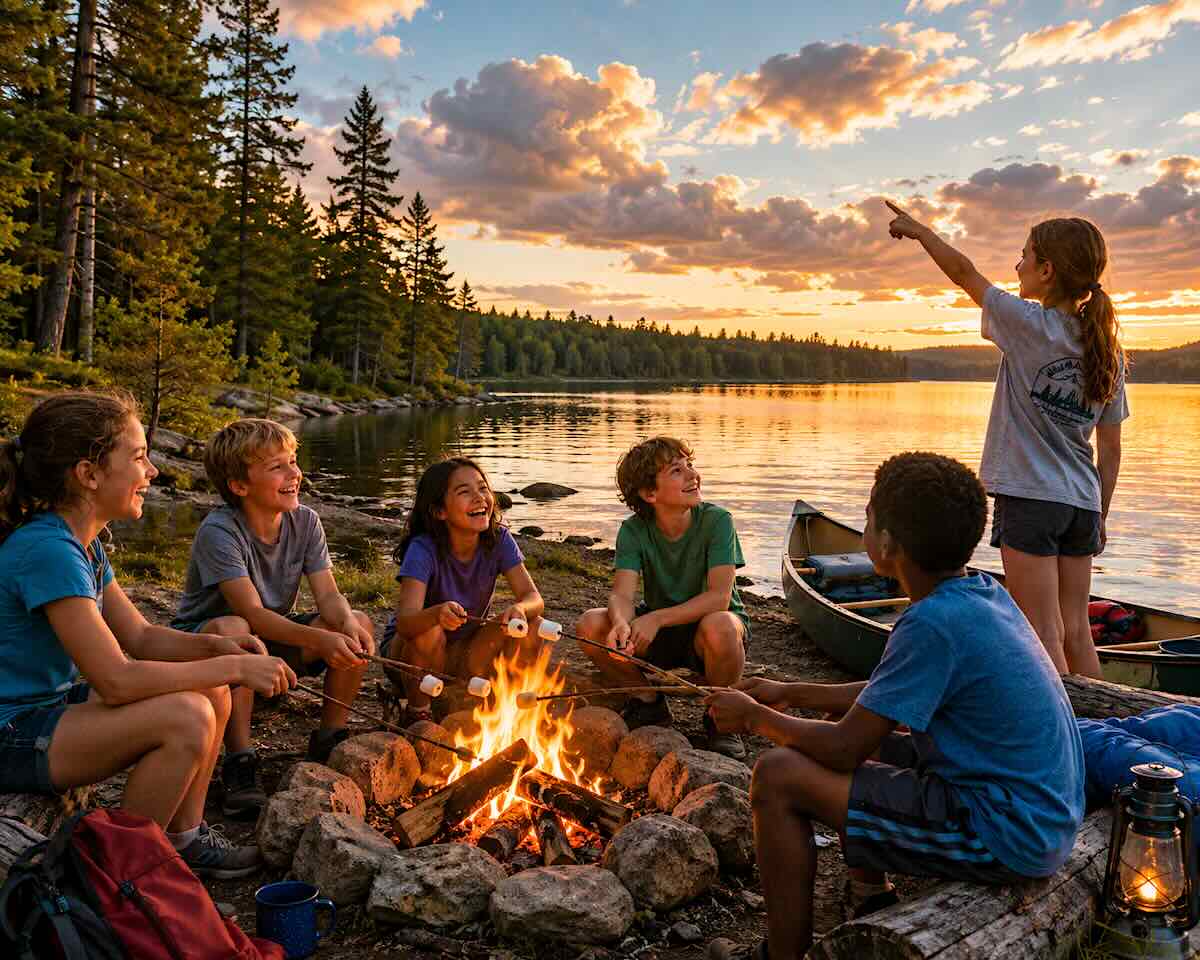
National Public Radio’s (NPR) recent article, “Climate change is now threatening a pillar of childhood: summer break,” reports that climate change is making outdoor play increasingly dangerous through heat, wildfire smoke, floods, and storms.
The story features interviews with children disappointed by canceled camp activities and interrupted pool days, then presents those experiences as evidence that today’s youngsters are growing up in a fundamentally different and more hazardous world.
The premise is false, ridiculous even.
Rather than citing data or explaining the meteorological definitions of weather and climate, NPR quotes a child from Pennsylvania in the article, the daughter of Lauren Smith, who describes climate change as “the areas around you are just, like, changing all around you all the time.”
Maybe she is conflating seasonal weather with climate because irresponsible adults told her that climate change is the same as weather?
The outdoors has always involved risk. Long before anyone falsely blamed rising atmospheric carbon dioxide for the weather, children have been taught to avoid lightning storms, stay hydrated on extremely hot days, steer clear of swollen rivers, and respect the hazards of forests, lakes, and mountains.
Summer has never been risk-free, nor should anyone expect it to be.
NPR relies almost entirely on anecdotes rather than evidence.
Readers meet campers whose outdoor activities were canceled due to wildfire smoke and children whose soccer practices were shortened during hot weather. Those experiences are real, but they do not demonstrate that climate change has fundamentally altered childhood.
Consider the wildfire smoke highlighted throughout the article.
NPR never tells readers that many of this summer’s Canadian wildfires were ignited by lightning, a completely natural ignition source that has shaped North American forests for millennia. Smoke traveling hundreds of miles is determined primarily by prevailing winds.
As Climate Realism established in “Wrong, Wisconsin Examiner and Investigative Post, Canadian Wildfire Smoke Is Not Proof of Climate Change,” smoke over Minnesota, Pennsylvania, or Washington, D.C., does not establish that climate change caused the fires or made them inevitable.
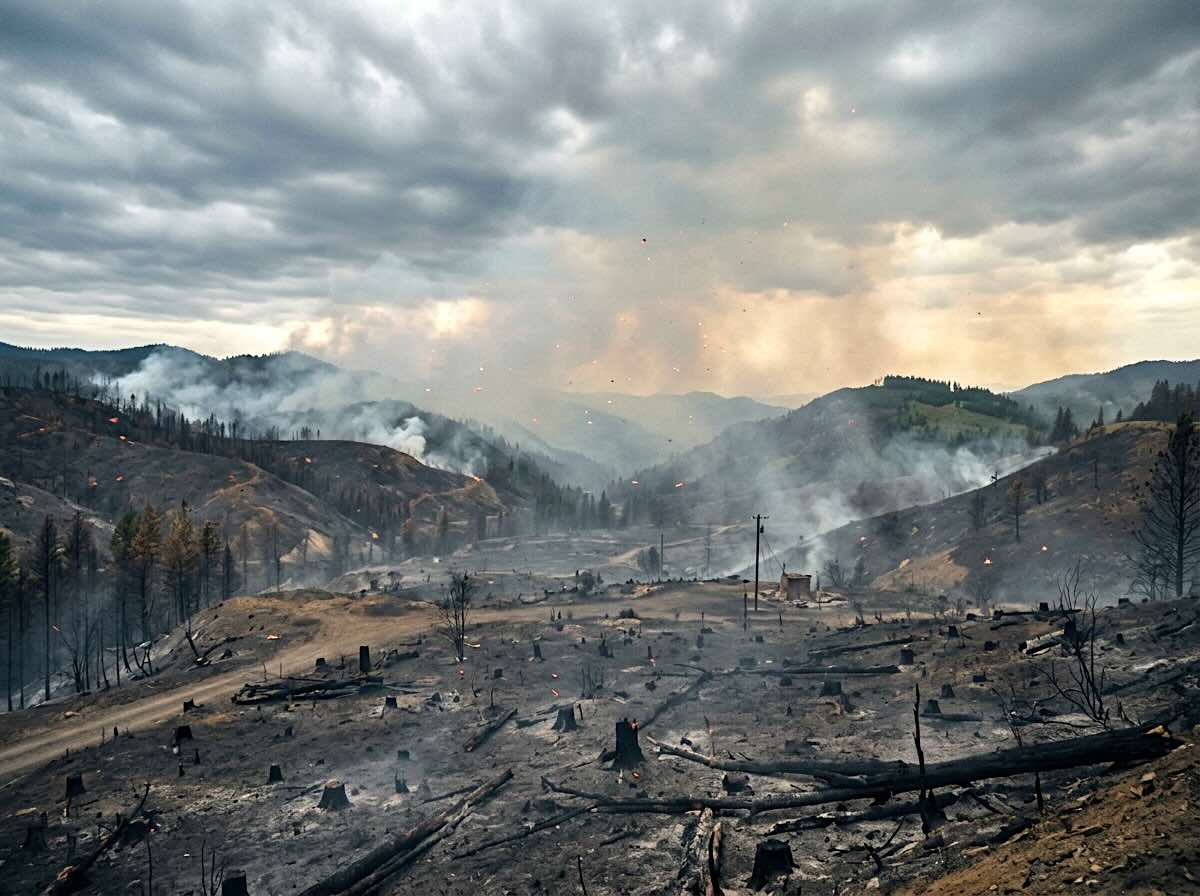
Nor does NPR point out that wildfire numbers in recent decades are lower than in the past, and that the acreage lost to wildfires has declined as well.
NPR also claims that changing weather is making outdoor recreation “not just impossible, but dangerous.” Dangerous compared to what?
Children have always dealt with hot afternoons, thunderstorms, smoky skies from distant fires, and canceled outdoor activities. Anyone who attended summer camp decades ago remembers rainy weeks, lightning delays, flash floods, or forest fires disrupting plans. Weather has always dictated what could and could not be done outside.
Children growing up in Minnesota experience a very different summer than children growing up in Arizona or Texas. A child accustomed to mild northern summers might struggle in Phoenix during July, just as an Arizonan child might find Minnesota’s mosquitoes, thunderstorms, or wilderness unfamiliar.
Geography has always shaped how people spend time outdoors. That is adaptation, not evidence of a climate emergency.
In fact, today’s children are arguably safer than any previous generation when they venture outside.
Modern weather forecasting provides days of advance warning for dangerous conditions. Parents receive severe weather alerts instantly on their phones. Air conditioning is common.
Summer camps maintain evacuation plans, lightning protocols, emergency communications, and trained medical personnel. Sunscreen and mosquito repellent, although not mandatory, are ubiquitous. Earlier generations had none of those advantages.
What has changed is not that summer suddenly became dangerous. What has changed is the media’s insistence on framing ordinary weather challenges as catastrophic symptoms of dangerous climate change.
NPR’s article transforms the impact of ordinary summer weather on kids into a narrative of loss, suggesting that today’s children are uniquely burdened by climate change.
By the end, one teenage camper concludes that future wilderness trips “are just going to be different because of this climate change situation.”
That conclusion reflects the teenager’s previous climate-crisis indoctrination and the article’s framing more than any evidence that climate change is modifying the weather during the summer months.
Good journalism distinguishes between weather and climate. It also distinguishes between compelling human-interest stories and scientific proof. National Public Radio’s article blurs both lines, using emotional anecdotes to support sweeping conclusions it fails to substantiate.
Children deserve honest discussions about weather and the outdoors, not scary stories that encourage them to view every hot day, canceled camp activity, or smoky horizon as evidence that their future is being stolen.
Teaching resilience, preparedness, and respect for nature has served generations of young people well. Replacing those lessons with childhood-damaging climate anxiety serves neither science nor children.
Read more at Climate Realism