USA Today claims in “Infamous disaster scenario can rapidly unfold, study finds” that the Atlantic Meridional Overturning Circulation, or AMOC, could rapidly collapse in a scenario reminiscent of the movie The Day After Tomorrow. [some emphasis, links added]
This is false.
The article leans on cinematic fear imagery and speculative modeling rather than observational evidence, and it repackages long-debunked catastrophe narratives as breaking news.
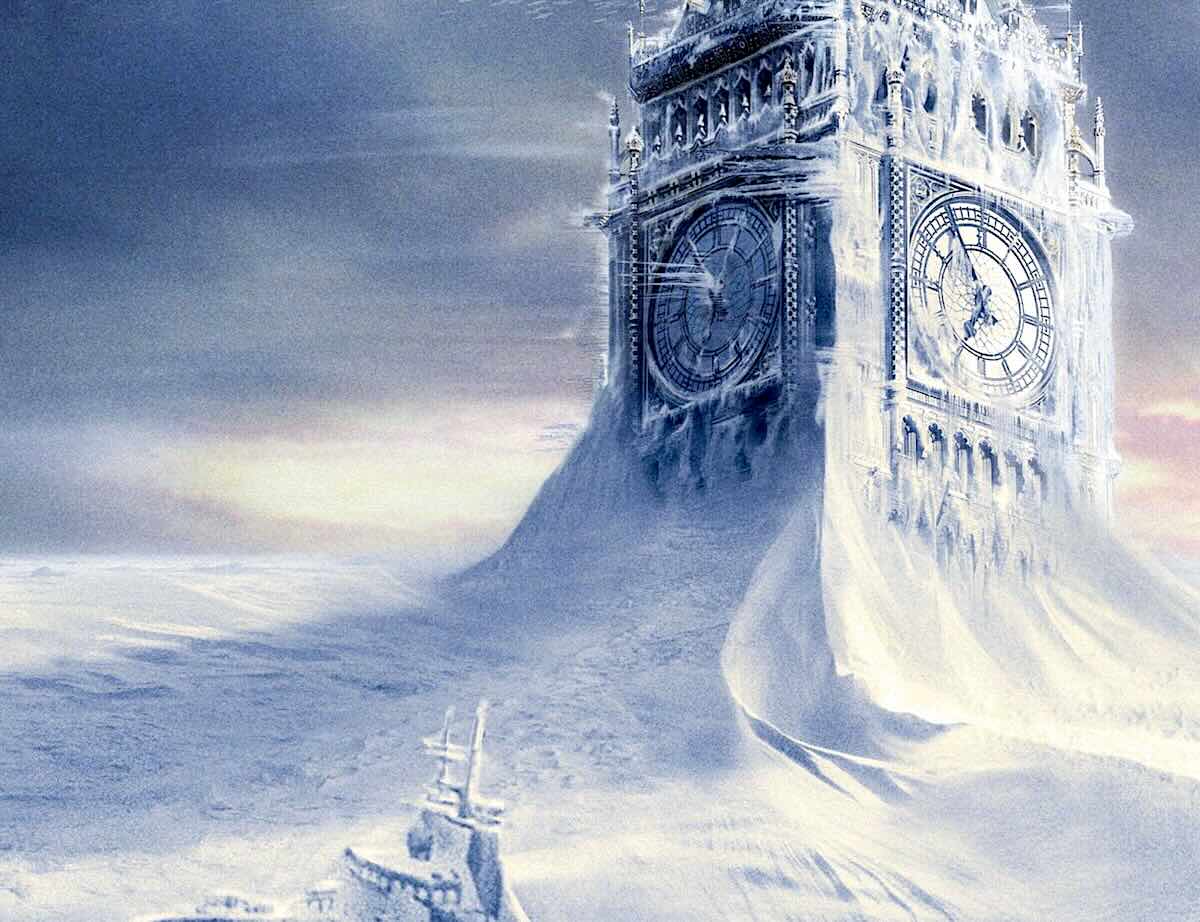
The piece explicitly invokes The Day After Tomorrow, writing that the film “imagined a world where a critical ocean current suddenly collapsed.”
That comparison is not accidental. It is a rhetorical framing designed to trigger anxiety. The glaring problem is that the movie’s premise has been scientifically debunked for years.
The film portrayed the AMOC collapsing in a matter of days, plunging the Northern Hemisphere into an instant ice age. Oceanographers and atmospheric scientists have repeatedly explained that such abrupt global glaciation is physically impossible under current planetary conditions.
The Day After Tomorrow’s depiction of an instantaneous AMOC collapse and rapid ice age was scientifically debunked by the National Oceanic and Atmospheric Administration (NOAA) in 2004.
NOAA stated that while the AMOC could weaken under climate change, the movie’s rapid, days-long shutdown and instant global freeze are physically impossible. NOAA explained that such changes would unfold over decades to centuries, not days.
NASA scientists also publicly criticized the movie’s premise.

NASA climate scientist Gavin Schmidt wrote at RealClimate that the film’s portrayal of hemispheric flash-freezing and superstorms “is physically impossible” under known atmospheric and ocean dynamics.
The American Meteorological Society (AMS) similarly explained that while ocean circulation changes are scientifically plausible over long timescales, the movie’s depiction of continent-scale temperature drops occurring in days violates basic thermodynamics and atmospheric physics.
Additionally, oceanographer Stefan Rahmstorf, who studies the AMOC, stated that although weakening is possible over long periods, the rapid ice-age scenario shown in the film is not realistic.
In short, multiple authoritative scientific bodies and researchers made clear at the time of the film’s release that while AMOC variability is a legitimate research topic, the movie’s catastrophic timeline and mechanisms were exaggerated beyond physical plausibility.
Even the Intergovernmental Panel on Climate Change (IPCC) Sixth Assessment Report (AR6) states there is low confidence in an AMOC collapse before 2100. Yet Doyle Rice of USA Today points to the big-budget Hollywood disaster film to keep the catastrophic imagery alive.
Fear sells, but in the real world, physics matters.
The study highlighted by USA Today examines the Younger Dryas, a cooling event roughly 12,900 years ago, and suggests volcanic eruptions may have contributed to AMOC disruption. That paleoclimate research is not evidence that modern AMOC collapse is imminent or is made likely by human emissions of carbon dioxide (CO2).
The article admits that during the Younger Dryas, there was evidence of “a weakening of the AMOC, but not a complete collapse.” The article also quotes a scientist saying the Younger Dryas shift was “a much more abrupt shift than what is currently happening.”
Those admissions contradict the immediacy of an AMOC collapse-induced climate catastrophe implied in the headline. Weakening is not the same as collapse. Variability is not the same as shutdown.
Moreover, the Younger Dryas occurred under vastly different conditions. Ice sheets were far larger. Freshwater pulses from glacial lakes were massive. Orbital forcing differed in the amount of sunlight received on Earth’s surface. Comparing that era to today is dishonest.
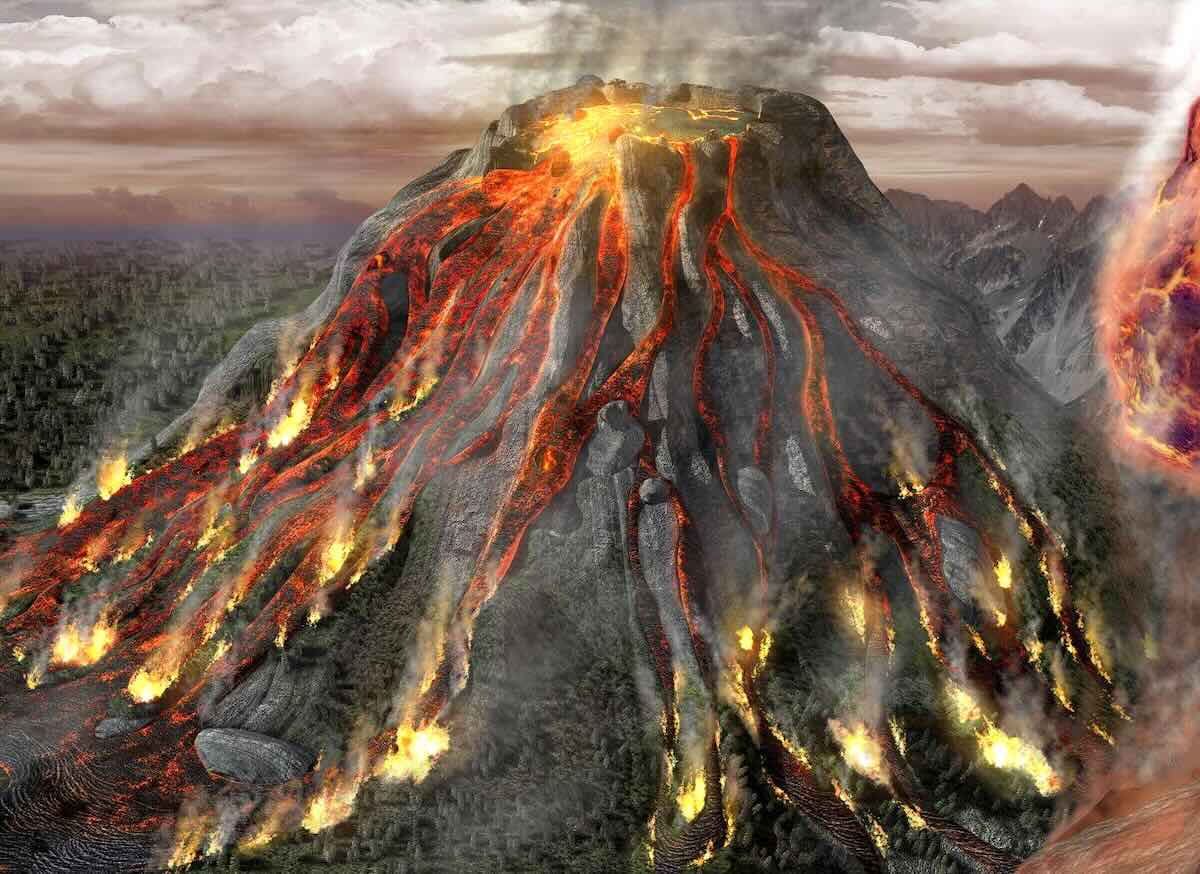
USA Today pivots from volcanic cooling thousands of years ago to modern CO2, asserting that today’s threat comes from “excess carbon dioxide in the atmosphere.”
But that claim rests on climate model simulations projecting weakening under high emissions scenarios. It is not based on observational evidence of collapse.
Direct measurements of AMOC strength, such as the RAPID array at 26.5°N operating since 2004, show variability but no clear downward spiral toward shutdown. The system fluctuates on decadal timescales. It has been recorded throughout history.
As summarized in Climate at a Glance’s review of ocean currents, claims of imminent AMOC collapse are not supported by consistent observational data. The page highlights that while some model projections show weakening under high emissions pathways, empirical measurements remain inconclusive and demonstrate substantial natural variability.
Climate Realism has likewise documented how concerning the AMOC, there is no consensus. The scientific literature has gone three ways: collapse scenarios, steady-state projections, and partial strengthening, all depending on model configurations.
That divergence alone signals high uncertainty. Ocean circulation depends on salinity gradients, wind forcing, freshwater input, and deep water formation processes that are imperfectly represented in even the most advanced models.
The AMOC is complex. It has fluctuated for millennia. It may weaken modestly over this century under certain emissions scenarios. That is not the same as a Hollywood-style catastrophe.
Referencing The Day After Tomorrow as scientific shorthand for disaster is dark storytelling, not journalism. The movie was unrealistic when it was released. It remains unrealistic today.
When media outlets use debunked cinematic imagery to frame uncertain model projections as looming disaster, they are misinforming and fearmongering their audiences.
USA Today should be ashamed of itself for substituting a falsely alarming climate change narrative for the journalistic presentation of truth and knowledge about an important issue.
Read more at Climate Realism