The North Sea is one of Britain’s “greatest industrial assets” — but an increasingly polarised fight over its future is driving investment abroad, experts have warned. [some emphasis, links added]
It means the sector is suffering a brain drain of expertise, even though the very same skills are needed to drive the renewables market, as Labour pledges to ban any new licences for oil and gas drilling to alleviate “the worsening climate crisis”.
Research revealed more than nine in ten companies believe the North Sea has a viable long-term future, but only if Whitehall “introduces the right fiscal and regulatory frameworks”.
However, after the Energy Independence Bill was announced in the King’s Speech earlier this month, Energy Secretary Ed Miliband stated:
“After the second fossil fuel crisis in half a decade, our clean power mission is the only way to bring down bills for good and take back control of our energy.”
Drilling at Rosebank, the UK’s largest untapped oil field, and Jackdaw, a giant gas field, has been stalled due to legal objections on climate grounds. Both are licenced fields, but the final decision falls to Mr Miliband.
His Department for Energy Security and Net Zero has repeatedly insisted that more North Sea drilling will not bring down bills because the price of oil and gas is set by the global market.
Meanwhile, North Sea operators continue to face a “windfall tax” introduced by the Conservatives after the war in Ukraine, meaning they pay out 78 percent of profits.
In its Energy Transition Report, Aberdeen & Grampian Chamber of Commerce (AGCC) warned the country was in danger of “accelerating the decline of the North Sea unnecessarily”.
Opponents of North Sea drilling have argued that there is simply not enough oil left to justify further exploration; the offshore sector believes there could be 7.5 billion barrels still recoverable – almost double the Government’s estimates.
The Energy Transition report found 93 percent of businesses either agree or strongly agree that there is still a future for oil and gas activity in the North Sea with the right frameworks in place.
This finding alone “directly challenges the growing political narrative that the future of the basin is already decided”, says the AGCC.
Russell Borthwick, Chief Executive of the AGCC, said:
“For several years now, the dominant political narrative has increasingly suggested that the future of the North Sea is already decided. This report tells a very different story.”
The report’s foreword warns:
“It’s clear that energy security needs to be at the centre of national economic policy. Simultaneously, increasingly polarised debate surrounding the future of the North Sea continues to create uncertainty across investors, operators, and the wider supply chain.”
The report, launched this morning in Aberdeen, reflected the views of 121 organizations linked to the sector, including seven North Sea operators.
Respondents predicted that, in less than five years, domestic revenues will be overtaken by overseas markets, such as Norway, as the main source of income.
Fewer than one in ten believed that the UK would have “sufficient skills to deliver its energy transition ambitions” if current trends continued.
Nearly nine in ten said new licences should be granted “where operators can demonstrate lower emissions than imported alternatives and deliver greater UK economic value”.
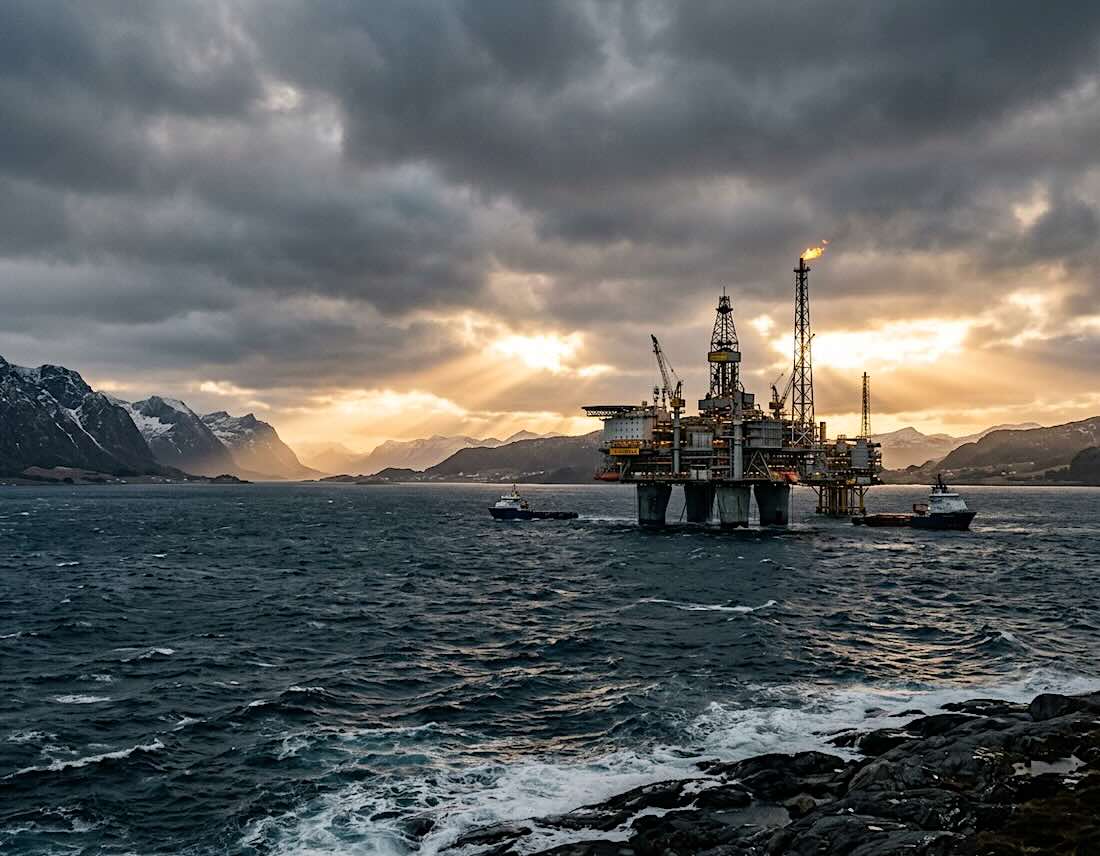
Top: Oil rig off the coast of Norway, Europe’s new center for energy production. AI image.
Read rest at GB News