

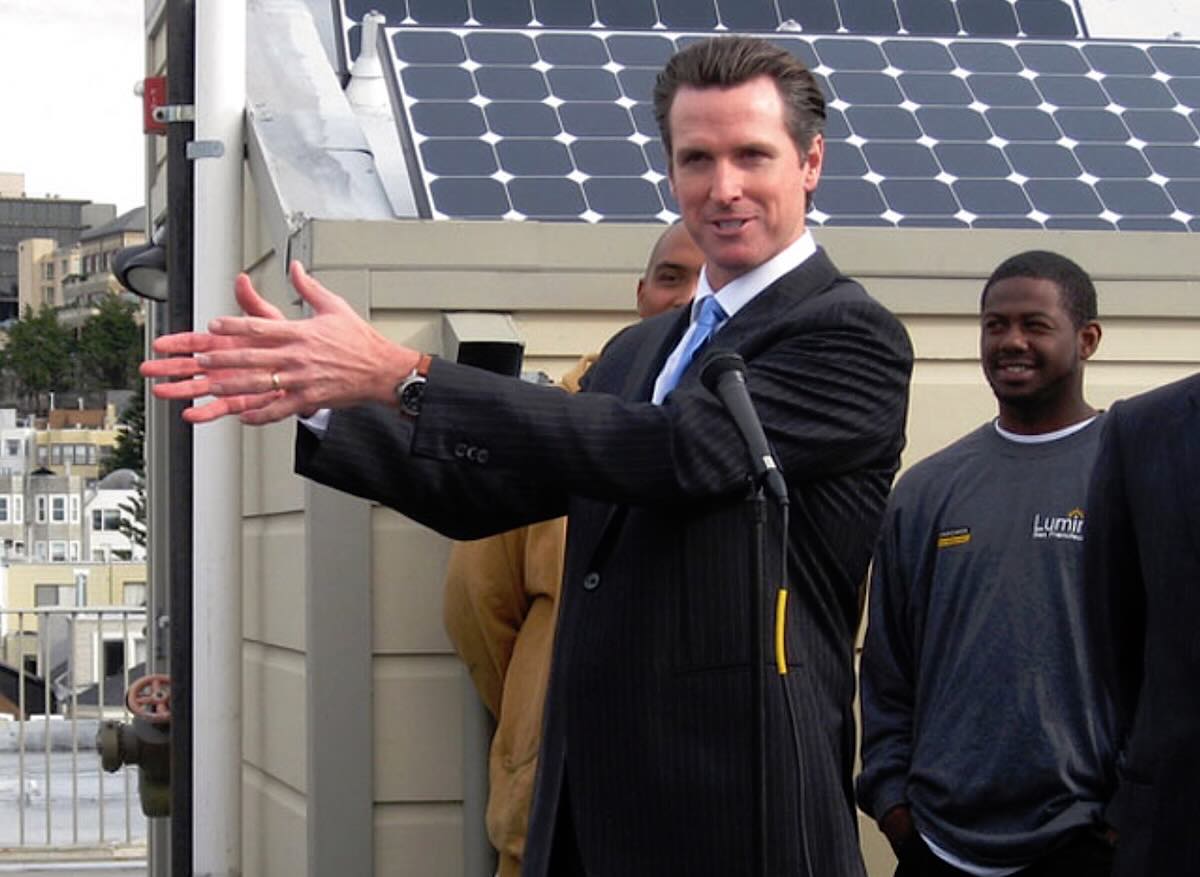
Governor Gavin Newsom has dismissed fossil fuels as “alternative energy,” and wants to power California with, among other things, the sun. [some emphasis, links added]
Through extensive mandates and extra energy costs for non-solar consumers, the Newsom administration has directed billions to building solar energy capacity.
The centerpiece of this initiative is the Solar on Multifamily Affordable Housing (SOMAH) program.
SOMAH began under Governor Jerry Brown, who signed legislation requiring a state commission to allocate up to $100 million annually from California’s cap-and-trade program to fund the installation of solar panels on apartment buildings in low-income areas.
Since then, California has devoted nearly $900 million to SOMAH, which the state hoped would create 300 megawatts of power by 2030 and advocates envisioned would create a million solar-using renters.
The results have been disastrous. Since 2015, the program has installed or reserved only 129 megawatts of solar power for approximately 65,600 residents—nowhere close to the target of one million “solar renters.”
What happened? First, incompetence.
For a decade, businesses and utilities have been forced to buy emissions credits, and while the state has lavished nearly $900 million on SOMAH, the program’s administrators designed it so poorly that they have paid out only $131 million for solar installations.
As the program’s largest contractor admitted in a draft audit, potential customers were turned off by the paperwork, bureaucracy, and red tape.
“Initially, we found housing owners excited about the program,” the contractor said, “but after a long and laborious process, they are much less enthusiastic.”
That is an understatement.
From the beginning, the SOMAH program has been plagued by delays and cancellations. More than 400 applications have been cancelled or withdrawn, or about a third of the total.
On average, projects take three and a half years to make it through the program’s gauntlet of paperwork and inspections.
Some projects have been fully installed—only to sit idle for a year or more waiting for permission to begin operating. As a result, more than $700 million of the program’s budget remains unspent.
In other words, California can’t even give away a heavily subsidized, and sometimes free product.
Read rest at City Journal








And in South Africa, unsubsidised home owners have installed over 4 GW of solar due to unreliable state power provider