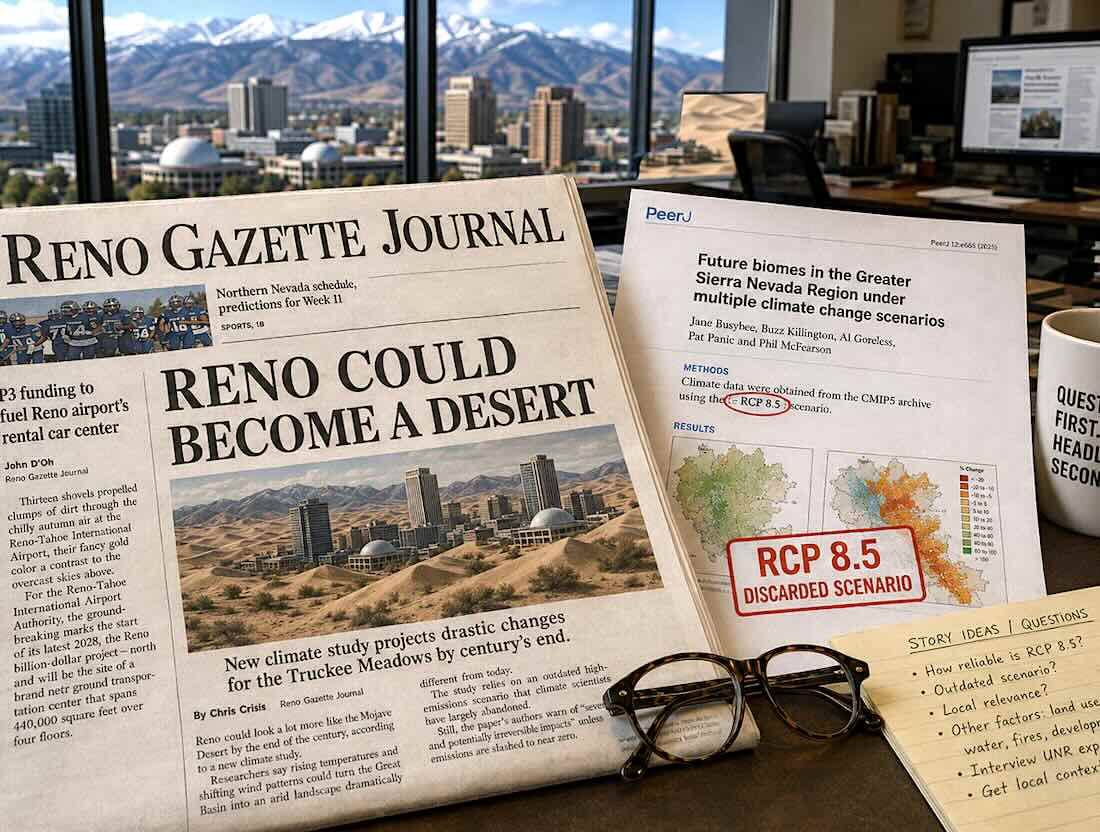
The Reno Gazette Journal (RGJ) reports in “Climate models project Reno-Sparks could be a desert by late century” that climate change is poised to dramatically reshape the world’s ecosystems, with forests giving way to savannas, deserts, and other major vegetation shifts occurring by the end of the century. [some emphasis, links added]
This is false.
The study does not observe ecosystem changes occurring today; instead, it projects hypothetical future vegetation changes using climate models that rely on the now-discredited and retracted RCP 8.5 worst-case emissions scenario, making the scientific study used to write the RGJ newspaper article invalid.
Readers would never know from RGJ’s coverage that the scientific model used to generate the study’s alarming findings was pronounced as implausible by the Intergovernmental Panel on Climate Change (IPCC) in April.
Yet the information about that climate model’s retraction is easy to understand and readily available if they bothered to look.
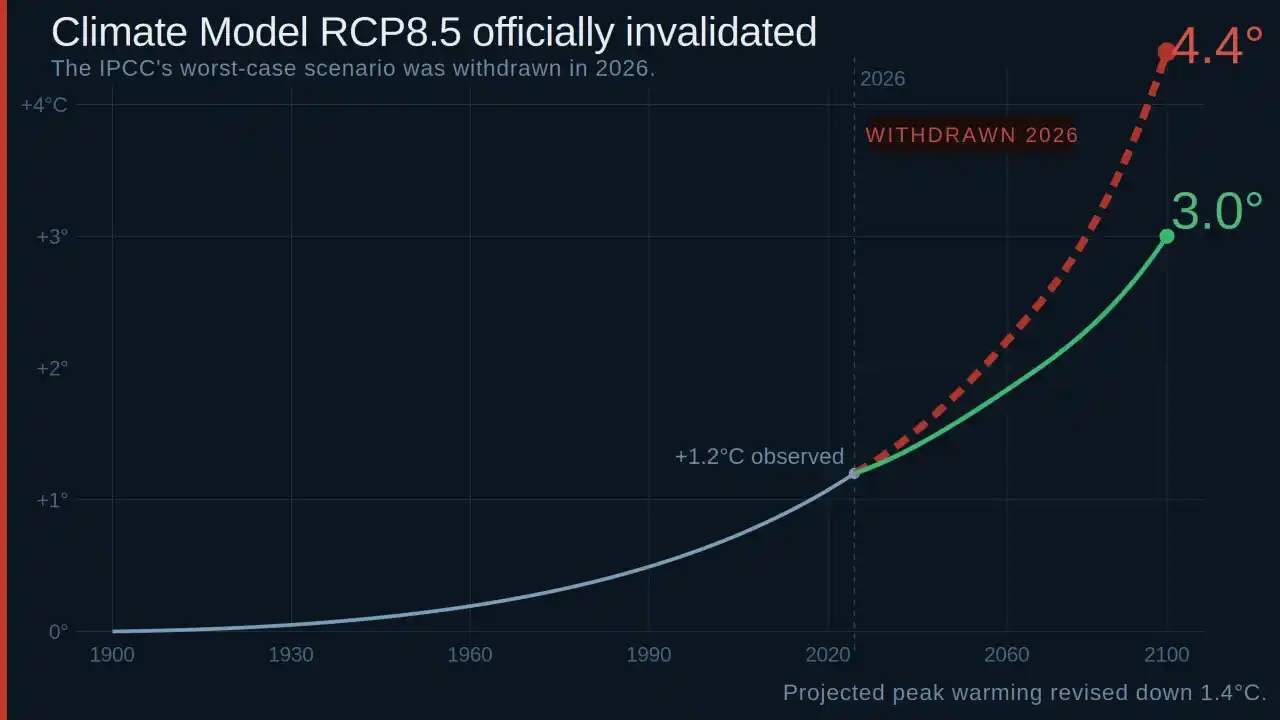
The RGJ article discusses recent research published in PeerJ as though scientists have determined what Earth’s landscapes will look like decades from now, rather than speculating about possible changes based on the [output of a withdrawn climate model].
In reality, the researchers modeled where future climate conditions might become suitable for different vegetation types under several greenhouse gas emissions scenarios. Those projections are only as reliable as the assumptions built into the climate models that drive them.
One of those assumptions is perhaps the biggest flaw in both the study and RGJ’s reporting of it. The researchers based their projections on three emissions scenarios from the older CMIP5 generation of climate models, including RCP 8.5.
The problem is that RCP 8.5 was never intended to represent the most likely future. It was developed as a high-end worst-case scenario to explore what might happen if global emissions continued rising rapidly due to massive coal expansion and little technological progress.
That emissions scenario was impossible.
Yet RGJ never tells readers that the study’s most dramatic projections depend on a retracted scenario that never, in reality, reflected the world’s actual greenhouse gas emissions trajectory.
The study authors explain that they deliberately chose to use the older and now-retracted CMIP5 climate models because many of the newer CMIP6 models produced warming responses that appeared unrealistically sensitive to greenhouse gases.
That admission should remind readers that climate modeling remains a sometimes arbitrary and unproven science. If researchers are still debating which climate models produce realistic results, it is difficult to justify presenting century-scale vegetation projections as settled science. It renders the outcome as no better than a coin toss.
Another important point largely missing from RGJ’s coverage is that the study does not predict forests will disappear.
Instead, the researchers model what they call potential vegetation. In other words, they estimate the types of ecosystems that climate conditions alone might support in the future. That is a very different exercise than predicting what will happen in the real world.
Real forests, unlike those in climate models, respond to far more than just temperature, rainfall, or greenhouse gas concentrations. Soil conditions, wildfires, insects, diseases, human land management, ecological succession, and a species’ ability to adapt all influence how ecosystems change over time.
These difficult-to-model or predict factors are routinely excluded from climate models. The authors openly acknowledge these limitations.
They state that their model does not include vegetation-climate feedbacks, snowfall effects, ecological succession, or the influence of rising atmospheric carbon dioxide (CO2) on plant growth.
They also acknowledge that their statistical model is imperfect and explicitly state that they “acknowledge our inability to predict the future” with certainty.
One glaring omission deserves particular attention.
The study excludes the well-established CO2 fertilization effect, even though decades of research have shown that increasing atmospheric CO2 generally promotes plant growth and improves water-use efficiency for many species.
In fact, deserts have been shrinking as rising atmospheric CO2 helps plants become more resilient. The authors concede that excluding this process could lead them to overestimate biome changes, particularly in tropical regions, noting that recent IPCC assessments have identified evidence of increasing woody vegetation associated with higher CO2 concentrations.
According to the researchers, more than 99 percent of Earth’s land surface will remain within the same broad biome classification under their projections for the future, with significant changes confined to relatively limited areas. That important context is also largely absent from RGJ’s article.
As a result, perhaps the greatest irony of RGJ’s headline is that it is far more dramatic and alarming than the results reported with confidence in the study it is touting.
The failure here extends beyond the RGJ article. It is also a failure of the peer-review process. PeerJ reviewers should have asked why researchers were still relying on RCP 8.5 to produce some of their most alarming projections, even though the IPCC admitted the scenario never reflected possible emissions trends.
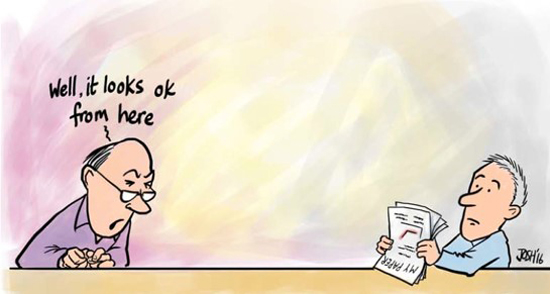
Instead, the paper passed peer review with little apparent scrutiny of one of its most fundamental assumptions, an assumption now acknowledged to be false.
Likewise, the RGJ failed to ask the obvious question that any competent science reporter should have asked: Are these projections based on realistic assumptions? Instead, it accepted the study’s conclusions at face value and presented speculative model output as an accurate forecast of Reno’s future.
In addition, if RGJ had done a little independent fact-checking, its reporters would have noticed that Reno’s long-term temperature trend is based on one highly biased weather station located in the middle of Reno International Airport.
A recent experiment conducted at the airport proved that the station reads abnormally warm, reducing Reno’s chances of becoming a desert in the future.
Good science depends on testing assumptions against reality. Good journalism depends on questioning scientific claims before presenting them to the public as proven.
In this case, both the PeerJ journal and the Reno Gazette Journal failed their respective quality tests. In both cases, readers were misled. Bad science bred bad journalism.
Read more at Climate Realism