

A claim that repeatedly clashes with observable reality demands scrutiny. Such claims survive only when contradictory evidence is buried, data selectively presented, or fear trumps fact. [some emphasis, links added]
Such is the case with the apocalyptic narrative of climate change.
One among the many pretenses of doomsayers is that shifting climate patterns threaten global food security. Environmental websites like Mongabay warn that “climate change, extreme weather, and conflict exacerbate the global food crisis,” as if harvests are failing everywhere.
“Science” blogs declare that climate change endangers food systems. The United Nations states that “the world’s food supply is made insecure by climate change.”
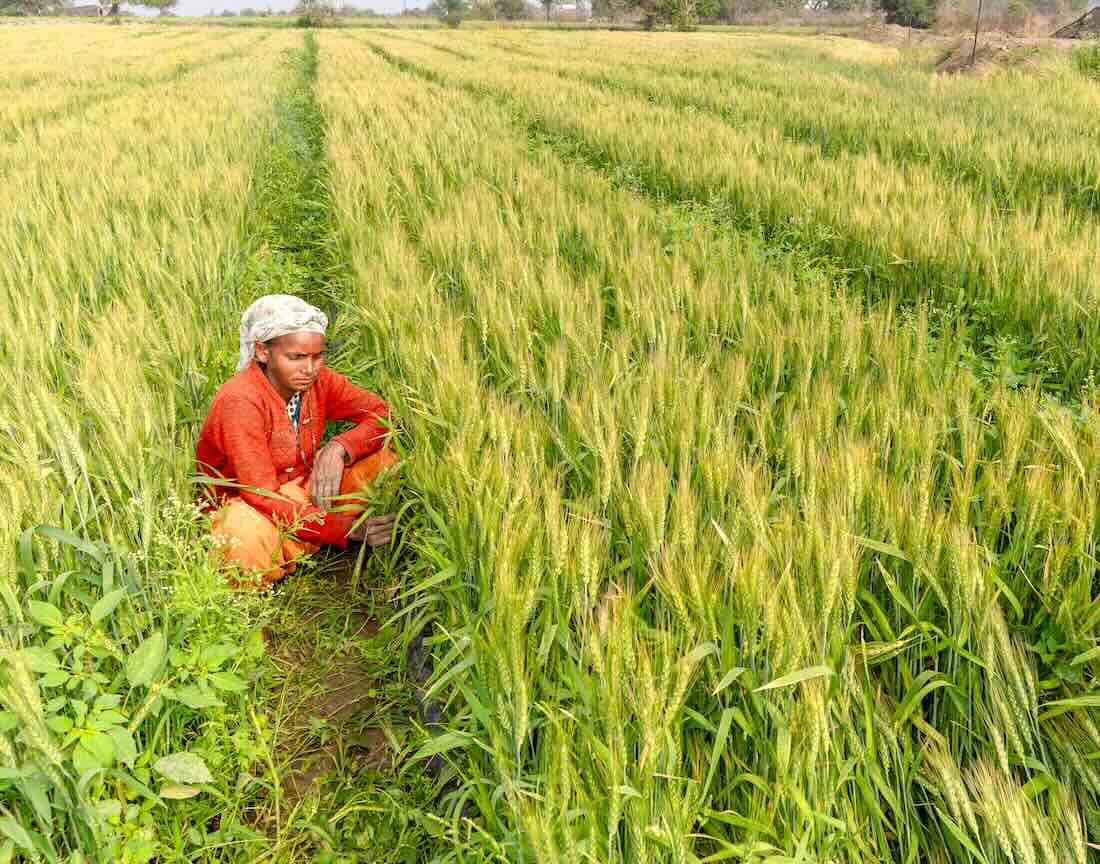
If this drumbeat matched reality, heavily populated agrarian nations would be showing signs of collapse, with my home country of India already a cautionary tale.
Hundreds of millions of Indians still depend directly or indirectly on agriculture. Rainfall variability has shaped its economic history for generations.
Instead, India’s crop production has shattered records year after year, proving this thread of climate dogma false.
India’s Agricultural Miracle Defies Climate Propaganda
India ranks as the world’s second-largest producer of rice and wheat, with output reaching 150 million and 117 million metric tons, respectively, in 2024-25.
The country achieved record food grain production of 358 million metric tons, reflecting a strong shift towards high-value crops. Between 2020 and 2025, agricultural exports rose 50% to $51 billion.
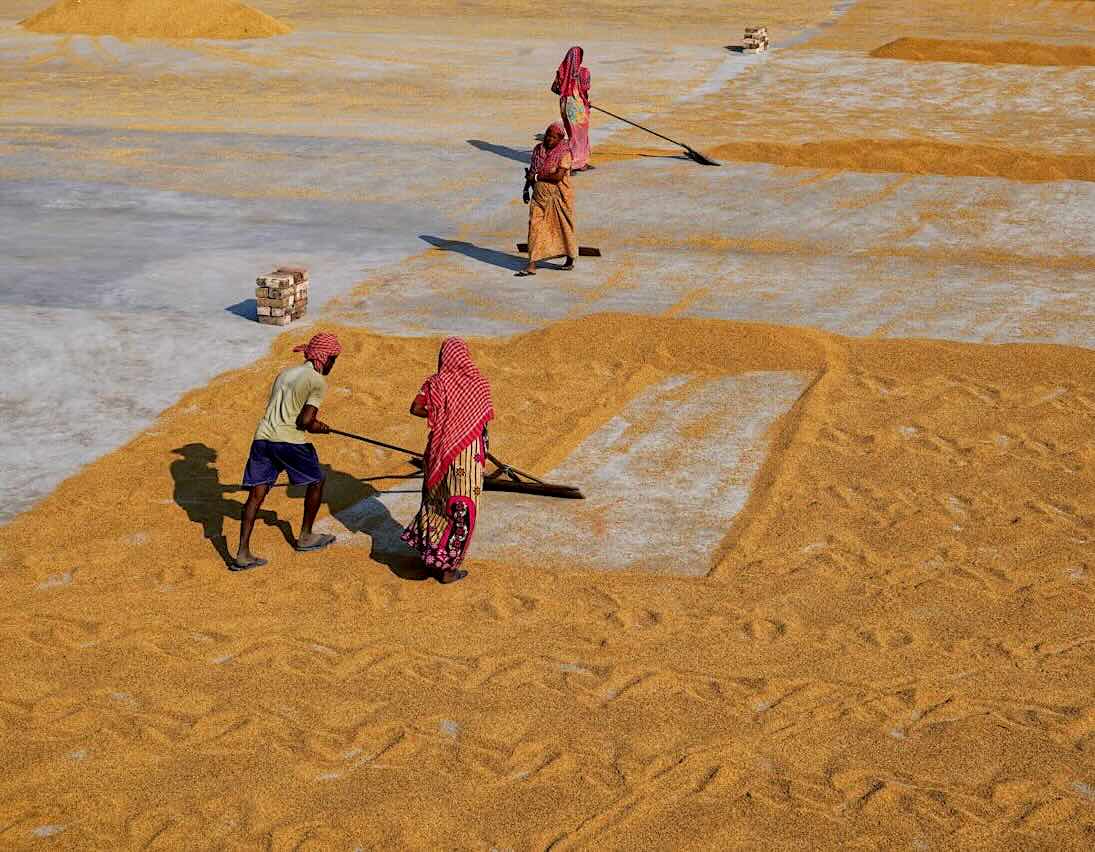
Agriculture and allied activities account for nearly one-fifth of the country’s gross value-added at current prices, employ approximately 46% of the workforce, and support nearly 55% of the population.
Does this look like a collapsing ecosystem to you? Do record-breaking harvests reflect a planet hostile to plant life? The shrieks of climate Chicken Littles are no match for millions of tons of harvested grain.
The Toxic CO2 Myth
How does a nation in the tropics, supposedly vulnerable to “extreme weather,” achieve consecutive record harvests?
The answer lies partly in something climate alarmists refuse to acknowledge: Rising levels of atmospheric carbon dioxide (CO2) accelerate plant growth, and natural warming of the modern era favors agriculture far more than the chill of the Little Ice Age, from which the planet emerged 175 years ago.
CO2 is not the pollutant that climate pseudoscience claims it is; it is plant food. Every botanist and farmer understands this, as did schoolchildren before indoctrination replaced education in many classrooms.
Elevated CO2 levels boost photosynthesis, increase crop yields, and improve water-use efficiency in plants.
NASA states that “CO2 is making Earth greener,” noting that a rising atmospheric concentration has added 5% to global green leaf area over the past three decades.
Studies of plant growth consistently demonstrate that crops like wheat, rice, and soybeans respond strongly to CO2 enrichment, with yield increases ranging from 15% to 30%.
Commercial greenhouse operators routinely boost productivity by elevating CO2 levels to 800-1,000 parts per million (ppm)—well above current atmospheric levels of 420 ppm.
The results are striking: tomato yields increase by 40-50%, cucumber production rises by 30-40%, and growth of lettuce and other vegetables accelerates significantly.
This does not mean climate plays no role in agriculture. Of course, it does. Rainfall, temperature, sunlight, and seasonal timing matter. The issue is whether the climate narrative accurately explains agricultural outcomes.
During the Little Ice Age, cold temperatures caused widespread crop failures. Growing seasons were brutally short. Frost destroyed harvests before they could mature. People starved in massive numbers across Europe and Asia.
Today’s warmer temperatures and longer growing seasons are blessings.
Ours is an agricultural golden age. The air is richer in the compound that gives plants life. The weather is more conducive to growing food than it has been in centuries. The fabricated doomsday scenarios of the climate industrial complex are ludicrous.
Read more at CO2 Coalition




The Net Zero program is essentially a war on plant food. co2 is greening the planet and driving crop yields higher practically every year apart from occasional bad seasons. The plants would quite likely be pleased to have four times as much CO2 or more, but as the level rises, other factors like water and nutrients become limiting.
In case you are worried about warming and CO2 emissions, just read a good book or two and relax!
https://www.amazon.com.au/s?k=Rafe+Champion&i=stripbooks&crid=GZ66NWUYZ193&sprefix=rafe+champion%2Cstripbooks%2C262&ref=nb_sb_noss
Throughout recorded history, the warm times have been the good times. In the coldest times, life was truly nasty, brutish and short. The warming since the Little Ice Age has been unequivocally beneficial and we are still a degree or three short of the Roman Warm Period which was the best time for humans and other living things.
if we are lucky, we might get two or three degrees of warming before we turn the corner and start the downhill run into the next cold spell.
Besides the war on CO2 is lost outside the deindustrializing net-zero nations and the use of coal is increasing.
https://rafechampion.substack.com/p/losing-the-war-on-co2
Fear of warming (and plant food) is driving the greatest misallocation of resources ever, with trillions of dollars worldwide, wasted to get more expensive power, with blackouts looming and ongoing wreckage of forests and farmlands. https://rafechampion.substack.com/p/how-much-would-you-be-prepared-to
” crops like wheat, rice, and soybeans
respond strongly to CO2 enrichment,
with yield increases ranging from 15% to 30%.”
With an increase of +200 to +300 ppm of CO2
which would take 80 to 120 years
at the current CO2 rise rate of +2.5 PM a year