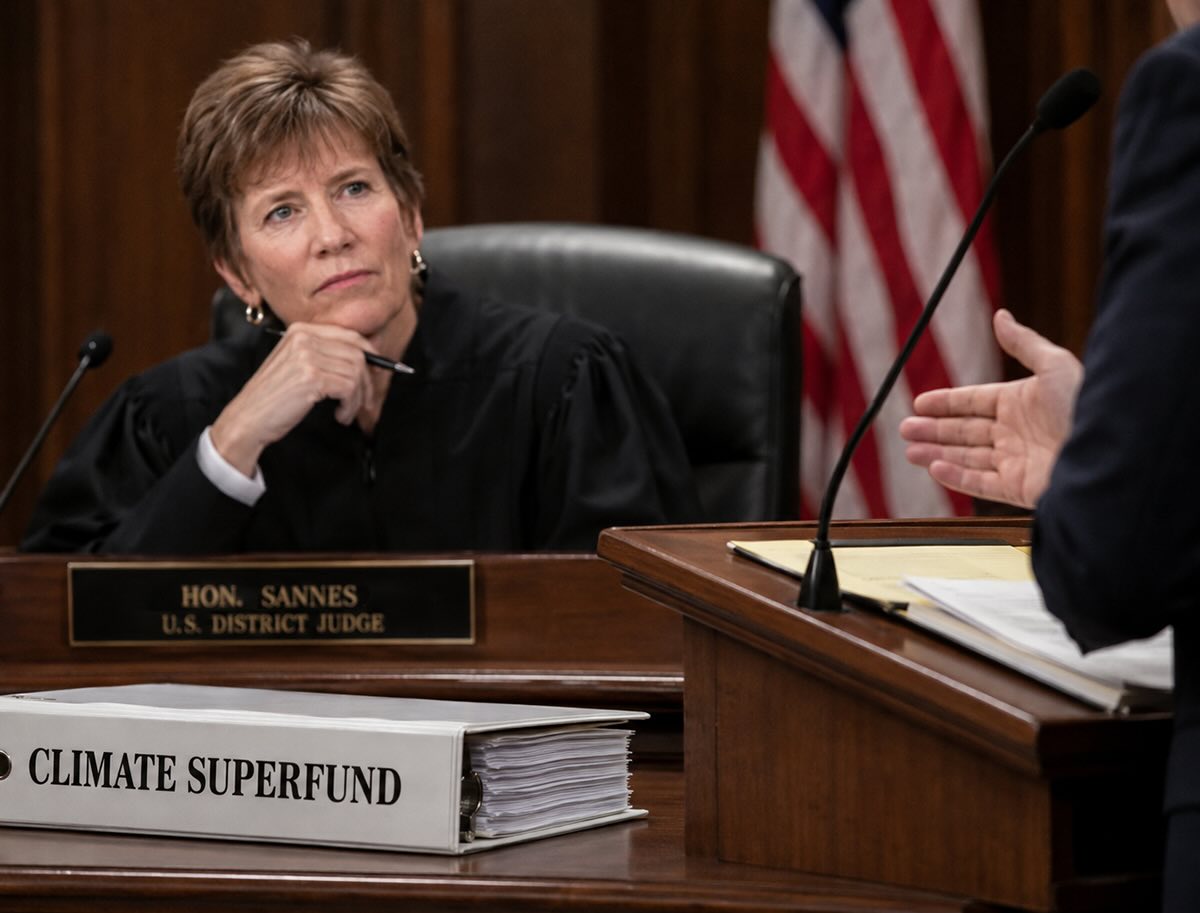
Last week, New York’s attempt to stick American energy companies with a $75 billion bill for decades of lawful energy production faced a skeptical federal judge. [some emphasis, links added]
The hearing came in a lawsuit brought by 22 Republican-led states and major trade associations challenging New York’s so-called Climate Change Superfund Act.
The challengers argue that the law is an unconstitutional power grab designed to punish selected companies for global emissions and conduct that occurred far beyond New York’s borders.
During oral arguments Thursday in the U.S. District Court for the Northern District of New York, Chief Judge Brenda Sannes repeatedly questioned whether the law conflicts with federal authority and a binding Second Circuit decision that rejected a similar effort to hold energy producers liable for global climate change.
The hearing offered an early indication that climate activists may have carried the same legal problems from their failed courtroom campaign into their new legislative strategy.
New Label, Same Legal Problems
Sannes focused heavily on whether New York’s superfund scheme intrudes on powers reserved for the federal government.
In particular, she pressed attorneys on whether the law is subject to a 2021 decision from the Second U.S. Circuit Court of Appeals that barred New York City from using state laws to sue oil and gas companies for climate change.
Steven Lehotsky, representing the U.S. Chamber of Commerce and American Petroleum Institute, called the law a “repackaging of the same argument that the city of New York tried and failed to succeed with in the 2nd Circuit.”
That is exactly what it looks like.
New York countered that the law doesn’t infringe on federal matters, as it does not force energy companies to reduce production or emissions.
Sannes did not appear eager to accept the state’s relabeling exercise. “I do have to follow the 2nd Circuit law,” she told New York’s attorney.
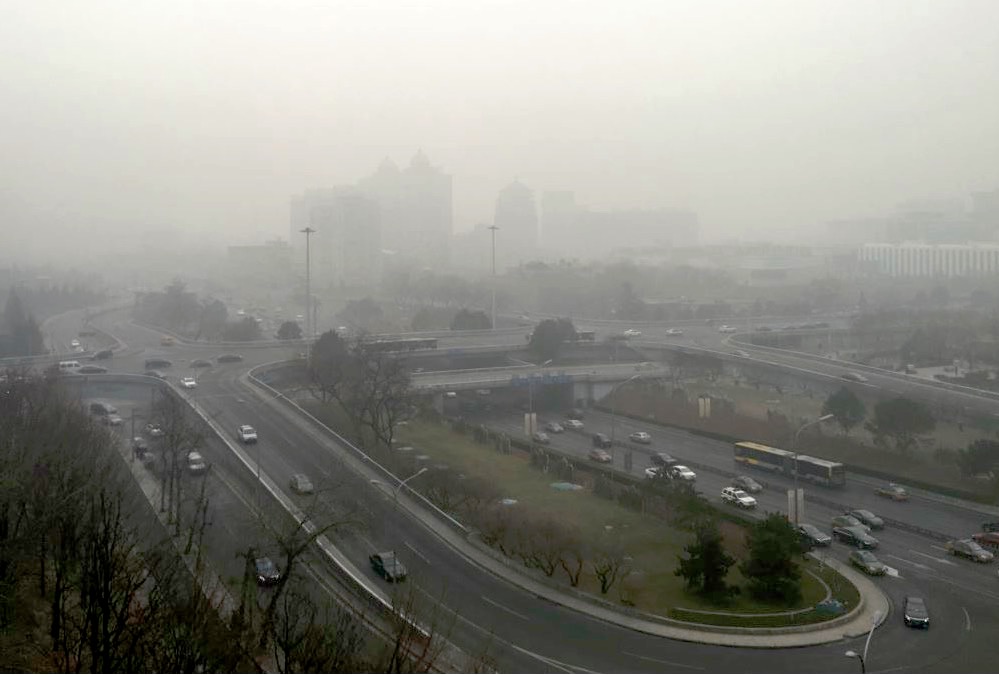
The judge also pressed the state on the law’s sweeping reach. Liability would focus on emissions tied to fossil fuels produced worldwide—not just activity within New York.
“Doesn’t this act implicate the conflicting rights of states and our relations with foreign nations?” Sannes asked.
Those exchanges cut to the heart of the challengers’ case: New York may call this a “superfund,” but it is still trying to impose state-level liability for worldwide emissions. Changing the label does not change the substance.
And while the law may not explicitly order companies to cut production, a $75 billion penalty is hardly a gentle suggestion. It would target one industry for producing and selling lawful products, burden future investment and production, and ultimately push costs onto consumers.
It would also invite other Democratic-led states to launch their own copycat programs, creating overlapping liability schemes aimed at the same companies for the same emissions.
Climate Litigation Gets a New Label
New York’s law is the latest evolution of the national climate litigation campaign backed by wealthy foundations and environmental activist groups.
After racking up defeat after defeat in courthouses across the country, campaign leaders turned their attention to the legislative process.
The activists first tried their hand at the federal level, with the Rockefeller Family Fund (RFF) helping craft a bill that was ultimately introduced by Democratic Senator Chris Van Hollen in 2021. When that effort failed to advance, activists turned to the states.
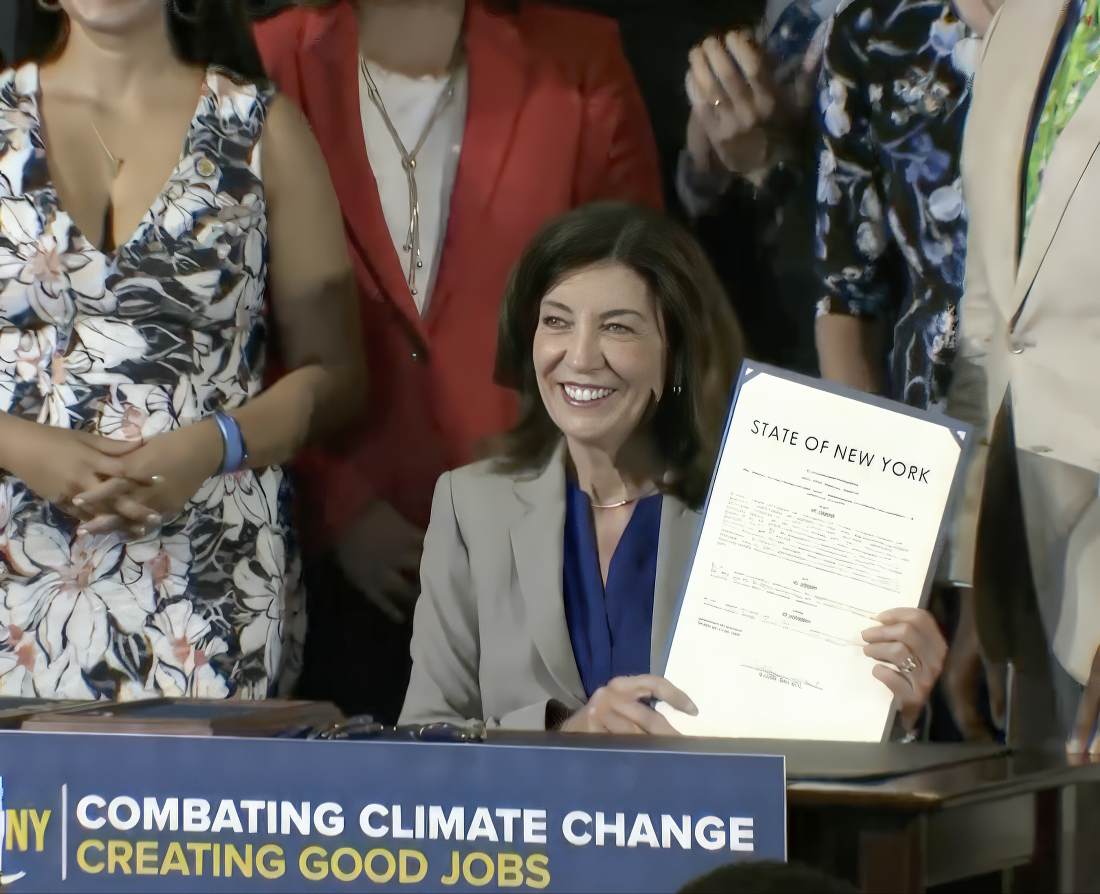
In New York, Rockefeller Family Fund Director Lee Wasserman participated in an event announcing the legislation and was described as a “crucial member of the team” behind the effort.
Gov. Kathy Hochul signed the bill in December 2024, committing New York to an unprecedented experiment in retroactive climate liability.
What’s Next
Judge Sannes did not issue a ruling on the spot and will instead issue a written ruling at a later date. That leaves the New York case in a position similar to the challenge against Vermont’s climate superfund law, where a federal judge heard arguments in the spring but has not yet issued a decision.
In the meantime, the Rockefeller network and its allies are showing no signs of backing away from their decade-long effort to take down America’s energy industry. Activists and lawmakers continue to push ahead on climate superfund bills in other states across the country.
The campaign is betting that legislatures can accomplish what climate plaintiffs have repeatedly struggled to achieve in court.
But as last week’s hearing made clear, calling climate litigation a “superfund” does not place it beyond constitutional scrutiny.
Sooner or later, the courts will have to decide whether individual states can appoint themselves global climate regulators and impose billions of dollars in retroactive penalties on companies for lawful activity conducted around the world. The answer should be no.
Read more at EID Climate