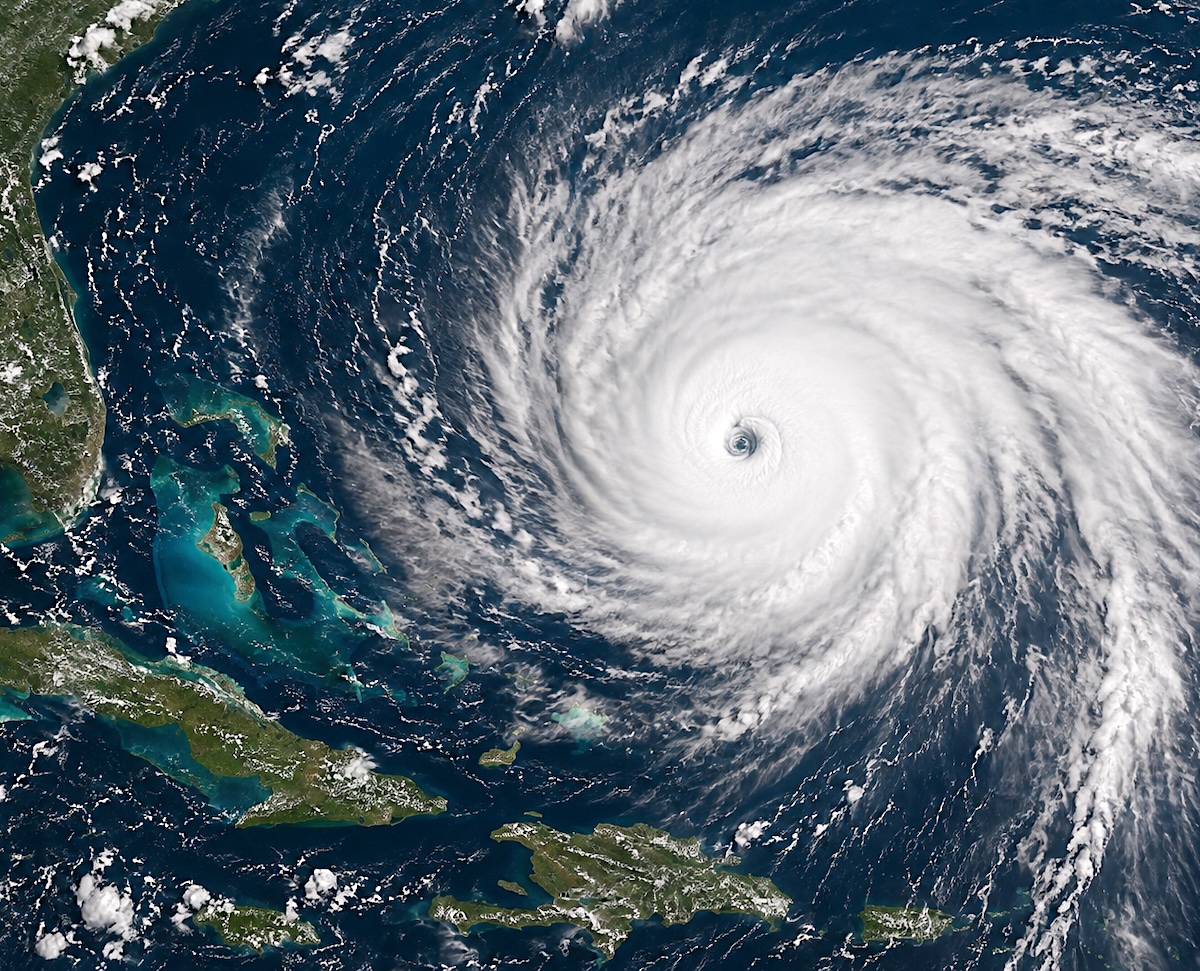
Where are all the climate ambulance-chasers? Well, you won’t find them in the Atlantic. So far in 2026, Atlantic hurricane activity has been unusually quiet. [some emphasis, links added]
Currently, the Atlantic Accumulated Cyclone Energy (ACE) index is only at 3.1, about 85% below the 1991–2020 climatological normal for this point in the season. (See Figure below.)
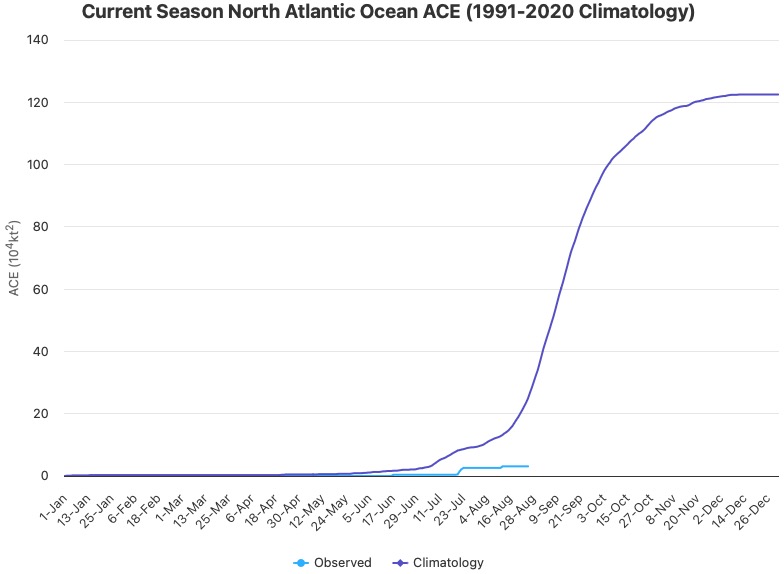
Experts say a combination of atmospheric and ocean conditions has contributed to the unusual calmness.
Strong El Niño Event
Warm sea surface temperatures in the central and eastern Pacific have driven strong vertical wind shear across the Caribbean and Atlantic Basin, disrupting the vertical structure of developing tropical disturbances and hindering hurricane development.
Dry Air and Saharan Dust
Moreover, continuous plumes of dry, dusty air blowing off the African coast (the Saharan Air Layer) have “dried out” the region’s atmosphere. Tropical storms require moist air to fuel hurricane development.
Suppressed African Easterly Waves
The atmospheric disturbances rolling off Western Africa that act as “seeds” for major Atlantic hurricanes have been weaker and less frequent than usual.
Lack of Deep Warm Water
Sea surface temperatures are hovering near average across parts of the Atlantic, but deep-sea heat content in areas like the Gulf of Mexico is missing. Developing storms can draw up cooler waters below and stall tropical storm growth.
While conditions remain hostile for major storm development, we are now at peak season and sudden shifts can occur.
Not surprisingly, there are many natural reasons why dramatic storms aren’t materializing. But when the storms do show up, the natural reasons disappear, and it all gets blamed on human GHG.
Read more at No Tricks Zone