Back on May 26, 2026, the New York State Legislature dramatically changed its 2019 climate law, which had originally been labeled “landmark” by the green press. These recent changes have been widely reported, but I have yet to see a summary of just how [significant they are], so here is my take. [some emphasis, links added]
When it comes to the law’s draconian emission reductions, the landmark is gone. The law has been gutted.
Ironically, the Greens tend to call any softening of a reckless environmental law or regulation a gutting, but in this case, I have not seen that term used, even though it is certainly called for.
Perhaps it’s because the Greens did it themselves. The New York governor and legislative leaders certainly qualify as Green leaders, and they did the gutting.
By way of background, for example, back in February, CFACT published my report on the calamitous emissions-reduction provisions of the climate law that were about to kick in. It was sent to key members of the Legislature. It is here (PDF).
The full report’s title is:
“Severe Climate Act Impacts Threaten New York State
“Massive price hikes and fuel shortages will hit unless the law is changed”
Here is a telling excerpt from the executive summary:
“The threat is stark. The Climate Act requires the administration to promulgate regulations that ‘ensure’ that the 2030 emissions reduction target is met. Governor Hochul has said her administration does not want to do so because the regulations are infeasible and ruinously expensive for New Yorkers. The court has ruled that either the law must be changed or the regulations must be issued.
“Clearly, the legislature must act on this threat. Our brief report outlines some of the most pressing issues lawmakers should consider. First and foremost, the regulatory mechanism includes rationing fuel use for transportation and heating. Such rationing is likely to create unacceptable shortages, including the possibility of homes running out of heat during the winter months.
“The so-called ‘cap and invest’ regulations also include taxing the rations. In practice, this means raising fuel costs so high that its use is sharply curtailed. This severe cost impact is also unacceptable.”
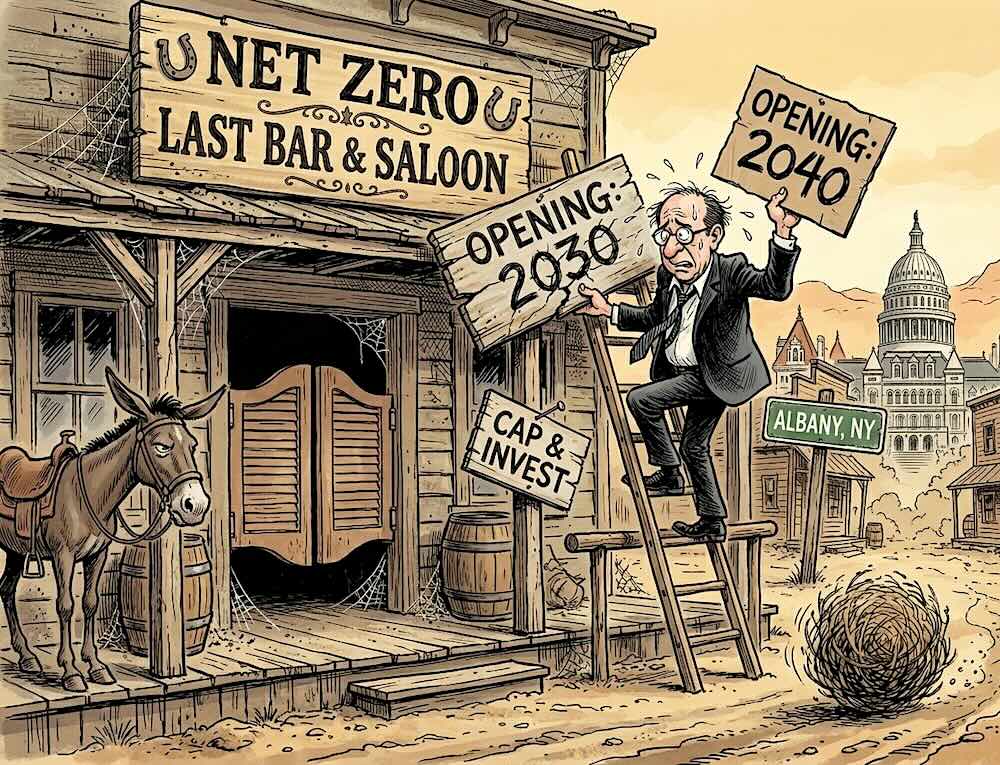
So, in May, the legislature changed the target date from 2030 to 2040. In fact, they increased the target emission reductions, but they also gutted the target, thus rendering the increase moot.
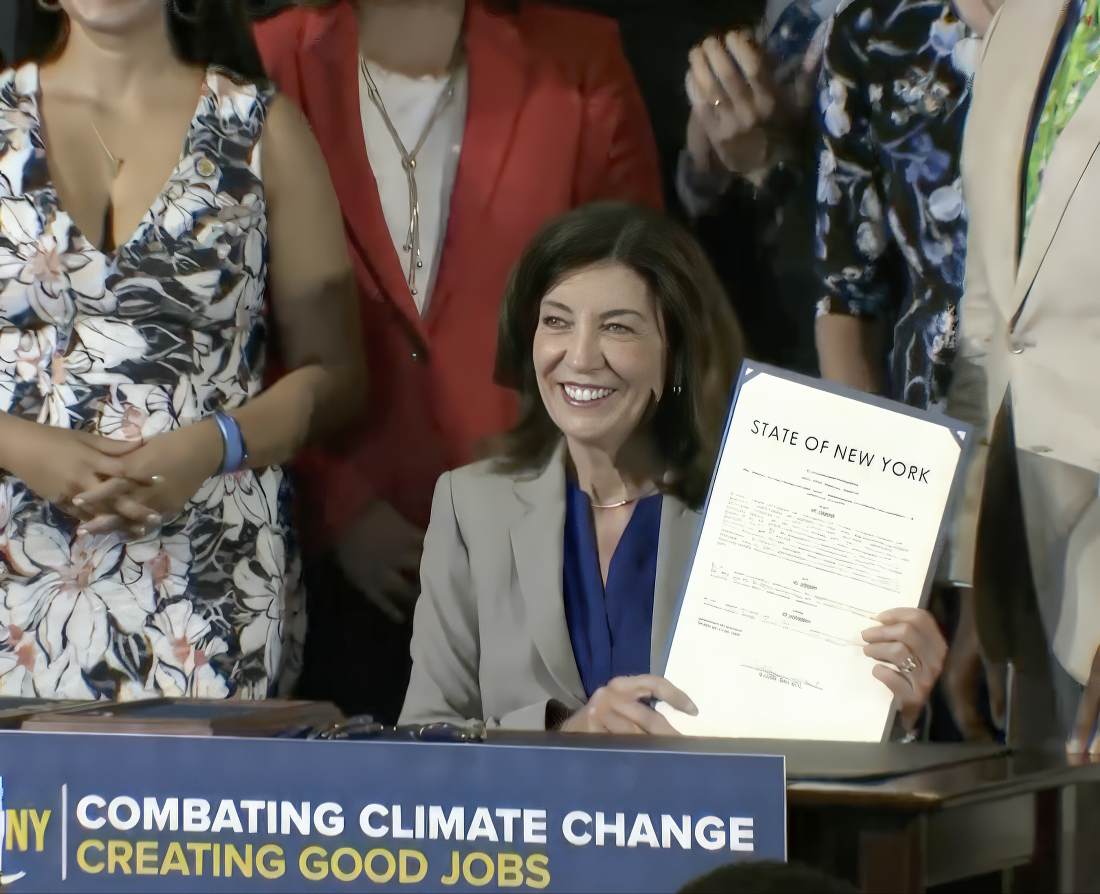
The 2030 target was an absolute mandate, while the ‘new’ 2040 target is merely a carefully qualified aspiration.
The original statutory requirement for a 40% statewide GHG reduction by 2030 is replaced by a vague mandate to achieve a 60% reduction by 2040, “to the maximum extent feasible and cost effective,” using 1990 as the baseline.
Since a 60% reduction is neither feasible nor cost-effective, the new target is completely undefined.
Likewise, the required regulations are now due in December 2028.
The amended Climate Act directs state regulators to consider several limiting parameters for an economy-wide cap-and-invest program, including impacts on affordability, economic development, and energy costs, as well as the feasibility for residents, businesses, and other entities.
These relatively specific considerations are even more constraining than the vague target language. If taken seriously, they could make the cap-and-invest program relatively harmless.
There are other big back-off-from-alarmism changes as well that I will not go into.
There is no way to tell whether the CFACT Report played a role here, but the surprisingly great magnitude of the legislative changes clearly allows for that. In any case, this is certainly a time for celebration.
At the state level, New York leads the league in gutting alarmism. Let other states follow their lead.
Read more at CFACT