Proponents of renewable energy often claim that wind and solar are the cheapest forms of energy and will drive down electricity rates. However, electricity costs continue to rise faster than inflation, with no sign that the trend is reversing, even as the share of wind and solar on the grid grows. [some emphasis, links added]
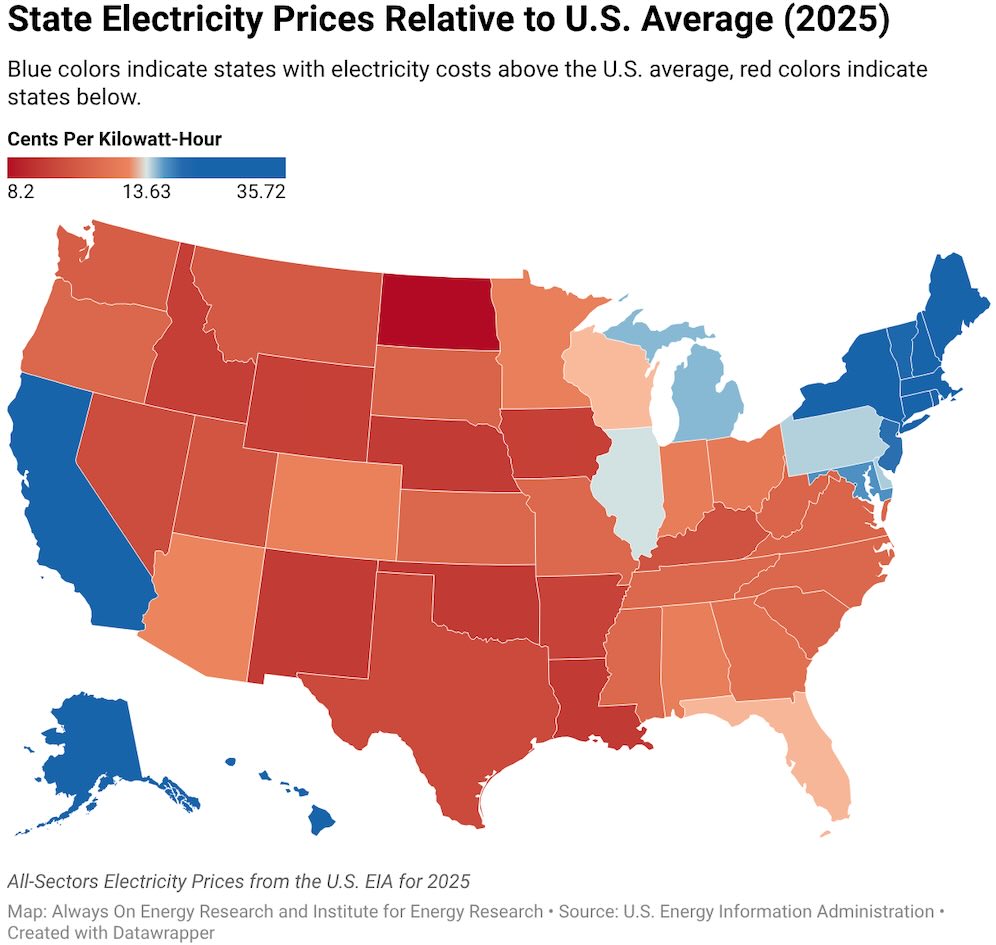
Last December, the Always On Energy Research and the Institute for Energy Research completed an analysis of electricity rates. They found that residents of blue states see higher electricity bills than those of red states.
Using data from the U.S. Energy Information Administration, the analysis found that 86% of states with electricity prices above the national average voted for the Democratic presidential nominee in 2020 and 2024.
By contrast, 80% of the 10 states with the lowest electricity prices voted for the Republican candidate in those same elections.
In that analysis [see figure below], the researchers highlighted five states to illustrate that the common factor [among blue states with high electricity rates] was the tendency to adopt stricter renewable energy requirements and climate policies.
The researchers are now taking a deeper dive into the other 45 states, and they released the first batch for the 13 original colonies on the Fourth of July.
“We wanted to have a one-stop shop where people could kind of get a feel for [what the energy mix is] in their state, what policies are being implemented, and what’s the impact of those policies on what they’re paying at the plug,” Isaac Orr, vice president of research for Always On Energy Research, told Just the News.
‘Wonky’ for the layman
In the original report, the researchers wrote spotlight narratives on policies impacting electricity rates in California, Florida, Kentucky, Louisiana, and New York.
The narratives compared red states with blue states, showing that red states with lower electricity rates lacked renewable portfolio standards, zero-emissions targets, net metering, and other climate policies impacting electricity rates.
While blue states had higher electricity rates, the picture is more complicated than just the two figures.
States such as Oregon and Washington, which are deep blue states, have lower electricity rates owing to the large amount of hydroelectric power available in the region.
The new report, “Blue States High Rates,” presents these deeper dives, with references, in an interactive index that provides information on specific policy areas affecting electricity rates in each state, allowing readers to easily compare rates and policies across states.
Sarah Montalbano, energy policy analyst with Always On, told Just the News the report offered the team an opportunity to get “wonky” about the subject. But they wanted to present the findings in a way that’s easy for the layman to understand and assess.
“We obviously have a perspective, but the ingredients are right there on the label for people,” Montalbano said.
Read rest at Just The News