

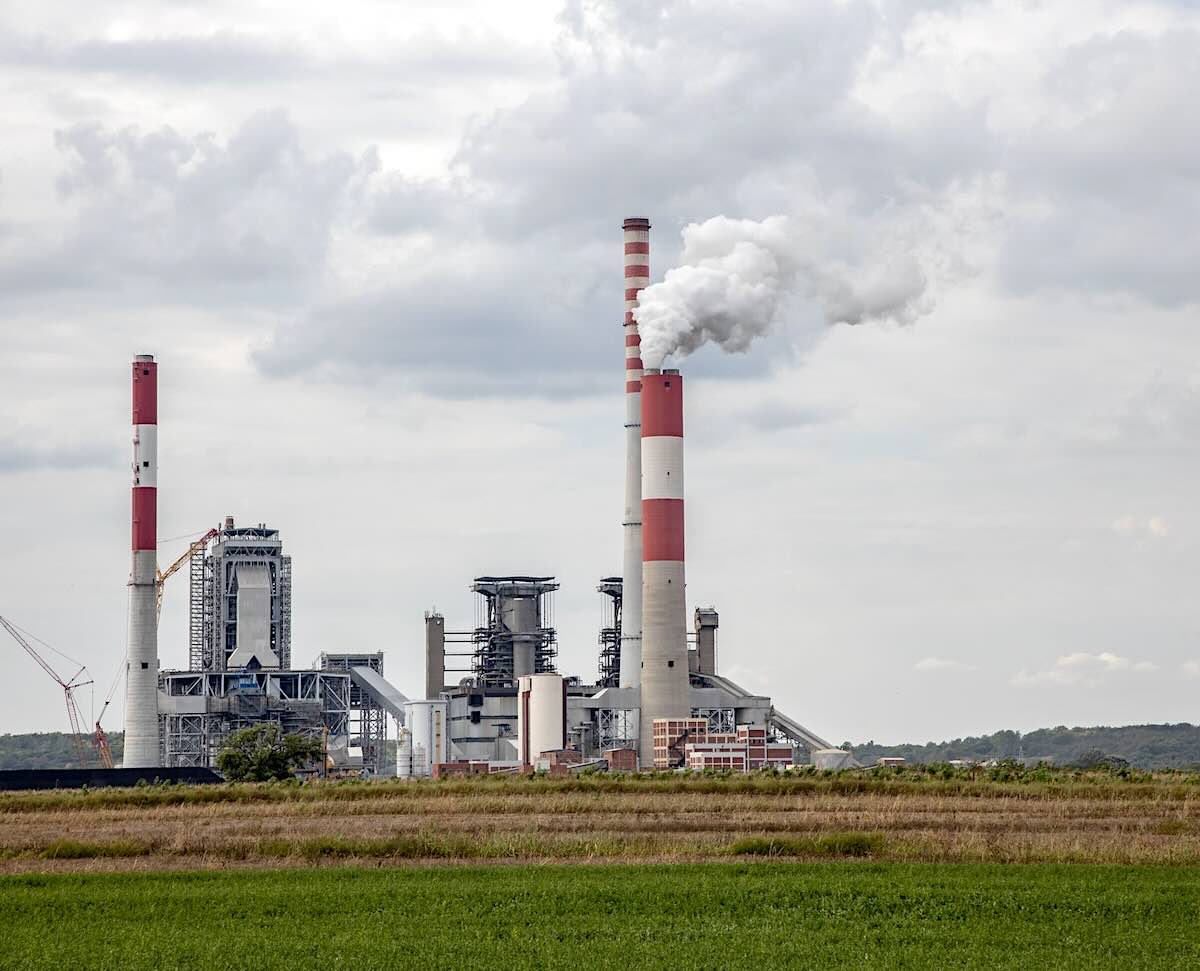
Climate alarmists treat fossil fuels as the producers of soot and environmental damage, yet the record is more complicated and quite positive. New research shows nitrogen deposition from the burning of hydrocarbons has helped to expand plant growth and the greening of large parts of the planet. [some emphasis, links added]
A Nutrient Hidden in Emissions
A 2026 global analysis published in Ecography examined increased vegetative greening across major ecosystems and found that one of the strongest statistical links was nitrogen deposition, greater even than changes in climate and land use.
NASA’s own Earth science material lists nitrogen as the second-largest driver of greening, accounting for 9% of the effect. Increases in atmospheric carbon dioxide (CO2), also from the use of fossil fuels, account for 70% of greening, according to NASA.
While often framed as a pollutant, reactive nitrogen, released primarily from the combustion of fossil fuels, has been quietly fertilizing our planet. Although 78% of the atmosphere is nitrogen, it is not in a form that many plants can use.
However, nitrogen oxides released from the combustion of coal, oil, and natural gas act as a fertilizer that plant roots absorb and use to build proteins and chlorophyll.
Farmers pay good money for synthetic fertilizer built on exactly this chemistry. Nature, through the everyday byproducts of industrial civilization, has been delivering a diluted version of that fertilizer to forests, grasslands, and agricultural fields for more than a century.
You will not hear this from researchers who depend on alarming headlines to renew their next grant.
Academic funding bodies do not reward scientists for reporting that industry has quietly fertilized half a continent’s worth of new leaf area. Instead, they reward papers that confirm a bogus crisis narrative.
Chemistry aside, much of the modern world’s agricultural abundance exists because the planet warmed out of one of the coldest periods in the past two millennia.
Warmth Feeds Us
Historians call it the Little Ice Age, a 600-year cold spell that gripped much of the globe until the middle of the 19th century. Harvests failed repeatedly. Grain prices spiked. Livestock starved in barns for lack of fodder. Rivers that had never frozen in living memory turned solid enough to walk across. Regions with already short growing seasons had them grow even shorter, and famine followed.
In contrast, warmth helps big time. Not just today, but in earlier warm periods that had temperatures comparable to today’s.
During the Medieval Warm Period, European vineyards crept northward into England, and Norse farmers grazed cattle on pastures in Greenland that today sit locked under permafrost.
These historical precedents underscore a crucial point: Climate is dynamic, and warmer periods have often coincided with human prosperity and thriving ecosystems. To ignore this historical context is to embrace a selective amnesia, driven by an apocalyptic agenda.
Undeniable Relationship Between CO2 and Plant Growth
Notwithstanding the extraordinary warmth enjoyed by Greenland’s Norse farmers 1,000 years ago, they did not have an advantage present today: elevated concentrations of atmospheric CO2, the very molecule falsely blamed for overheating Earth.
The physiological benefit of a richer CO2 atmosphere for plant life is not a fringe theory. It is fact, confirmed by government scientists and others.
A NASA-backed study using three decades of satellite data found that rising atmospheric CO2 has been the dominant driver behind a surge in global leaf area equivalent to roughly two additional continents’ worth of green cover, with NASA reporting that CO2 fertilization alone accounts for the majority of that effect.
Research on crop yields shows that wheat increases by 20% to 30% under elevated CO2, rice by 15% to 32%, and soybeans by up to 46%. Greenhouse operators routinely elevate CO2 levels up to 1,000 parts per million to turbocharge tomato, cucumber, and lettuce production.
These facts have largely been concealed by the climate-industrial complex, which relies on fear for its continuation. Bureaucracies thrive on emergency declarations. Journalists, preoccupied with their predetermined agendas, repeat the apocalyptic script because it sells.
This blindness carries real costs. Developing nations face pressure to abandon fossil fuels that could lift their people out of poverty.
The question is no longer whether fossil fuels have greened the planet. The evidence is overwhelming. Will people in power have the courage to acknowledge it as a benefit?
Top photo by Boris Hamer via Pexels.
Read more at CO2 Coalition





‘Cos 91% is caused by CO2. Bless
“NASA’s own Earth science material lists nitrogen as the second-largest driver of greening, accounting for 9% of the effect”
Global anthropogenic NO2 from fossil fuels and industry peaked i 2015
How can the NO2 decline over the past 10 years causing greening?
2015:
Based on area-weighted global tropospheric concentration trends derived from satellite mapping, global ambient NO2 levels peaked in 2015 at approximately 4.05 ppbv before entering a downward phase driven by cleaner energy transitions and vehicle standards
Wow, Dickie misses out on the science yet again.
The Nitrogen compounds released by coal and gas are in a form that can be absorbed into the soil, thus acting as a fertiliser.
You aren’t surprised are you? He’s good at reading and regurgitating some facts without comprehending those facts from a scientific understanding.
You’re confusing ambient NO2 concentration with nitrogen deposition. The NASA study you cite does not attribute 9% of global greening to ambient NO2; it attributes 9% to nitrogen deposition, while CO2 fertilization accounts for 70%. More importantly, the study analyzed greening from 1982–2009, so a decline in global ambient NO2 beginning in 2015 cannot invalidate its attribution. You’re comparing different atmospheric quantities over different time periods.
But that is your MO.