

Last week in Washington, more than 10,000 delegates, finance ministers, and central bankers gathered for the World Bank and IMF spring meetings. Their stated goal: accelerate global development, drive economic growth, and lift billions out of poverty. [some emphasis, links added]
That mission remains vital. But too many development institutions have lost sight of what the world’s poorest people actually need.
Flush with funding from taxpayers in wealthy nations, they increasingly prioritize elite Western concerns — gender, social issues, and climate change — over the basics that matter most: better education, healthcare, and reliable energy.
Nowhere is this disconnect clearer than in their growing climate fixation. The World Bank proudly reports that in its latest fiscal year, 48% of its funding went to so-called “climate finance”, up from 44% the year before and exceeding its own 45% target.
To its credit, it emphasises that these projects can often do more than deliver climate benefits, but that still means more than $39bn redirected toward climate-themed projects.
Across all multilateral development banks, spending on climate initiatives for low- and middle-income countries topped $85bn in 2024.
The African Development Bank has gone further than most: climate finance now accounts for 49% of its portfolio, and for 2025, it announced it will aim to have 100% of projects incorporate climate considerations.
This is a profound misallocation. When Africans are asked directly what they worry about most, climate change barely registers.
An Afrobarometer survey across 39 African countries, interviewing more than 50,000 people, found that respondents ranked unemployment, the economy, health, education, poverty, roads, electricity, hunger, and corruption as their top concerns.
When a child could die tonight from a preventable disease, no family cares about shaving a fraction of a degree off global temperatures a century from now.
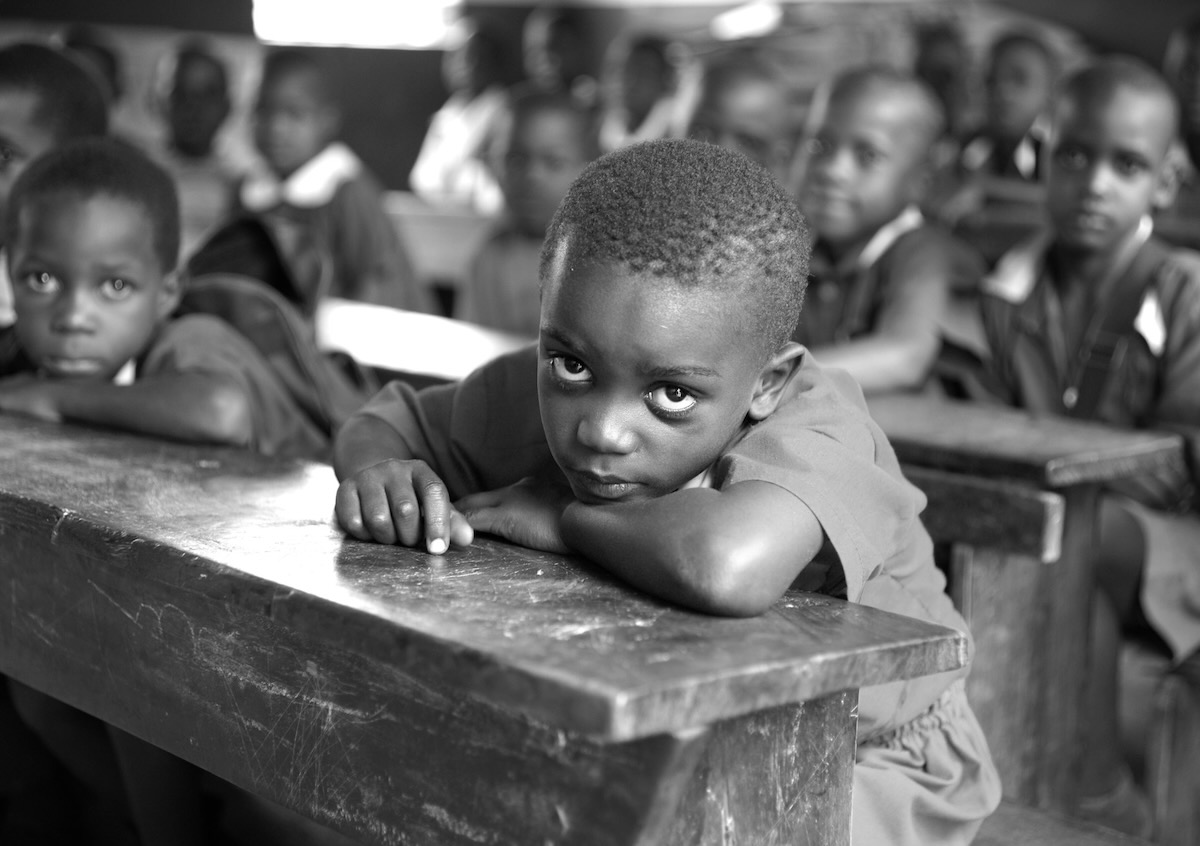
Climate change ranked near the bottom, 31st out of 34 priorities.
When a child could die tonight from a preventable disease, no family cares about shaving a fraction of a degree off global temperatures a century from now.
The well-heeled delegates in Washington — whose own children enjoy excellent healthcare, nutrition, and education — can afford to obsess over temperature differences in a century.
They may even convince themselves they are helping the poor by focusing on climate, but they are not. This is mission creep, and it is immoral.
Consider one flagship development initiative: the World Bank’s and African Development Bank’s plan to deliver electricity to 300 million Africans by 2030. It is an excellent goal, but the execution leaves much to be desired.
Despite rhetoric about an “all of the above” energy policy, much of the “Mission 300” energy plan appears to be heavily designed around renewable energy, irrespective of whether this is what delivers the best results for Africa.
Plentiful, reliable, and cheap energy is the foundation of prosperity. The rest of the world runs on fossil fuels, which still supply 81% of the world’s energy and over 60% of its electricity. The development banks should fund what works for Africans, not what satisfies rich-world climate ideology.
Solar and wind can play a role where they make sense, but they cannot yet deliver the constant, affordable electricity that powers agriculture and drives industry. Gas and coal remain the practical bridge to prosperity for hundreds of millions.
The development banks should fund what works for Africans, not what satisfies rich-world climate ideology.
Leaders of development institutions would do well to remember that what counts is not empty rhetoric and trite slogans like ensuring “a liveable planet”, but concrete results. The good news is that far better options exist for spending than vanity climate projects.
Instead of pouring resources into low-return climate projects, the World Bank, IMF, and other institutions should prioritize high-impact investments with proven returns.
In poor countries, 334 million primary school children — 79% of the total — fail to learn basic reading, writing, and arithmetic.
Teaching children at their own level using low-cost tablets and software costs just $31 per child per year, yet triples learning gains. The result: about $2,000 in higher lifetime earnings per child. Every dollar invested delivers $65 in social benefits.
Another high-impact area: land tenure reform. Secure property rights allow farmers to invest in their land, access credit, and boost productivity. Each dollar spent generates more than $18 in social benefits.
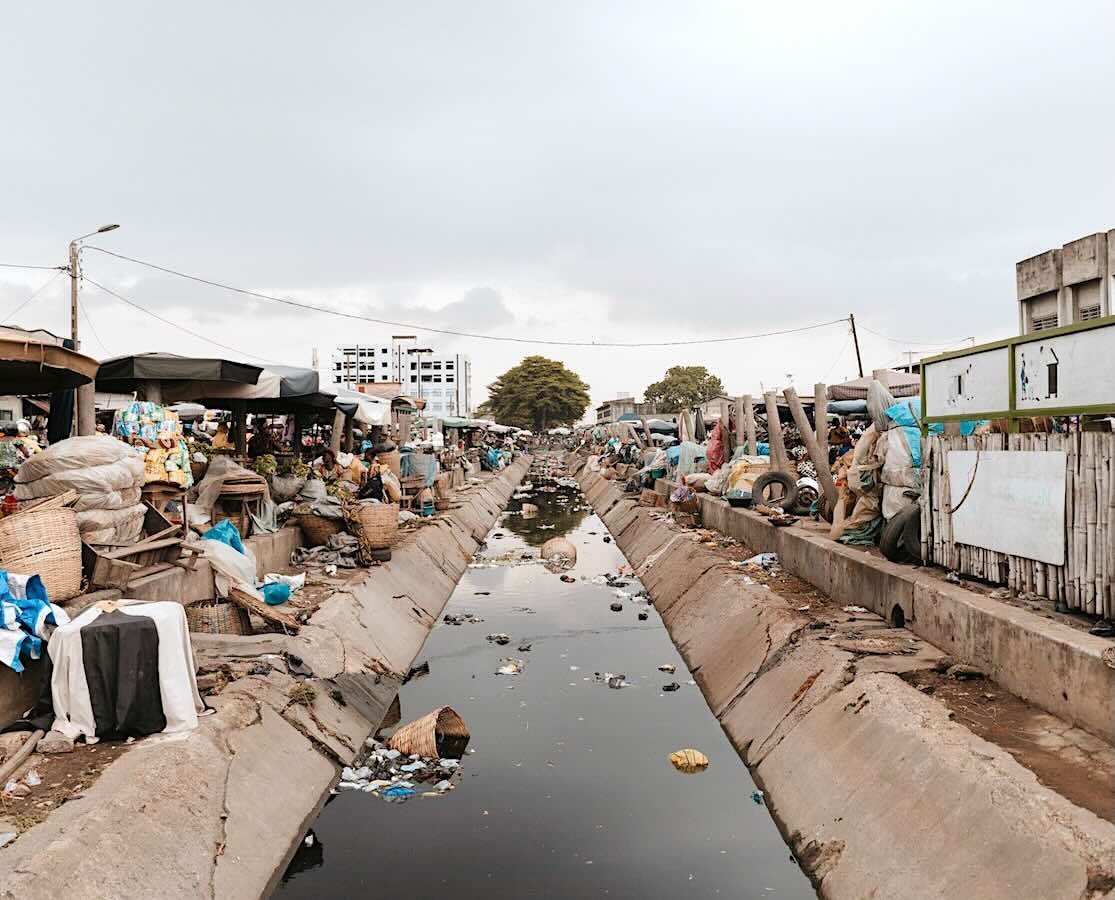
Top: photo of Benin, West Africa, by Greg Keelen on Unsplash
Read rest at Business Day





During the Trump administration’s second term (beginning in early 2025), HUGE % breductions were made to U.S. aid programs in Africa as part of a broader dismantling of the U.S. Agency for International Development (USAID). this is far more important for lifes and deaths than anything mentioned in the article.
USAID had massive funding for WOKE causes such as a school for transgenders in Egypt. It needed to be terminated.