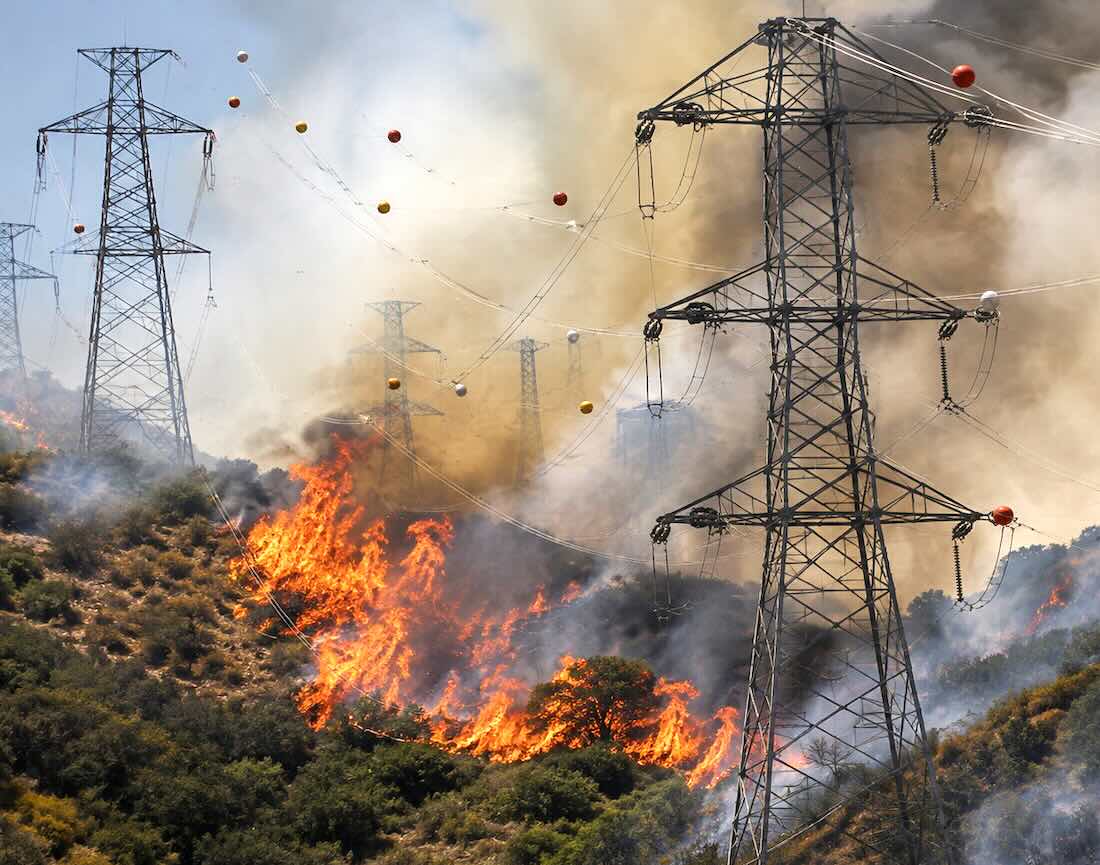
California utilities have been responsible for more than one million acres of scorched land. Power lines and other equipment, often outdated, have caused thousands of wildfires. Last year’s Eaton Fire in Los Angeles County, for instance, was started by arcing lines near an idle transmission tower. [some emphasis, links added]
The companies have paid billions for their errors, but the governor is now proposing to limit their liability.
Details of the proposal are still unfolding, but this is an issue the state has grappled with for years: How should the victims of wildfires started by power companies best be compensated for their losses?
Gov. Gavin Newsom says the “status quo doesn’t work,” and is pressuring lawmakers to pass a law that changes how wildfire victims are compensated when power companies are responsible.
He also said he wants to see “no more bonuses” handed out to “utility CEOs when they’re found liable and culpable for major fires,” but reportedly wants to cap some of the costs power companies pay when they are responsible.
According to CalMatters, fire survivors and advocacy groups say the governor’s proposal will limit victims’ compensation for pain and suffering, strip insurance companies of their “right to recover wildfire costs from utilities or other corporations,” and cap legal fees, limiting fire survivors’ ability to retain representation.
Meanwhile, Politico says the proposal limits the amounts that utilities would “pay out to insurance companies, hedge funds and disaster attorneys when the power companies spark a wildfire.”
If Newsom’s plan is adopted, insurance companies will no longer be able to pay policyholders’ claims, then turn around and get a portion of the money back by suing the offending utility through subrogation. Of course, this might lead insurers to raise their rates.
California’s compensation process operates under an “inverse condemnation” legal standard, which Newsom’s proposal reportedly leaves untouched.

Inverse condemnation allows Californians to seek compensation from utilities for damage and to hold them responsible for the harm caused by wildfires ignited by their infrastructure, even if the [utility was not negligent].
In California, inverse condemnation invokes “strict liability,” a legal principle in which, according to trial lawyers, liability exists even if the responsible party was not careless or acted with malicious intent.
North Dakota just passed a bill that limits the application of the strict liability standard. California might want to consider a similar approach in the future if there are concerns that strict liability could bankrupt utilities.
Pacific Gas & Electric Company got a taste of how a utility can be nearly ruined when it filed for bankruptcy in 2019 after racking up as much as $30 billion in liability for fires set off by its equipment.
Some critics of Newsom’s plan are using the word “bailout.” The California State Association of Counties calls it a “corporate bailout” that puts “utilities’ profits above fire survivors and local communities.”
Joy Chen, a survivor of last year’s Eaton fire, ignited by “an electrical event” at Southern California Edison transmission towers, says that it’s not only a bailout, but it’s also an “end-run around the democratic process” that will do nothing for families and communities that have been “shattered” by wildfires and might never be compensated for their losses.
Limiting utilities’ financial liabilities is not a terrible idea. It might stir warm feelings to see them smacked with stiff penalties. But monetary fines imposed on utilities found responsible for wildfires are passed on to ratepayers.

The California Earthquake Authority noted earlier this year that the state’s second-highest residential electricity prices in the country are elevated by the “accumulation of wildfire-related costs in utility rates.”
Newsom’s “no bonuses” hard-line proposition should not be considered extreme. If a power company causes a wildfire, whether through mismanagement or negligence, it is, by definition, failing at its job. In no world, even in the sphere of investor-owned, government-protected regional monopolies, should executives be rewarded for failure.
The 20% raise that Pedro Pizarro, president and CEO of Edison International, parent company of Southern California Edison, raked in last year — the year SoCal Ed’s equipment ignited the Eaton fire that left thousands homeless and killed 19 — must feel like an insult to the victims.
[Public policy has incentivized power companies] to spend heavily on climate schemes, leaving fewer funds to [harden their systems and update equipment] to prevent fires.
The misallocation of funds, and the regulatory burden and web of mandates placed on utilities, needs to be reformed, says Pacific Research Institute economist Wayne Winegarden, “to meaningfully address the problems of worsened wildfires and grid unreliability.”
Any serious changes to the state’s wildfire policy ought to end this root cause. But it’s one of many flaws embedded in regulated utilities that operate on a business model that was drawn up nearly a century ago.
Regulated utilities don’t have to compete for customers, and the government sets their rates and returns, thus protecting these monopolies in their exclusive service territories. They don’t have to worry about being punished by consumers because of poor performance and are managed like government bureaucracies.
[Any legislative compromise will likely leave out] reasonable efforts to better mitigate and prevent wildfires. Options range from thinning forests of dead timber to brush removal to “undergrounding” power lines.
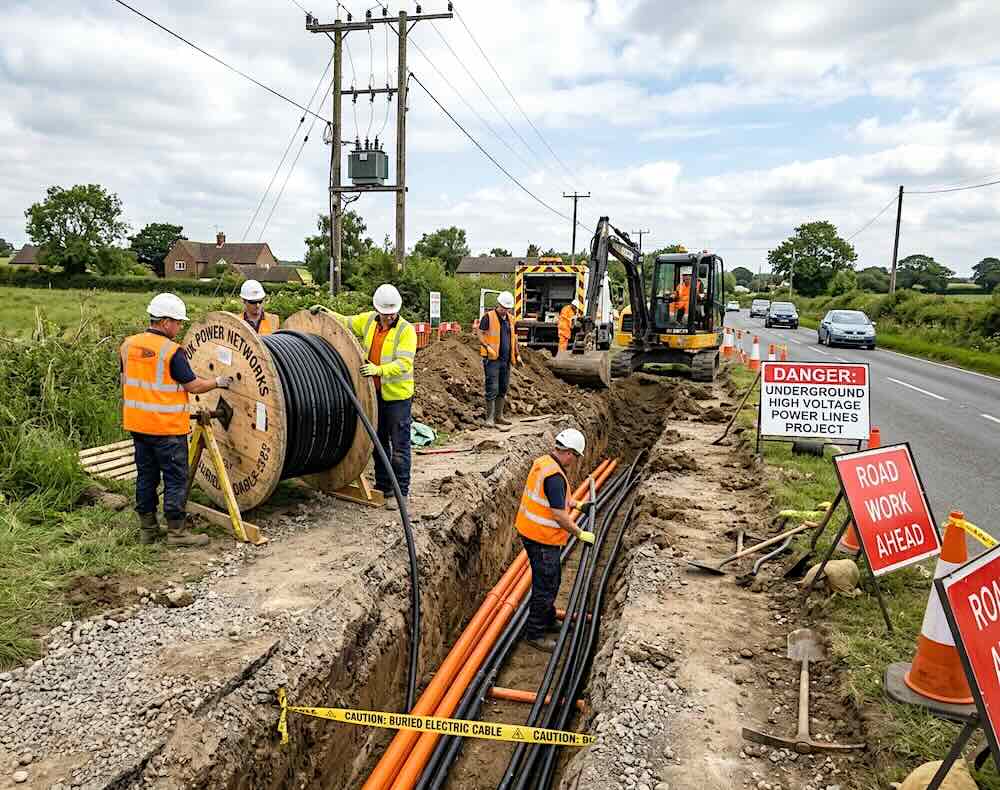
Burying distribution lines underground whenever and wherever possible would be expensive, but the Free Cities Center’s John Seiler estimates that 3,405 miles of power lines could have been “undergrounded” for the same amount of money that has so far been wasted on the high-speed rail.
That figure rises to 33,510 miles of underground line if we’re talking about the latest total completion cost of the HSR.
The costs of mitigation efforts could be paid for from the state’s Greenhouse Gas Reduction Fund, which has poured more than $1 billion into expenditures, such as affordable housing, transit projects, and, yes, the high-speed rail, that will not affect the climate.
How lawmakers will use the governor’s outline to write legislation is obviously unknown. But credit Newsom for attacking an issue that needs fixing. Californians now deserve a bipartisan effort from Sacramento that will balance victims’ needs with appropriate accountability for utilities.
Read more at PRI