

For much of its five-decade history, the Colorado Energy Office was a small department with a handful of employees who supported practical, cost-saving energy conservation measures. From 2010 to 2022, records show, the office received an average of $7 million per year from the U.S. Department of Energy. [some emphasis, links added]
All that changed after the Biden administration and Congress approved hundreds of billions of dollars in new spending to provide “a more equitable, low-carbon, and clean energy economy.”
In fiscal year 2024, Colorado’s state energy office was slated to receive $157.5 million from the energy department, along with another $156 million from the Environmental Protection Agency (EPA).
The Biden team’s defeat in the 2024 election didn’t stop the gusher, either, as an additional $60 million in funding was allocated after voters elected Trump and his promise to halt the spending.
A RealClearInvestigations search of government data shows that the Colorado Energy Office was just one of many agencies and groups across the country that received exponential increases in federal grants during Biden’s last two years as part of the unprecedented attempt to refashion federal agencies into the finance engines that would transform the U.S. energy sector to a renewable net-zero future.
The Treasury Department’s database indicates that after Congress passed unprecedented funding to fight climate change, it looked for outfits that could disburse that money at the state and local levels.
In response, it turned to many organizations in the public and private sector with no track record for handling such vast sums, as well as state energy offices and agencies.
“Biden-era climate policy sometimes prioritized sending money out the door first, and worrying about logistics and oversight second,” said Jeremy Portnoy, an investigator with OpenTheBooks who seeks to make all government spending public. “Money went to groups that were receiving grants larger than they [could] manage.”
Although they represent only a sliver of Biden-era spending on green energy, the sudden promise of $9.5 billion in awards to state and county energy programs beginning in FY2024 and the Trump administration efforts to claw back some of that money highlight how shifts in White House policies can make long-term planning hard, especially regarding partisan policy issues.

In response to Trump’s efforts to halt much of the spending, a coalition of 13 Democratic state attorneys general filed suit in February seeking to have all the approved grant money dispensed.
They argued the Trump administration unfairly targeted states controlled by Democrats, and that without the money those states’ “ambitious climate goals” may not be reached.
“Since the first day of President Donald J. Trump’s second term, his Administration set out to reverse and undermine the historic energy and infrastructure funding measures enacted by Congress in the preceding years,” according to the lawsuit.
“Its true purpose was to give the Administration thin bureaucratic cover to eliminate congressionally established energy and infrastructure programs and rescind their funding, for no other reason than a fundamental disagreement with the programs’ policy underpinnings.”
The legal challenges have scored some successes; last month the Energy Department agreed to reinstate 11 grants, although the largest of them remain in limbo.
Three Huge Beneficiaries
While most states received some portion of the climate splurge, RCI’s analysis focused on three of the biggest beneficiaries: Colorado, California, and New York, which were poised to receive more than $1 billion.
Like the Colorado Energy Office, the New York Energy Research and Development Institute and the California Energy Commission were established as energy conservation initiatives in the 1970s, when the U.S. was reeling from the oil embargo shock and the economy’s blood seemed dependent on the will of foreign actors.
In more recent decades, all three have also focused on renewable energy, with a special emphasis on social justice equity.
Today, the New York institute has nearly 500 employees with an average salary of $127,220, while the California Commission enjoys regulatory powers over siting energy plants and sets state energy policies.
In addition to state funding and, in New York and California, money from ratepayers, these three state agencies routinely received relatively small federal grants, according to the Treasury Department’s usaspending.gov.
But then Biden’s Investment Infrastructure and Jobs Act and his Inflation Reduction Act kicked in, and the Energy Department began approving enormous sums for state agencies.
The grant bonanza lasted roughly 18 months beginning in 2023 and was capped by a post-election frenzy in December 2024 and January 2025, records show. Suddenly, the three Democratic state agencies were receiving grants 10 or more times larger than anything they had previously received.
An RCI review of the FY2024 data showed both the unprecedented size of the grants and the rapidity with which they were greenlit:
- The New York State Energy Research and Development Authority (NYSERDA) got an average of $5.2 million a year in Energy Department grants from 2015 to 2021. In 2024, however, it was slated to receive $335.38 million. Even after Trump’s 2024 election, $30 million was approved in three grants.
- The Colorado Energy Office averaged $6.7 million from 2015 to 2021. Its 2024 grant haul was on top of almost $60 million in fiscal year 2023, and post-2024 election grants to the office were for nearly another $60 million.
- The California Energy Commission averaged $3.1 million for the seven years between 2015 and 2021, a figure that increased by more than a hundred-fold in 2024. After the 2024 election, another $630.5 million grant was approved, one of seven post-election grants.
And the grants came in rapid procession, records show. In California’s case, there were four grants totaling $1.4 billion in the last six months of the 2024 calendar year, while the Energy Department and the EPA combined to greenlight more than $400 million in July and August of that year.
The Treasury Department has rarely disbursed these grants in full. Unlocking that money is the main goal of a lawsuit brought in February by the attorneys general. And, as RCI previously reported, totals on usaspending.gov do not always match those from other agencies, reflecting the complexity and scale of federal spending.
But the extraordinary amounts and compressed timeline reflect a blizzard of approved spending that the inspectors general of the respective federal agencies warned would make effective oversight of the money nearly impossible.
Nebulous & Questionable
The grants were designed to pay for tasks such as improving grid resilience in the face of disasters, integrating renewable energy into the grid, or reducing methane emissions.
Yet another purpose was for programs such as home weatherization, a federal operation dogged by allegations of fraud and shoddy work, as RCI reported in 2022.
Some of the biggest grants were for nebulous-sounding work. For example, the Inflation Reduction Act was the source of funding “to provide initial guidance for the planning, administration or technical assistance for future distributions of formula awards through the home energy rebate programs.”
Such “initial guidance” would not come cheaply.

Records show the Colorado Energy Office would receive two separate $70 million awards for this work, while the California Energy Commission would receive $580 million for the same task and the New York Energy Institute more than $310 million.
The weatherization of low-income households began with the Obama administration’s 2009 spending bill, and received a significant boost under President Biden. Records show that two $70 million grants were each earmarked for the Colorado Energy Office’s weatherization projects in fiscal year 2024.
As with other stories RCI has done on Biden’s climate change spending, the Department of Energy did not respond to requests for comment. But current White House officials maintain the grant binge ended during President Trump’s second term.
“While the Biden administration threw taxpayer dollars at Green New Scam ideological pet projects, the Trump administration is focused on reshoring critical supply chains and safeguarding our national and economic security – all while ensuring the best bargain for taxpayers in every deal,” White House spokesman Kush Desai told RCI.
The Colorado Energy Office declined comment, and NYSERDA did not respond to RCI’s questions about the grants.
The California Energy Commission, on the other hand, said much of the grant money was tied to formula spending, such as “clean energy retrofits” in residential homes.
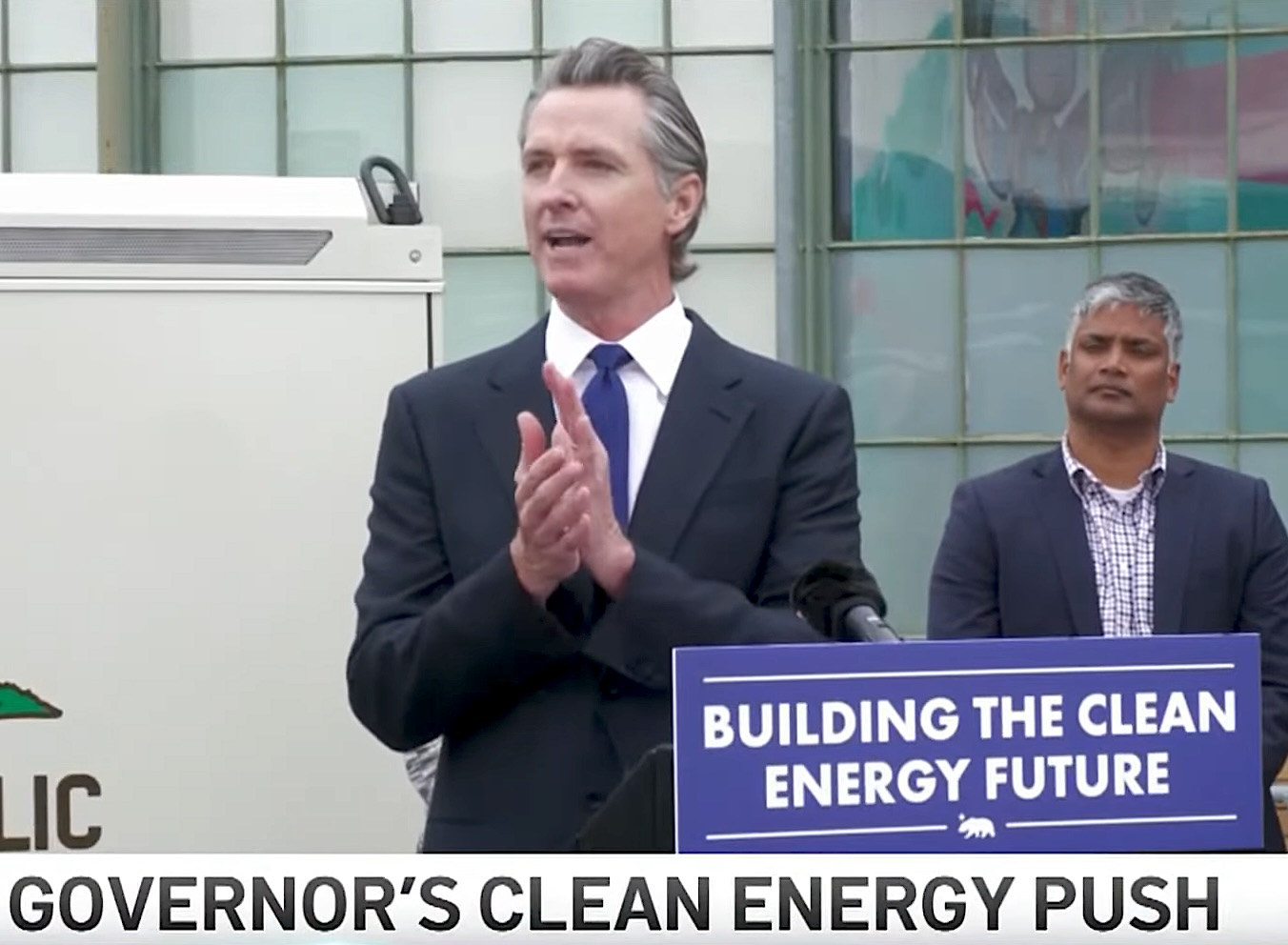
“California is meeting growing electricity demand by rapidly building out affordable clean energy infrastructure, increasing grid resilience and transmission capacity, and electrifying new and existing buildings with energy-efficient appliances that help lower energy bills,” a Commission spokesperson told RCI. “Federal grant funding is critical for California and other states to meet growing energy demand quickly and to do it in the smartest way possible – with clean renewable electricity.”
There was one FY2024 grant to the CEC specifically labeled as “formula”; however, an $11.7 million grant was fully disbursed by Treasury.
New Priorities
In the grand scheme of federal spending, the amounts may not seem huge. They are dwarfed, for instance, compared with grants that Washington has made for interstate highways.
“Biden wanted to jumpstart the green energy economy so it’s not surprising to me a couple of billion dollars were spent,” said John Joseph Wallis, an economics professor at the University of Maryland who specializes in public finance. “They just decided to make that a priority, and there are hundreds of examples of that kind of thing over the last century.”

But as the renewable energy grants began to flow, inspectors general at the Energy Department and the EPA warned the unprecedented amounts would make oversight next to impossible.
“The EPA’s inspector general Sean O’Donnell warned Congress that money would be lost to fraud and waste if the EPA went ahead with its plan to spend billions in Inflation Reduction Act funds in a short timeframe, but the money was funneled out anyway,” Portnoy said.
Energy Secretary Chris Wright has made several moves to reorient the Department toward Trump’s policy goal of increasing affordable and abundant energy, a shift the administration in a first-day executive order labeled “unleashing American energy,” and Wright’s Department calls the “Energy Dominance Financing Program.”
Over the past year and a half, the administration has slashed away at what it considers Biden’s fanciful push toward a net-zero future.
Within two months, it had put together a so-called “kill list” of recent renewable energy initiatives, and last October, the administration canceled $7.6 billion in Biden-era energy grants, with White House budget director Russell Vought saying the money had been designed to “fuel the Left’s climate agenda.”
Read rest at RealClearInvestigations



Since I live in Colorado I went to the website listed for the Colorado Energy Office. They sure have been busy cranking out all kinds of reports and studies. I have been going thru a powerpoint presentation on how Colorado will go to NetZero so it is clearly full of a bunch on total nonsense that cannot possibly happen and still have a functioning power grid. But facts don’t bother leftist dreams.