

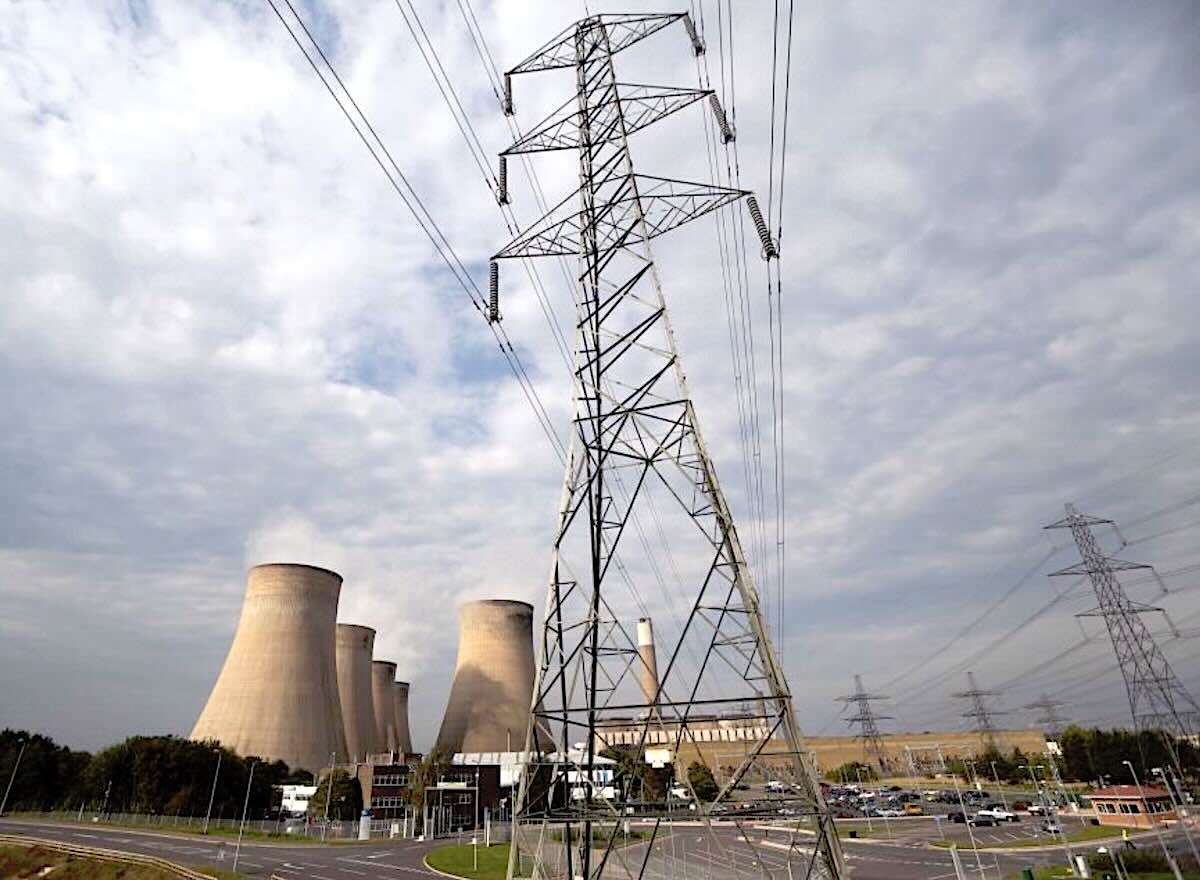
President Donald Trump will say it: beautiful, clean coal. Alaska will host the first new coal-fired power plant built in the U.S. since 2013. Xcel Energy, the first utility to pledge net-zero emissions, is pleading with Colorado regulators to let it keep its coal-fired plants open through 2030. [some emphasis, links added]
Yet coal remains a four-letter word in polite energy circles.
States are trading reliable, dispatchable electricity for intermittent wind and solar, driving up costs and reducing reliability in exchange for emission reductions that have little impact on global temperatures.
Not all megawatts are equal. We need an honest conversation about coal. Without firm, always-on generation, we cannot meet the demands of our 21st-century economy.
Artificial intelligence, data centers, advanced manufacturing, and the electrification of everything are driving a surge in electricity demand that America’s grid cannot meet.
NERC’s 2025 Electricity Supply and Demand data projects U.S. peak summer demand across all assessment areas reaching nearly 967,000 megawatts by 2030, an 18% increase from today.
The consequences are real. Data centers form the physical backbone of AI, cloud computing, electronic health records, financial markets, and defense logistics.
Hyperscalers making decade-long infrastructure commitments cannot afford unreliable or high-priced power. If they cannot get it here, they will look elsewhere, including countries unburdened by philosophical objections to coal, gas, or nuclear.
Those countries may require that our data be stored there. Every gigawatt of data center load we fail to serve will move somewhere with fewer constraints and less accountability.
Operators are hoping to meet the 24/7 data center load with natural gas. After PJM reformed its interconnection queue, gas projects surged 1,810% over the prior year.
But gas faces two hard supply walls. Major turbine manufacturers are backlogged to 2029 or 2030, and prices are rising. New pipelines face years of federal permitting and litigation. Data centers needing power in 2027 and 2028 cannot wait that long.
Atlanta-based Southern Company is caught in the bind that AI-driven demand is forcing across the energy sector.
The utility is tracking more than 50 GW of potential new customer demand and has approved several gigawatts of new natural gas generation to begin meeting it. However, supply is constrained as new pipelines don’t come online until 2028 and 2029.
To preserve capacity in the meantime, it has reversed planned coal retirements in Georgia and Mississippi.
Duke Energy faces a similar situation in North Carolina, where a legally mandated 2050 carbon-neutral goal remains on the books, but the state legislature stripped the 2030 interim target, freeing Duke to delay some coal retirements and lean on new natural gas.
A critical new pipeline into the state is under construction but faces active litigation that could complicate its completion.
This leads to an obvious but challenging conversation: we need coal. Always On Energy Research’s analysis of Indiana’s levelized costs shows that existing, depreciated coal plants generate power at roughly $55 per megawatt-hour. With firming costs, wind reaches $129 per MWh and solar $159 per MWh, two to three times more expensive than existing coal.
Indiana’s electricity prices rose 93% between 2007 and 2025, nearly twice the national average, as the state’s once-formidable cost advantage for manufacturers eroded with the help of state-incentivized investment in costly wind and solar.
Indiana isn’t unique. Across the country, regulated utilities earn returns on capital investment, not fuel. A paid-off coal plant earns shareholders nothing; a new wind farm earns a regulated return.
The incentive to retire low-cost, reliable generation in favor of expensive, intermittent new generation is structural.
After two decades of structural incentives that have driven up costs and driven down reliability, shareholders have done well, but ratepayers are worried about costs. And utilities are worried about reliable capacity.
Xcel Energy’s March 2026 filing with the Colorado Public Utilities Commission was blunt: the state faces capacity shortfalls in 2026 and 2027, reserve margins are “challenged” even in 2028, and there are “no viable alternatives” to keeping all four remaining coal plants online through 2030.
Tri-State Generation and Transmission’s Craig Unit 1, scheduled for permanent closure at the end of 2025, was urgently called back into service in April 2026 after the Southwest Power Pool issued a resource advisory amid wind shortfalls.
Ratepayers must pay for both resources.
The policy path is clear but politically challenging. Stop mandating coal retirements on arbitrary timelines. Prematurely retiring coal plants threatens reliability and makes it impossible to meet new demand. Where possible, modernize and reopen shuttered plants.
Consider new coal capacity in the Southeast, where infrastructure and demand growth support it, reform permitting for gas and nuclear, and redirect wind and solar investment toward dispatchable resources.
In a capacity-constrained environment, prioritizing intermittent generation over firm power compounds the very problem it claims to solve.
Our 21st-century AI buildout cannot pause for permitting reform, and national security infrastructure cannot wait to litigate pipelines. The economic opportunity of leading the digital economy belongs to those willing to power it. Right now, that means keeping coal in the conversation.
Read more at RealClearEnergy








Exactly the same situation is happening in Australia. Only yesterday, one of our shuttered coal power stations was literally blown up. Would you believe that?
A few years ago the Premier for Ontario Canada had a coal plant blown up after it was shut down so that there was no way to restart the plant. Politicians who do this are crazy and stupid.