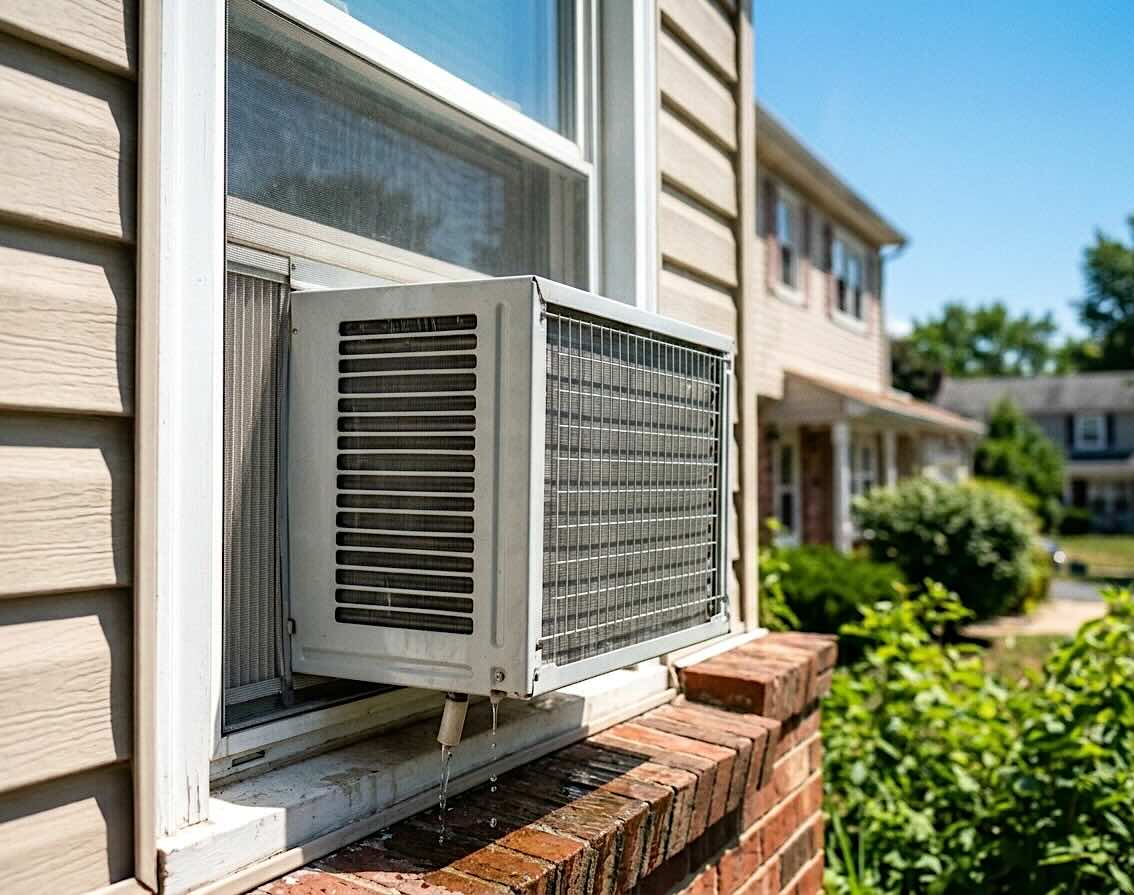
Popular Mechanics published an article titled “Air Conditioning Saves Lives. Scientists Think It Also Might Doom Us All.” The first part of the title is absolutely true: air conditioning does save lives; the second half is absolutely false, a bit of eye-catching hyperbole, which even Popular Mechanics admits in a subhead, stating, “Well, maybe not ‘doom.’ But a new study argues that air conditioning should be a last-ditch solution.” [some emphasis, links added]
Air conditioning saves lives, full stop! It should be a first resort for preventing deaths, not a last-ditch solution. In addition, research shows that air conditioning has a minimal, if any, influence on climate change.
Popular Mechanics cites a study claiming that although air conditioning will always be used, it should be limited because of its downstream climate impacts.
Popular Mechanics writes:
“In the very worst situations, air conditioners can save lives. But their electricity-hungry nature only exacerbates climate change.
“A new study suggests that a combination of technologies can decrease A/C demand by up to 80 percent and drop ambient temperatures by more than 4ºC.
“While the air conditioners will always have a place in helping humans stay cool, the study argues that they should be seen as a last-ditch cooling method rather than the go-to option.
“As the planet continues to inch past the 1.5ºC increase in global temperature—a threshold originally reported by the Intergovernmental Panel on Climate Change [IPCC] as critical to avoiding catastrophic climate impacts—this same dedication to convenience dominates the conversation about how we’re going to keep ourselves cool. According to the International Energy Agency (IEA), air conditioners and electric fans already account for 10 percent of global electricity consumption, and that number is only expected to rise as summers reach sweltering temperatures around the world.”
Parsing this article’s claims, it gets a few right. Others are built on false premises or assumptions.
Air conditioning does save lives. That claim is 100 percent correct.
We need a new Marshall Plan for shipping air conditioning units to Europe pic.twitter.com/vIbJTnWPEj
— Alec Stapp (@AlecStapp) July 11, 2025
In addition, the IPCC does argue that holding temperatures below 1.5℃ is critical to avoiding catastrophic climate impacts, and the IEA does estimate that cooling technologies account for 10 percent of electricity use; a new study also suggests that the need for most air conditioning could be avoided with a slate of new technologies and building designs.
Popular Mechanics should have checked some of the assertions or assumptions built into or suggested by the IPCC and the IEA against facts.
In addition, Popular Mechanics should have undertaken an analysis [or at least consulted outside experts to evaluate the real-world costs, benefits, and feasibility of rapidly deploying] the technologies and designs endorsed by the study they cite before publishing.
First, vis-à-vis the IPCC’s decades-long claims of a pending climate disaster if emissions are not reduced, they are completely false.
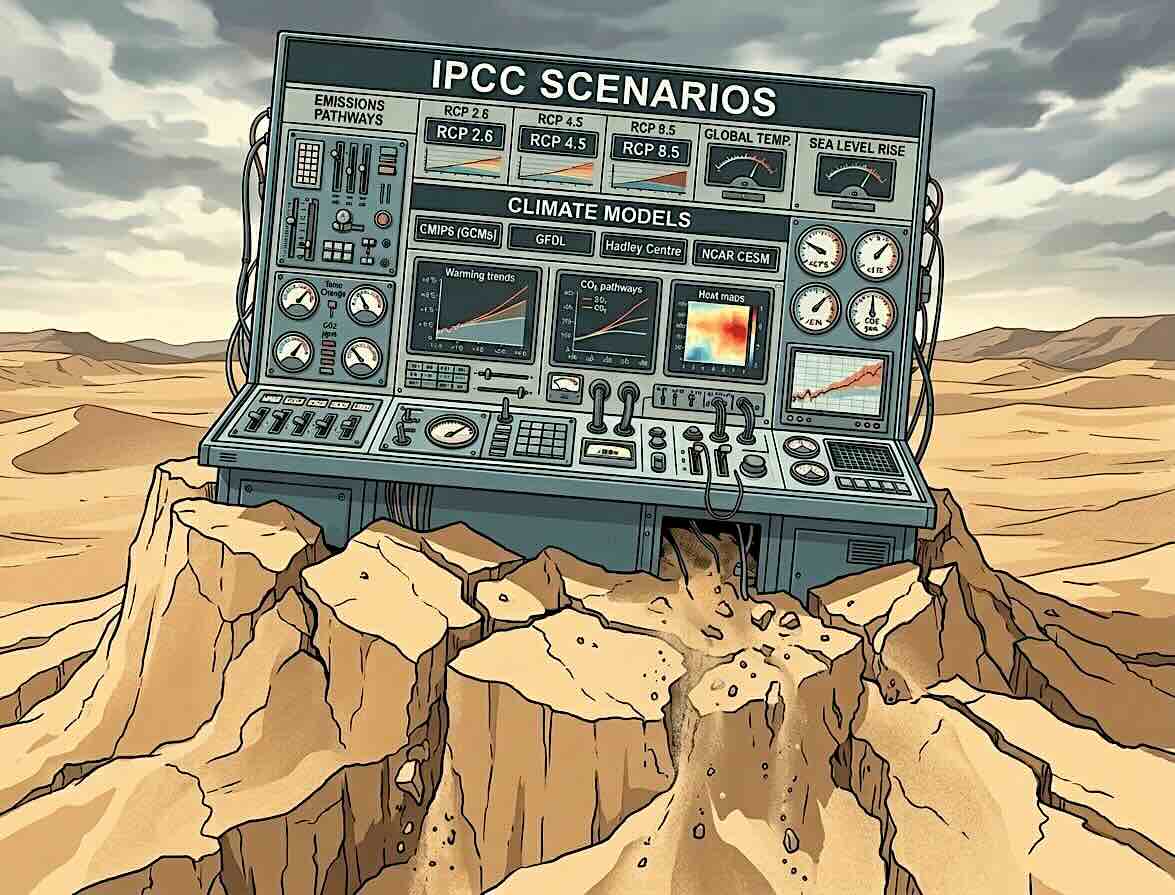
The IPCC’s claims have been grounded in flawed computer model scenarios and forecasts that the organization recently admitted were implausible and no longer to be used.
Real-world data demonstrate that none of the purported disastrous extreme weather trends supposedly flowing from rising emissions and slight temperature increases have occurred or are likely to occur under any plausible future emissions regime. In addition, the 1.5℃ threshold that the IPCC is so worried about was chosen for political, not scientific reasons.
There is no evidence whatsoever to suggest that exceeding preindustrial temperatures by 1.5℃ will result in a cascading climate catastrophe – there is no scientifically known climate change tipping point.
Concerning the IEA’s claim about air conditioners’ electricity use, which may be true, usage doesn’t necessarily correlate to higher emissions in power generation.
And even in areas where air conditioning emissions do result because of the local power supply’s configuration, those emissions have at best a marginal impact on global average temperatures.
America left footprints on the moon in 1969. They still don’t have air conditioning in Europe today. pic.twitter.com/SL9yf4yfvJ
— Scott Jennings (@ScottJenningsKY) July 20, 2026
The implication that air conditioning is a significant driver of global warming is simply false. Air-conditioning use accounts for approximately three percent of global greenhouse gas emissions.
Even under the direst scenarios, emissions linked to air conditioning will contribute at most 0.07℃ to global temperatures by 2050.
In addition, recent research cited in previous climate realism posts here and here indicates that “if all low‑income regions gained the same access to air-conditioning as rich regions, related global emissions would … add 0.003–0.05 °C of warming by 2050.”
Negligible warming to save tens of thousands of lives from heat-related mortality annually is a great trade-off. Indeed, it would be morally reprehensible and economically foolish to prevent the wider expansion of air conditioning when lives are in the balance, and no perceptible warming or follow-on extreme weather will result.
About that new study positing technological and design changes to limit the need for air conditioning: Many of the suggestions discussed by the researchers to reduce ambient temperature, like building with cross-ventilation and insulation, were staples of construction in the past and remain so today, yet the relief people felt from the heat wasn’t enough once air conditioning became available and affordable.
The newest green building designs and materials they propose may have some virtues, but they come at a high cost.
For example, California’s rooftop solar mandate for new homes is estimated to add as much as $10,000 to the cost of a new home, taking between one and two decades to pay off, by which time, if not before, the solar panels will need to be replaced.
And the U.S. Department of Energy has estimated that adopting the 2024 International Energy Conservation Code standards for building standards and appliances could add $14,000 to the price of a residential home, once again taking two decades or more to pay back the added cost.
And that’s for new homes; these estimates don’t even touch on the cost of retrofitting billions of existing homes, businesses, and structures with the suggested technologies and adaptations, like green roofing choices, or heat pumps in place of air conditioning units, or electric appliances where gas is currently used.
Every year, Europe lets 10,000s of its citizens die from heat because of its ideological rejection of the century-old technology of air conditioning
With US-level air conditioning, Europe could prevent about 26,000 deaths in a year like 2022https://t.co/FVaXzixlSH pic.twitter.com/ChWwxXl2u7
— Bjorn Lomborg (@BjornLomborg) June 25, 2026
This study reminds me of multiple studies from more than a decade ago produced by academics with no real-world experience claiming that the world could become carbon neutral in a short time through a radical replacement of fossil fuels with different wedge technologies.
These studies made pie-in-the-sky claims about the effectiveness of each wedge and how easily they could be adopted to replace fossil fuels – more than 85 percent of current primary power use.
The scholars acted as if the “wedge” technologies would fall like mana from heaven, seamlessly replacing fossil fuels at little or no cost, or at costs that were worth it to prevent the nowhere-in-evidence catastrophic climate change.
But the costs of such a transition would be massive, tens of trillions of dollars, and the evidence so far suggests that the technologies and designs promoted as replacement wedges don’t work as well as promised or come with their own unaccounted-for environmental impacts and negative externalities.
Academics who earn enough to barely be buffeted by the economic storm that their experiments in master planning would impose on ordinary people can hardly be considered a credible source on the acceptable impacts of their grandiose plans, or what their plans’ long-term impacts will be on the climate.
In the end, Popular Mechanics should have stuck to what multiple studies have shown: air conditioning is among the most effective, relatively inexpensive, life-saving measures on the planet.
In every country where it is widely available, thousands of premature deaths from heat-related health problems are prevented each year, and as air conditioner use rises in a country, its heat deaths fall, climate change be damned.
Read more at Climate Realism