Much of the world was optimistic after a peace deal ended months of conflict in the Middle East that had disrupted the global oil trade. But peace in that region has long been a tenuous matter, and how long it lasts is anybody’s guess. Nonetheless, there are other reasons for optimism that are not subject to the vagaries of geopolitics. [some emphasis, links added]
For the past two decades, the media have reported a “climate crisis” with a conviction that presumed dissent to be insane if not immoral.
Yet the very atmospheric changes that reporters hyperventilated about impending doom are, in fact, delivering measurable benefits.
History and Evidence Ignored
For most of human existence, weather ruled daily life. A cold winter or a run of bad harvests could wipe out an entire village. Infectious diseases swept through communities unchecked.
There were no vaccines, no antibiotics, and very limited capacity to move food and resources over long distances. Access to energy was limited to muscle, wood, and a bit of wind or water power. Life expectancy in many regions hovered around 30 years.
Compare that to the 21st century. Global life expectancy has more than doubled over the last two centuries, reaching more than 70 years. This was unimaginable in the 19th century, when Earth was a bit cooler, but daily life was far harsher.
The per capita food supply has climbed substantially, while the population has soared. Protein availability has increased by roughly one-third. Rates of undernourishment have fallen even as billions of people were added to the global population.
Earth is not a fragile planet on the edge of collapse. Instead, its dominant species has learned to produce more food on less land, in part because crops grow faster and yield more fruits, grains, and vegetables. This bounty is a product of modern agronomy, beneficial warmth, and an air enriched by industrial carbon dioxide (CO2) emissions.
Yes, increased atmospheric CO2 acts as a free fertilizer for plants. This claim acknowledges basic science: Plants require CO2, water, and sunlight. Satellite observations over recent decades show a measurable “global greening,” with vegetation densities rising in many regions, including India and China, the two most populous countries.
Natural disasters are another subject that draws news coverage bordering on hysteria, while quiet progress in protecting life through technology and engineering goes unnoticed. Decadal deaths from natural disasters have declined rapidly.
Similarly, in the past, unsafe water killed vast numbers through diarrheal disease and other infections. The share of deaths from bad water has fallen dramatically, as have the relevant death rates. Also declining in spectacular fashion have been the rates of death from infectious disease.
The media obsess endlessly over summer heatwaves while deliberately overlooking the far deadlier threat of cold. A comprehensive study on temperature deaths reveals that cold-related mortality dwarfs heat-related deaths across almost every region.
As a lover of wildlife, I’m often surprised that the recovery of myriad animals is seldom recognized by the public.

India’s tiger population has more than doubled, and now exceeds 3,600, representing about three-quarters of the global total.
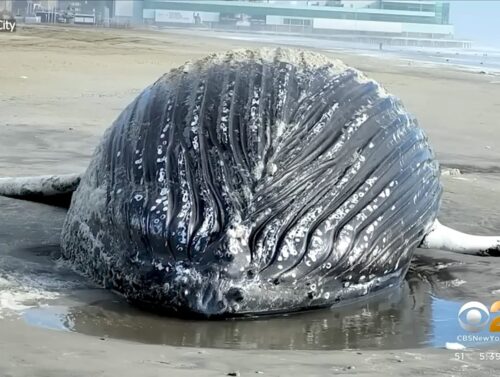
Humpback whale populations, once reduced by more than 95%, have rebounded strongly, with several distinct population segments now matching pre-exploitation abundance.
Polar bear numbers worldwide stand between 23,000 and 26,000, with multiple subpopulations stable or increasing after heavy hunting pressure was eased.
Look for the Bigger Picture
A picture of a world racing toward collapse is inconsistent with these trends: longer lives, more food, notable wildlife recoveries, and fewer deaths from infectious disease, tainted water, and natural disasters.
Climate change exists concurrently with a story of human adaptation powered by abundant energy sources, technology, a modestly warmer climate, and CO2-enriched plant growth.
A fair-minded observer would ask why this story is largely absent from mainstream news coverage.
Though not utopia, the world of 2026 is characterized by conditions for human thriving that are stronger than ever—cleaner, healthier, better fed, and safer than any time before.
Top photo by Hans-Jurgen Mager on Unsplash.
Read more at CO2 Coalition