

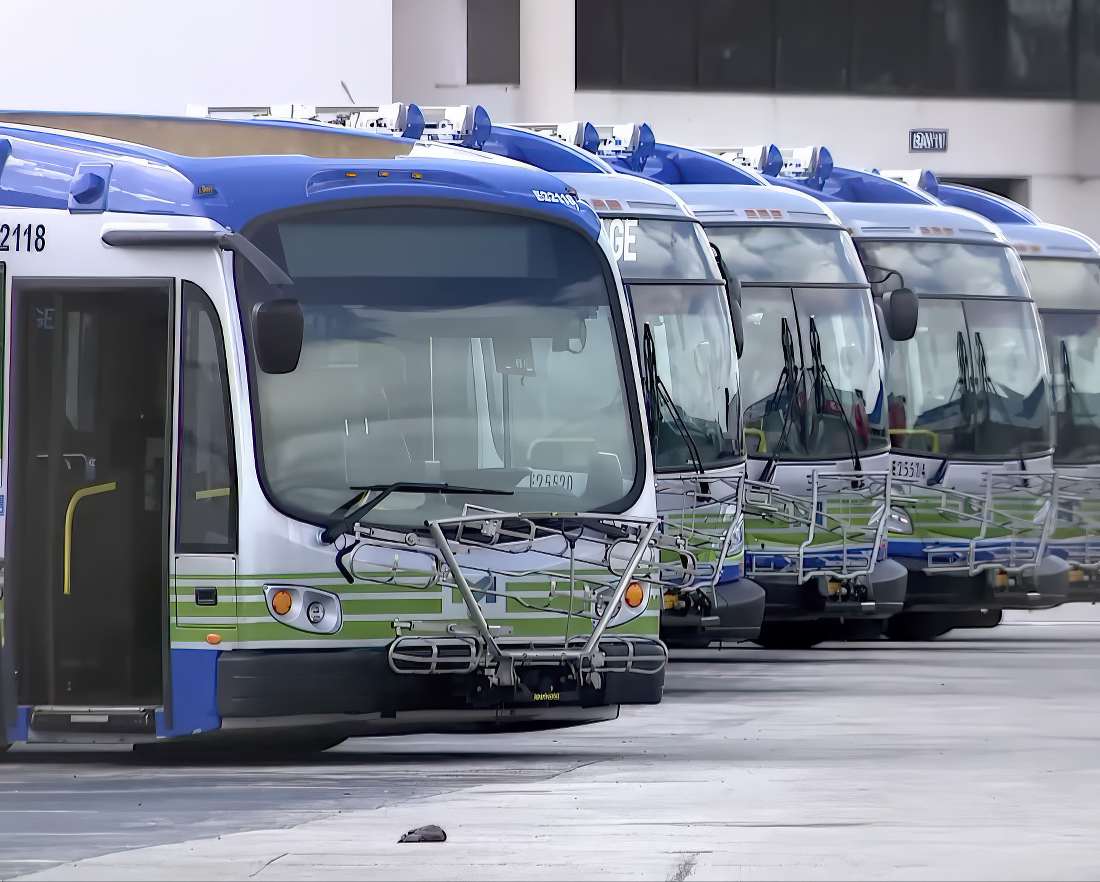
Ninety-six million dollars’ worth of electric buses sit idle across South Florida, some parked in a landfill, others lined up at the Homestead Air Reserve Base. [some emphasis, links added]
In Miami-Dade County, commissioners are demanding answers.
In Broward County, officials are working with the federal government on a plan to get rid of them.
Across South Florida, dozens of electric buses purchased with tens of millions of taxpayer dollars remain parked and out of service, more than a year after they were pulled from the road.
Right now, no one knows exactly what comes next.
In Miami-Dade, frustration is growing inside County Hall.
WPLG Local 10 investigates:
h/t Climate Realism
Read more at WPLG Local 10









The root cause of the failure with the busses is committing to a large scale deployment without checking on reliability and other factors involved in running the busses. In well run industries, when a new product is developed, they we have a prototype run. A small number of the new model are manufactures and sold to customers. Only after the prototypes perform well does full production start. For the busses they assumed there would be minimum problems. If they had purchased a small number of them and done an evaluation, tens of millions of dollars would have been saved.
Assuming everything is going to go as planned and performing no checks is common problem in the climate change movement. The auto industry assumed that electric vehicles would be a large seller and the result was the loss of tens of billions dollars. These same companies have done effective market research in the past, but skipped that step with electric vehicles.
No mention on how much it cost the taxpayers to charge and maintain them on top of the purchase cost.
And as always no mention of the the strain and pressure put on the grid when charging.
How can electric buses have so many mechanical failures? I thought EVs were supposed to be simple to operate and maintain with so many fewer moving parts compared to diesel powered buses!
The story doesn’t detail just what those “mechanical failures” entailed, but everything except the motive source (batteries, motors and related electronics) has been pretty much standardized through the bus industry over the years. If they can’t get the parts, then a blown circuit board or even just a broken charging connector could take one of these off the road. Normal practice, though, would be to purchase a stock of maintenance parts when the new vehicles entered service, and they may have skipped that step, especially if they were dazzled by the lure of technology.
I’m sure they were convinced that these buses are practically maintenence free. I hear that regularly from those who bought EVs not realizing all the computers and electronics involved in making them work.