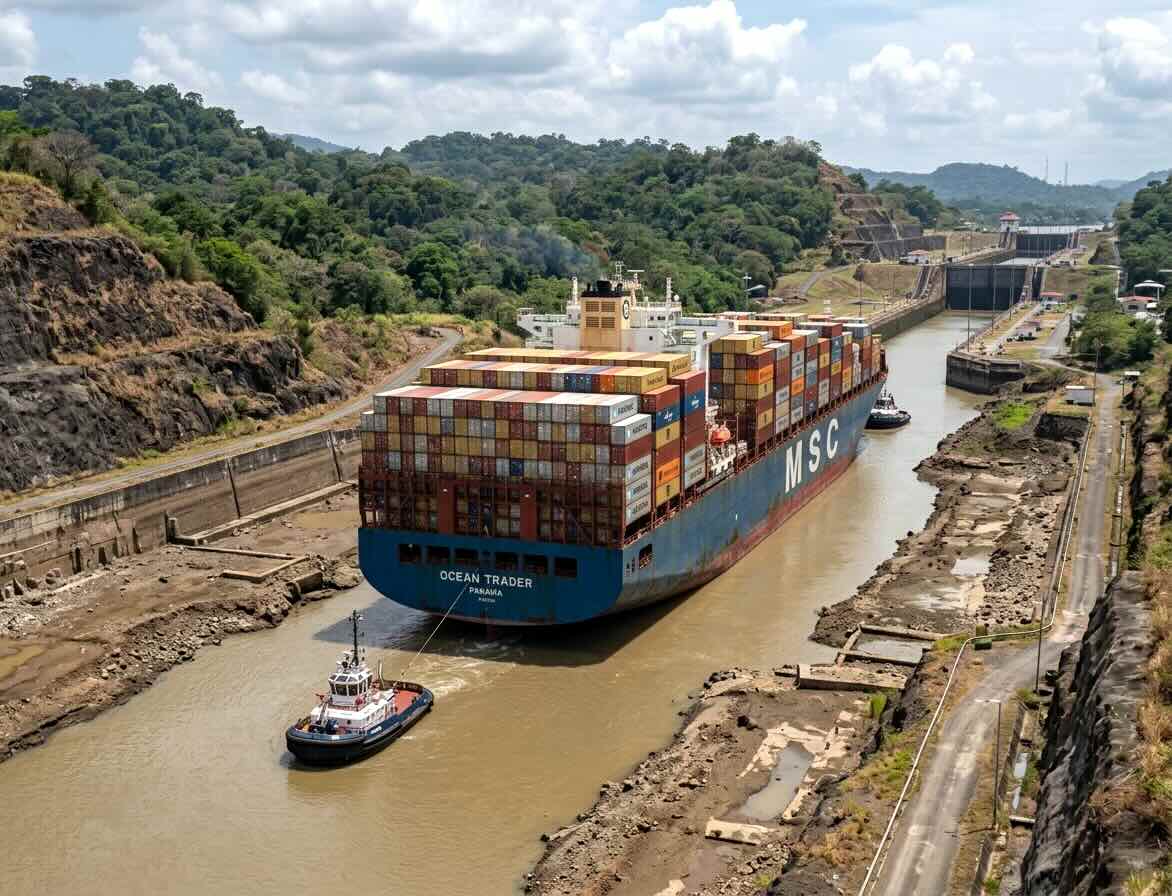
A recent article in the Financial Times (FT) claims that “War and climate change drive surge in global shipping costs.” The part about climate change is unsubstantiated because no long-term data support it. [some emphasis, links added]
While it is undeniable that the war [shut down the Strait of Hormuz and hampered shipping, with other bottlenecks also driving up prices, the alleged impact of climate change is speculative at best.
The climate connection is made because of low water levels in certain shipping lanes, but this is not due to climate change.
The FT states very firmly that the recent higher cost of shipping is “due to war and climate change,” justifying the climate claim by saying that:
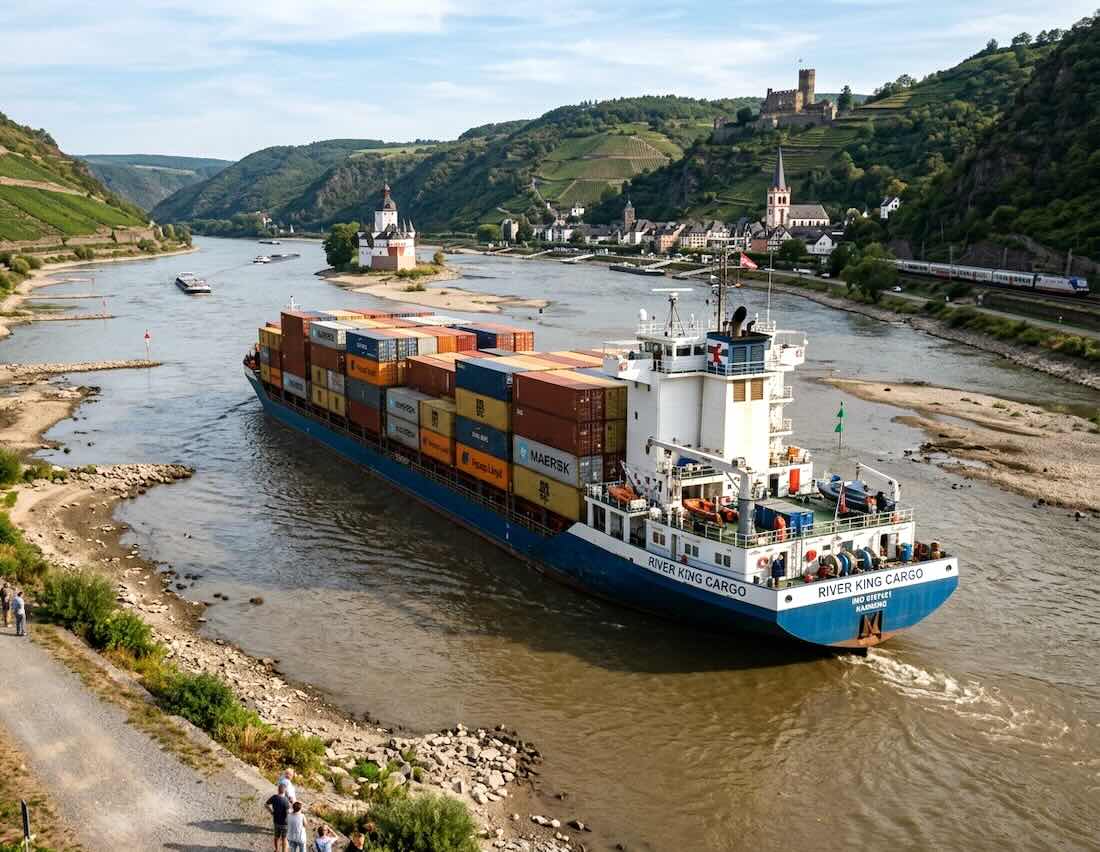
“[L]ow water levels caused by long periods of drought in Europe and Latin America have pushed up rates along key shipping routes including the Panama Canal, the Rhine, the Red Sea and Black Sea to record highs, according to pricing agency Argus.”
Drought in Europe and parts of Latin America has indeed lowered water levels in important channels—but not because of climate change.
First of all, climate is measured over 30 years, so a single summer or even a couple of summers of drought in different parts of the world is not proof of climate change. That’s just weather, and is also impacted by some longer-term natural cycles like the El Niño Southern Oscillation.
The FT admits as much, conceding that El Niño has exacerbated the drought impacting the Panama Canal. Again, this isn’t climate change.
The lake that primarily feeds the Panama Canal—Lake Gatun—supplies communities in the Panama Canal Watershed with water for drinking and agricultural irrigation.
The lake is low this year. The number of residents taking water from the lake has grown. It is widely recognized by everyone, except apparently the FT, that urbanization is putting increasing pressure on the water supply.
Although authorities prioritize the canal’s operations, in a dry year during El Niño’s shift of rainfall patterns in Panama, water demand for agriculture and residential use is higher.
The government is trying to thread the needle and keep all water users satisfied; in the process, lake levels are falling.
In the spring of this year, lakes Gatun and Alajuela both had record highs for March, but demand and El Niño’s effects have since reduced levels.
Water levels often drop in the summer, and deforestation has made it more difficult for lakes to recharge, as more water on the surface evaporates rather than being absorbed into the soil under the canopy.
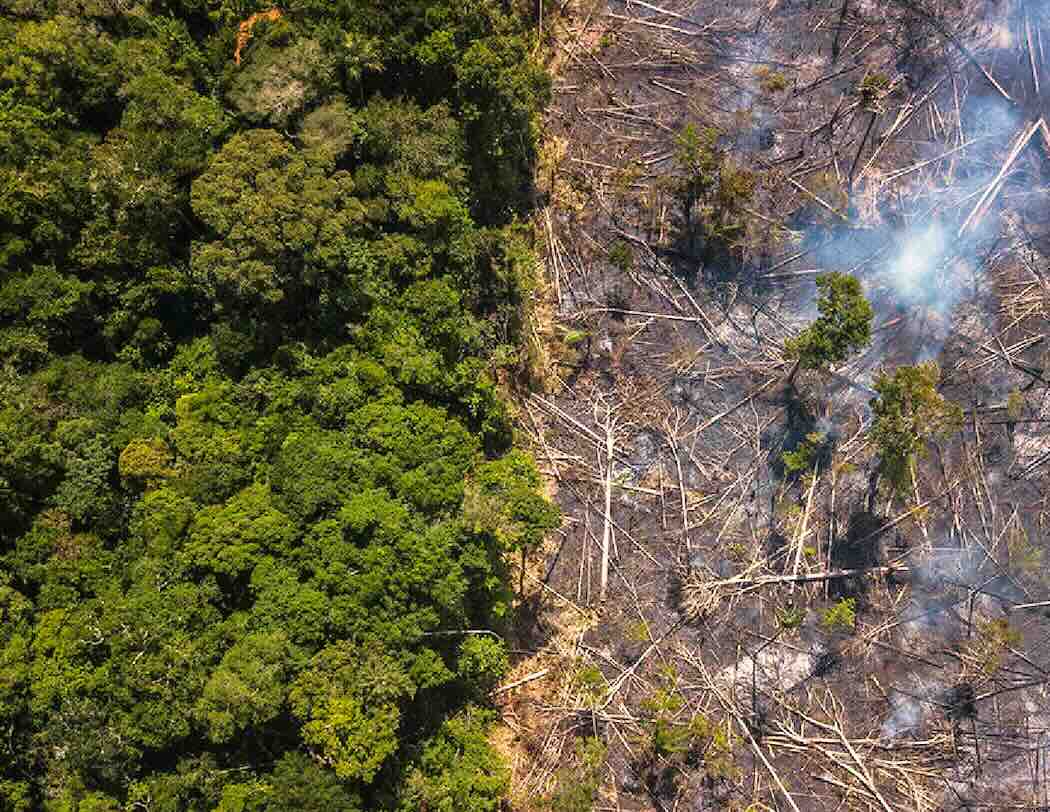
Deforestation and population growth both put pressure on water supplies and are human-caused; they are not caused by climate change.
The other drought FT references is the one in Europe, which has impacted water levels in the Rhine.
Drought is not unprecedented in the Rhine, nor any major European river. River levels are indeed very low. On average, recent years have seen less rainfall in Germany than in the 80s and 90s, but comparable to the low precipitation of the 1950s.
Data from the Mainz station in Germany, right on the Rhine, suggest the lowest recorded precipitation was in 1892. Why, then, are Rhine levels hitting record lows now?
As with the Panama Canal Watershed, population growth and urbanization along the Rhine and the lakes that feed it have increased water demand, so that when drought occurs, water levels can fall very quickly.
Much more severe droughts occurred in Europe long before industrialization.
The Megadrought of 1531-1540 was so severe that some rivers dried up entirely. Global average temperature was lower then, as were atmospheric carbon dioxide levels, yet a sustained severe drought still occurred.
Unfortunately, these weather conditions have coincided with a war in the Middle East, resulting in multiple bottlenecks or closures of major shipping lanes, which are unrelated to climate change.
The Financial Times stepped outside its area of expertise in making the climate change assertion and, by doing so, has badly misinformed its readers.
Read more at Climate Realism