

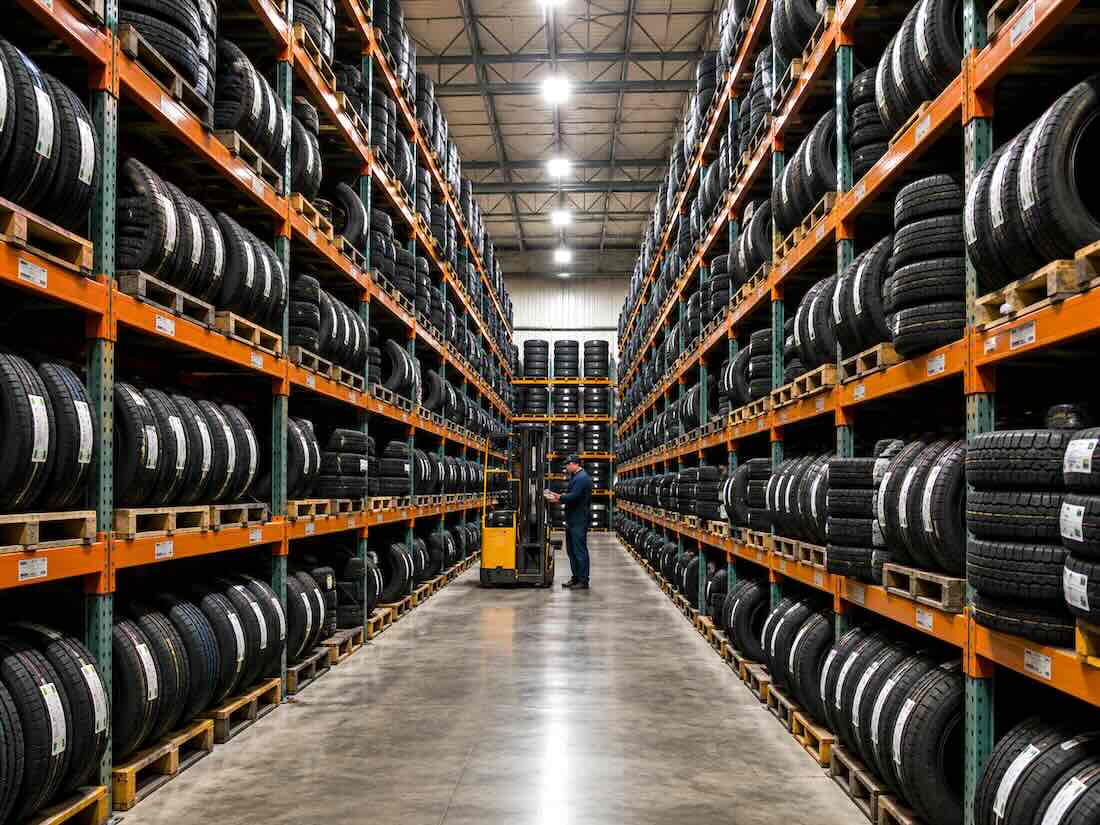
 The California Energy Commission has unanimously approved new rules that require vehicle tires to meet a standard for “rolling resistance,” which is a measure of how much energy it takes to roll the tire. [some emphasis, links added]
The lower resistance increases gas mileage or reduces energy use, which proponents of the rule say will help transportation affordability, the New York Post reported.
However, the rule could ban 70% of the tires now available to California drivers. According to the Tire Industry Association, average tire prices could increase from $81 to $157, the [cost difference adding over $300 for four new vehicle tires].
Former Los Angeles mayoral candidate Spencer Pratt called the tire rules a “scam,” arguing they’re part of California regulators’ push to get people to stop driving gas-powered cars by driving up transportation costs, including costly regulations that increase gas prices.
“They deliberately make your gas prices more expensive, to compel you to stop driving. Then they use the artificially high cost of fuel to impose further regulations and higher tire costs on you. The whole communist schtick is a positive feedback loop,” Pratt said in a post on X.
Commissioner Nancy Skinner told local news outlet KCRA:
“Look at the gas prices everyone’s experiencing. If we can bring each Californian’s gas cost down just a little bit, then why wouldn’t we?”
Read more at Just The News








It’s doubtful that the commissioners gave any thought to stopping distance in their zeal to reduce rolling resistance. Road safety? Not their area of responsibility.
If California regulators want to reduce driving costs, mandating more expensive tires is a ridiculous approach. As for pushing EVs, are these people ignorant of their greater weight requiring heavier tires? The question arises: Are they mentally unsound or just dogmatically stupid?
They note that budget all-season tires average around $81.30 per tire, whereas specialty low rolling resistance models average roughly $157.37 per tire.
this compares the lowest price available regular tire with a one of the higher priced low rolling resistance tires, which is an unfair comparison
it excludes the cost of installation
& fuel savings over the lifetime of the tire
Those figures weren’t calculated by this article. They come from the New York Post’s reporting on the Tire Industry Association’s analysis. If you believe the comparison is unfair, take it up with the TIA’s methodology. Installation costs don’t change the price differential unless one type of tire costs more to install than the other, while projected fuel savings are a separate lifetime-cost consideration.
a fair comparison would have been a cheap regular tire including installation versus a cheap
fuel efficient tire including installation, including the lifetime gasoline savings by using the efficient tire
Switching to fuel-efficient (low rolling resistance) tires typically increases your fuel mileage by 1% to 4% on average
Goodyear Efficient Grip Performance 215/60R16 95H BSW Tire
$68 x3 + $100 installation =$372
Goodyear Reliant All-Season 215/60R16 95V All-Season Tire
$47 x4 + $100 installation = $288
The difference is only $84
If the fuel efficient tires improve fuel economy by only 1% and gasoline costs $3,50 a gallon.
it will take only 240 gallons of gasoline to save enough money to offset the extra cost of the 4 fuel efficient tires. at 24 miles per gallon, it will take only 5760 miles to offset the extra upfront cost of fuel efficient tires
My fair comparison shows that fuel efficient tires can be a good investment in even the short run of 5760 miles
i don’t like people being forced to buy efficiency, but i also don’t like unfair comparisons