The New York Times (NYT), in its article “Climate Change Raises Risk of Disasters Like Nepal Floods,” claims that climate change increased the risk of the catastrophic glacier collapse and flooding in Nepal by thawing permafrost and destabilizing the mountainside. [some emphasis, links added]
This is false. The best evidence suggests the disaster was primarily caused by a complex cascade of geological failures and vulnerabilities in human infrastructure, not proof of a “climate crisis.”
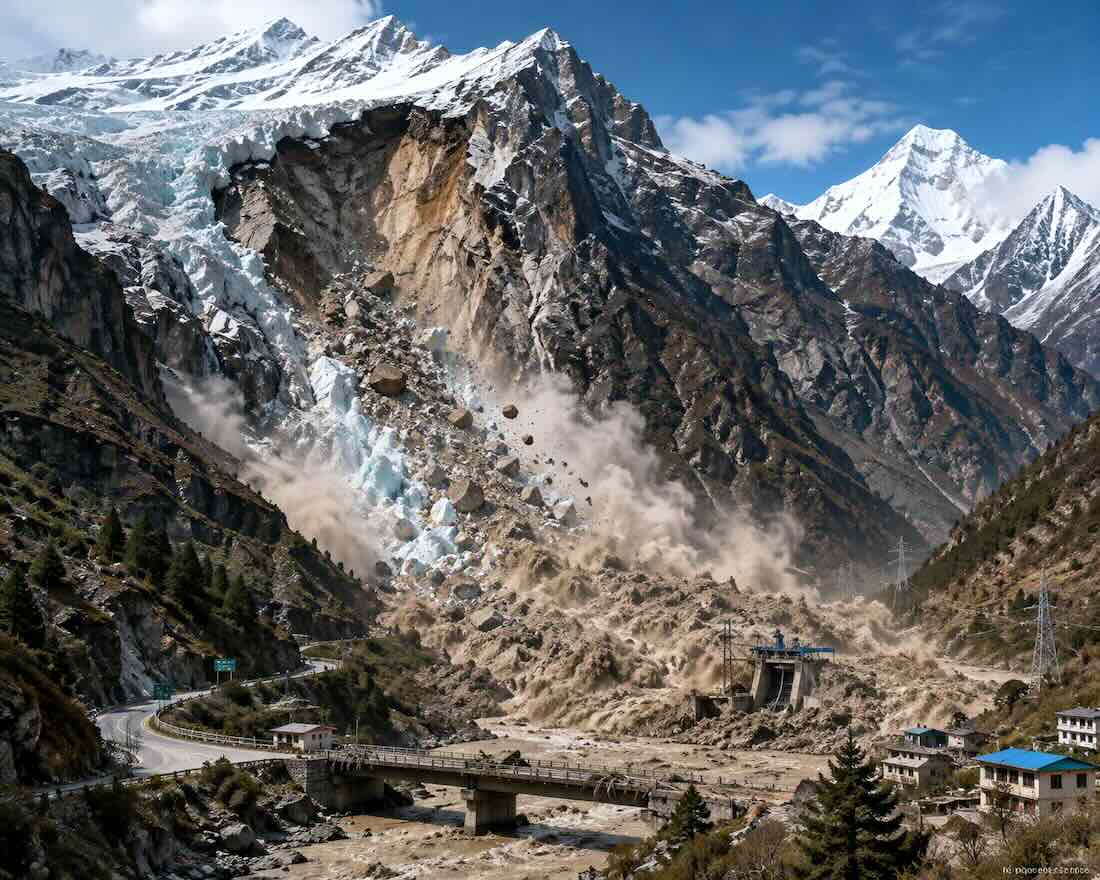
The scenes from Nepal are heartbreaking. Entire communities were devastated as millions of tons of rock, ice, mud, and water thundered down the Langtang Lirung valley.
Hundreds are dead or missing, roads and bridges have been swept away, and the landscape has been permanently altered.
When disasters of this magnitude occur, journalists should resist the temptation to assign blame immediately before the evidence is fully understood.
The NYT did exactly the opposite.
Even within its own reporting, the paper admits scientists are “still determining the exact cause” of the catastrophe and that research could take months.
Despite this acknowledgement, the NYT nevertheless frames the disaster as another consequence of climate change from the headline onward. That is not reporting. It is climate crisis narrative promotion.
“Climate change is heating up the Himalayas and supercharging the risk of disasters like the deadly flash flooding in Nepal and Tibet,” says the NYT, which quotes one researcher saying, “‘There’s a very straight link between climate change and these types of disasters.’”
Yet just a few paragraphs later, the article quotes Newcastle University geomorphologist Stuart Dunning, “I don’t think we can simply say this is a result of climate change.”
That caution should have been the headline. Instead, it was buried.
Dr. Roger Pielke Jr.’s analysis of the event, “What Actually Caused the Nepal Disaster,” reaches a much more measured conclusion.
The immediate trigger appears to have been an enormous bedrock collapse beneath the glacier, which destabilized the overlying ice and produced a massive rock-ice avalanche. The resulting debris flow raced downstream at extraordinary speed.
That is fundamentally a geological process, not an atmospheric or climate-related one. More importantly, human decisions amplified much of the destruction and were completely unrelated to climate.
Roads, bridges, hydropower facilities, and communities had been constructed directly within vulnerable river valleys and debris-flow pathways, areas where floods have hit in the past.
Infrastructure occupied locations long known to be exposed to landslides and flash floods in one of the most geologically active mountain ranges on Earth. Those choices dramatically increased the disaster’s consequences.
In other words, the event was catastrophically worse than it might have been had people and governments not placed expensive infrastructure and growing populations directly in the path of natural mountain hazards.
That is a very different conclusion than “climate change caused it.”
Ironically, the NYT itself provides historical context that weakens its central narrative. The article acknowledges that glacier failures have occurred dozens of times in the China-Nepal border region since 1900.
That matters far more than their clickbait headline.
Since these events occurred repeatedly for well over a century, long before human greenhouse gas emissions rose, this event cannot be automatically linked to modern greenhouse gas emissions and human-induced climate change.
Mountain glaciers fail for many reasons, including gravity, unstable rock formations, earthquakes, heavy snowfall, freeze-thaw cycles, and natural slope failure.
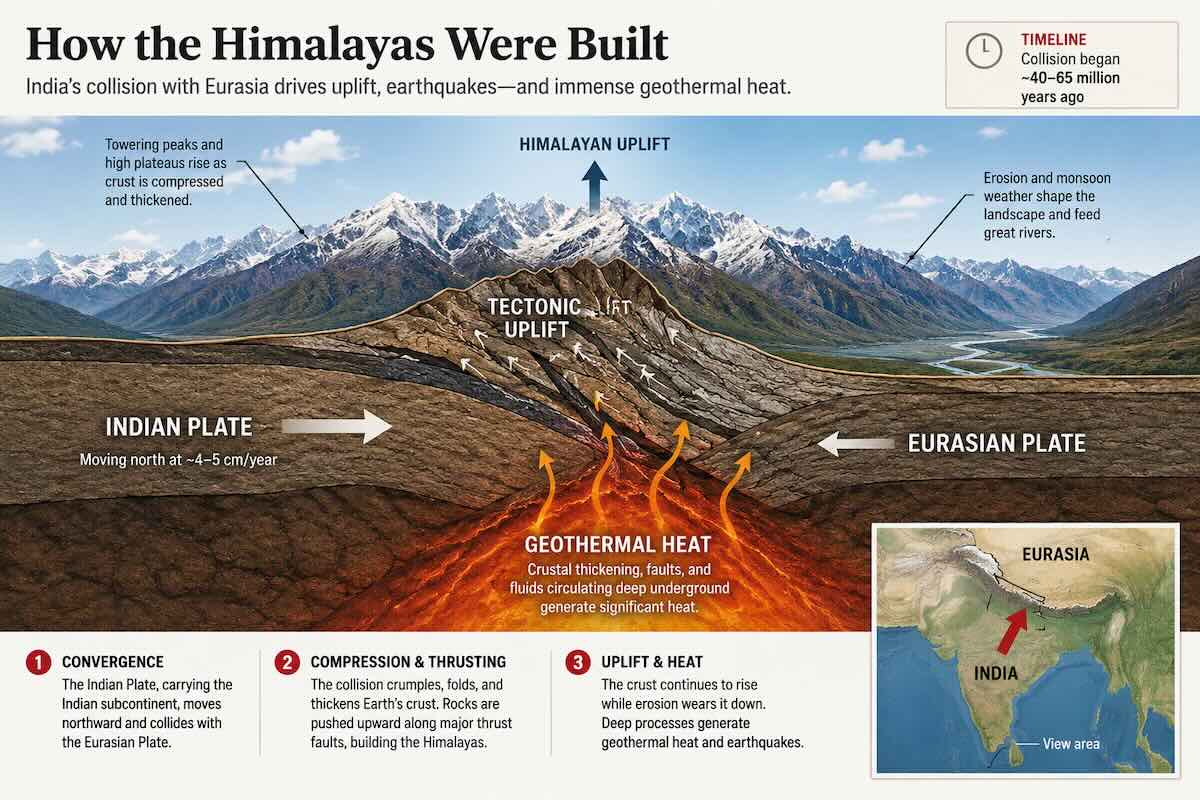
The Himalayas are among the youngest and most tectonically active mountain systems on Earth, formed by the Indian Plate slamming into the Eurasian landmass ~40-65 million years ago.
Landslides are not unusual there. Neither are rock, snow, and ice avalanches. The NYT also acknowledges that scientists initially suspected a glacial lake outburst flood before satellite observations showed no overflowing lake was involved.
That illustrates an important lesson: early assumptions after disasters are often wrong.
Unfortunately, that lesson was not applied to the climate narrative. Instead of waiting for investigators to complete their work, many media outlets, including NPR, the New York Times, and the Associated Press, immediately declared the disaster another example of climate change. Once again, the conclusion came before the evidence.
There is another glaring omission. The article briefly notes that Nepal’s warning systems were not designed to detect this type of rapidly developing debris flow. That is a practical issue policymakers can actually address and should.
Improved geological monitoring, better hazard mapping, stronger infrastructure design, and avoiding construction in known debris-flow channels will save lives, regardless of future climate conditions.
Those are the real solutions. Ending fossil fuel use will not mitigate or prevent future avalanches, but it would hamper recovery efforts and infrastructure improvements.
The tragedy in Nepal deserves careful scientific investigation, not instant political messaging. Good journalism follows the evidence wherever it leads. In this case, the evidence points first to geology and human exposure to natural hazards, not to climate change.
The New York Times should have let science finish its work before declaring the verdict. Sadly, the “publish first, ask questions later” method seems to be the norm these days for climate change-related news.
Top: A massive rock-and-ice collapse can trigger a devastating debris flow like the one that struck Nepal. AI-generated illustration.
Read more at Climate Realism