


Scientific discovery has always moved at the speed of the tools that make it possible. The telescope did not merely assist Copernicus and Galileo. It determined what they were capable of knowing. When lenses improved, so did the precision of the universe they could describe. [some emphasis, links added]
Genetics could not advance faster than the sequencing machines we built to read it. The history of science is, in no small part, a history of the instruments that science depended on and what society was willing to build to make them possible.
Today, the instrument is artificial intelligence, and the raw material it runs on is electricity. That is not a metaphor. The mathematical operations underlying modern AI, the training runs, and the inference at scale require power.
More of it than our current grid was designed to provide, and more than our current political culture was designed to welcome.
That collision is the late consequence of a long series of choices, channeled largely through environmentalism, which transformed rising energy demand from an economic signal into a moral accusation.
America spent a generation building a politics of restraint around electricity. The bill for that politics is now coming due, at precisely the moment we need the lights on most.
Environmentalism gradually shifted from reforming how we produced energy to questioning whether we should produce more at all. Consumption became suspect.
Rising electricity use, once understood as evidence of a growing economy, was recast as evidence of excess. The culture followed the rhetoric: To want more was to be wasteful. To build more was to be reckless. That instinct hardened into policy, policy hardened into bureaucracy, and bureaucracy hardened into reflex.
From 2008 to 2021, U.S. electricity demand grew at just 0.1% per year, flat enough that the underlying fragility of the grid was easy to ignore. Reliable plants retired. Transmission investment lagged. Permitting timelines stretched from months into years, sometimes into decades. The system grew tighter without anyone having to feel it.
In 2024, it surged nearly 3%. Generation hit a record 4.43 trillion kilowatt-hours in 2025. Projections now put demand 20% to 25% higher by 2030. The grid was not built for this. The permitting system was not designed to respond to it. And the political culture that shaped both remains hostile to the kind of expansion now required.
More than 2,200 gigawatts of proposed generation, solar, gas, storage, and nuclear, are sitting in interconnection queues waiting for approval. Not all of it will be built. But the scale of the bottleneck is unmistakable.
The entire existing U.S. generation capacity is just over 1,200 gigawatts. We have nearly twice that sitting in line. The power exists on paper. The politics won’t let enough of it get built.
That matters for reasons that go well beyond electricity bills. A nationwide trial published in January in Nature Medicine found that AI-assisted mammography detected breast cancer at a rate 17.6% higher than standard screening, catching more cancers without increasing false positives.
Another large-scale study found AI-supported workflows identified 21.6% more cancers than conventional 3D mammography alone. AlphaFold has predicted the structures of more than 200 million proteins, compressing into months of work that once would have taken generations.
Machine learning is narrowing thousands of drug candidates to the few worth testing, cutting years from timelines once measured in decades.
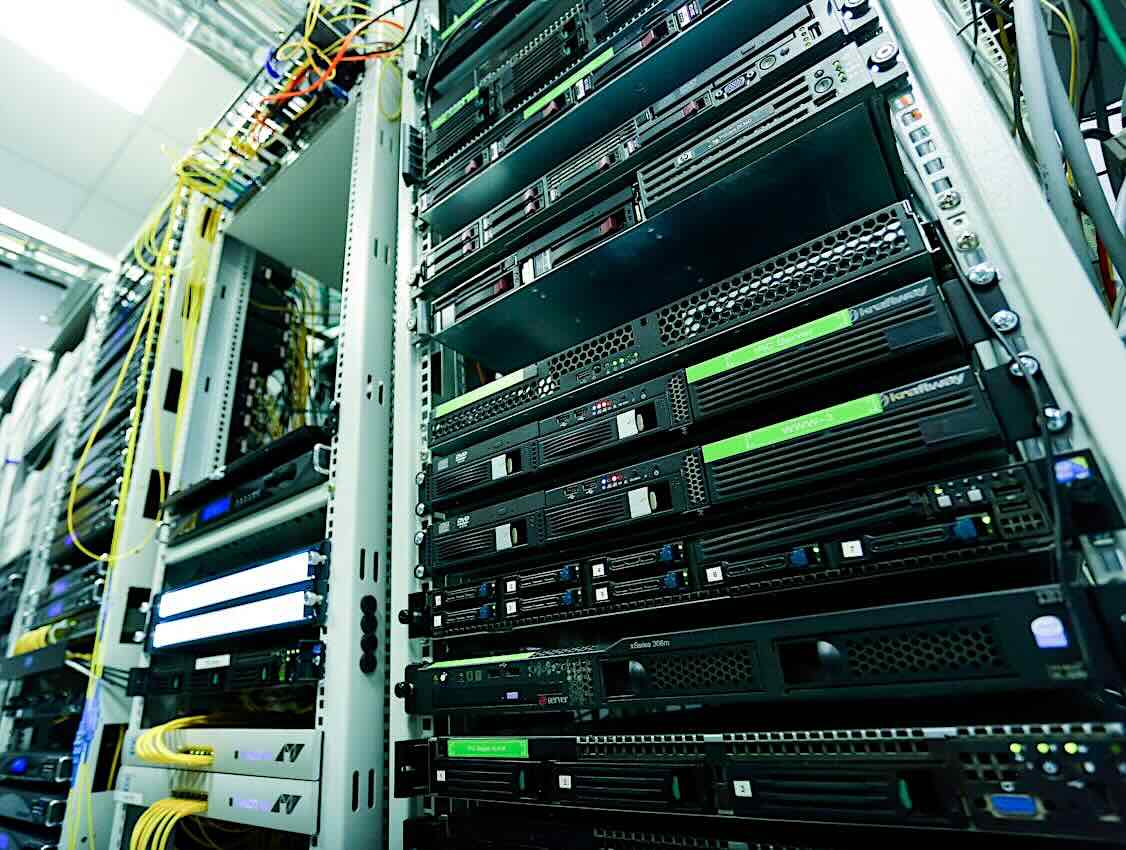
These are not science-fiction promises. They are real advances at the frontier of discovery, and they run on servers. Those servers run on electricity.
We have begun to see what abundant computing can do at the frontier of medicine and science. Now imagine the discoveries delayed or foreclosed each time a moratorium is passed, a transmission line is stalled, a power plant is trapped in review, or a needed electron is left sitting behind red tape.
What looks like a fight over data centers is also a fight over the physical conditions of progress itself.
This is where the irony becomes hard to miss. The same intellectual culture that spent a generation demanding that policy “follow the science” helped build a regulatory and political order that now slows the material preconditions science depends on.
We cheered discovery in the lab and recoiled from it in the landscape. We praised the research and opposed the infrastructure that the research required. We invoked science to restrict the power that science now needs to run.
The scarcity that followed was not mainly physical. It was political and institutional. Frontier AI is constrained not just by chips or algorithms, but by the electricity and infrastructure required to train and run models at scale.
Researchers feel that in computing budgets, which experiments get run, how large models can grow, how often they can be refined, and who gets access. Too often, those limits are treated as natural. Many are the result of choices that made power harder to build and slower to expand.
When demand for something essential rises, a healthy society adds supply. An unwell society blames the new demand, rations the remaining resource, and stunts the progress it claims to celebrate.
Scientific progress has always required someone willing to build the next instrument. Jenner needed a way to produce and distribute a vaccine. Fleming’s discovery mattered because a society eventually figured out how to manufacture penicillin at scale.
The question in front of us is simpler than those, and more urgent: Are we willing to build the power that lets the next instrument run? The answer, so far, has too often been no.
And the cost of that answer will be measured in cancers caught later, drugs discovered more slowly, and breakthroughs arriving years after they could have.
Read more at RealClearEnergy







the average electricity consumption in the US per hour in 2025
478.5 GW
net capacity additions to us grids:
2025 100% wind and solar
2026 90%+ wind and solar
ai needs dispatchable reliable electricity
not wind and solar
“More than 2,200 gigawatts of proposed generation,
solar, gas, storage, and nuclear, are sitting in interconnection
queues”
this is a meaningless, deceptive statement
The truth:
Developers plan to add 6.3 gigawatts (GW)
of new natural gas-fired capacity
to the U.S. power grid in 2026.
This accounts for approximately 7%
of the total 86 GW of new utility-scale
generating capacity expected to come online
this year.
As of 2026, the U.S. interconnection queue
has grown to a 2,600 gigawatt (GW) backlog.
(2,200 in 2024) … Over 97% is wind solar and batteries
all not useful for AI applications