

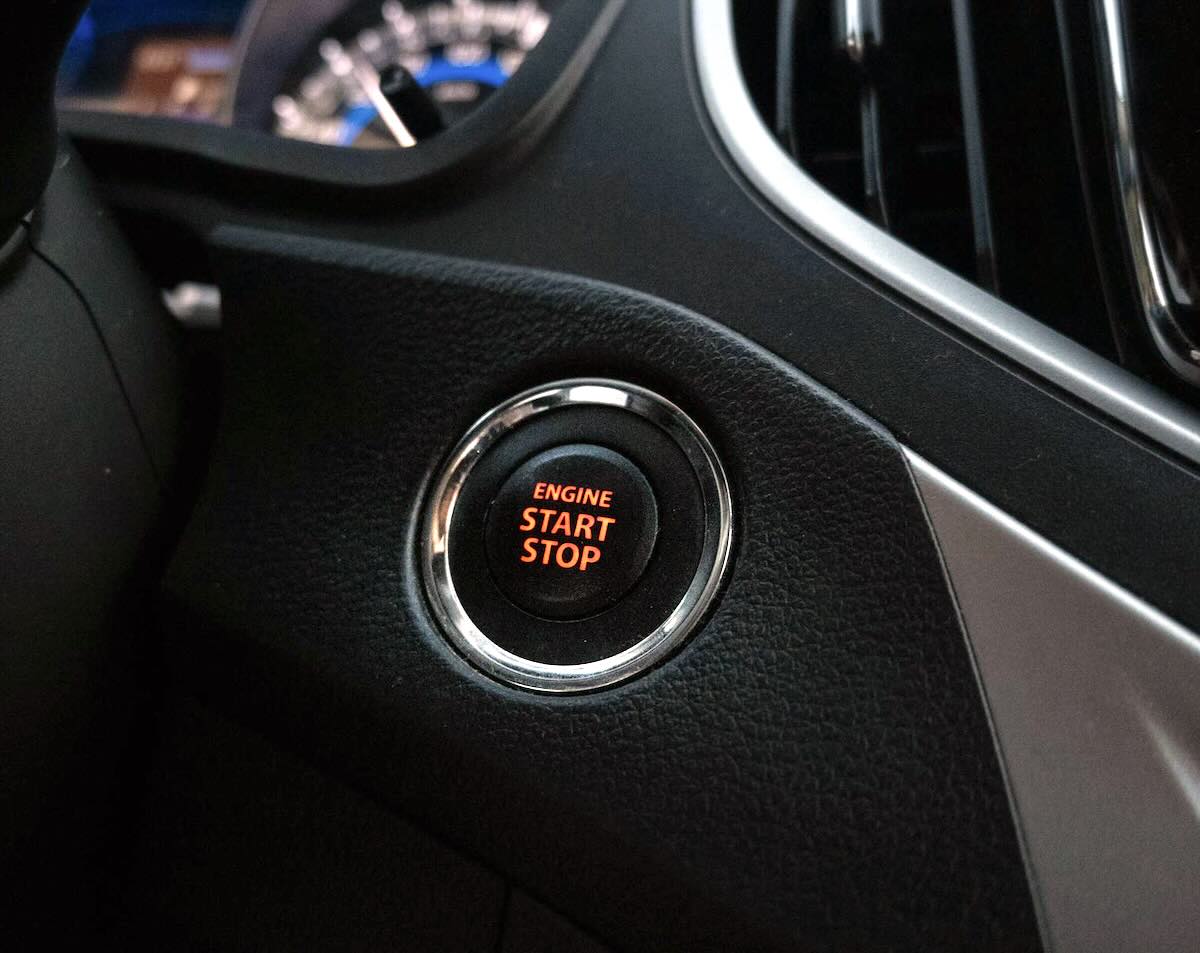
Has there ever been an automobile feature as widely despised as the stop-start system that the Obama administration forced on the country? Unlikely. Which is why new federal action that kills the requirement is cause for celebration. [some emphasis, links added]
The “feature,” which is the wrong word for what’s truly a nuisance, automatically shuts off a car’s internal-combustion engine when it is idling at a red light or stuck in traffic. It restarts the engine when either the foot comes off the brake pedal or the accelerator is pressed.
The action is jerky — it too often feels like a minor collision — distracting and tiring, producing a driving experience that’s more wearisome than enjoyable.
It’s also likely that the system increases wear on a car’s starter and battery, forcing owners to replace them sooner than they otherwise would — though its few supporters claim this isn’t so.
The Obama administration coerced the industry into including the function in every new car to improve fuel efficiency and cut emissions.
Automakers weren’t required to make it standard, but it became a mandate of sorts in 2012 because the government gave them a credit for adding the confounded gadget to their lineups.
To the relief of many, Environmental Protection Agency Administrator Lee Zeldin eliminated the credit in February as part of the Trump administration’s unwinding of useless and counterproductive Obama-era environmental rules.
Last week, Zeldin followed up with an announcement that the Trump EPA had “removed the ridiculous climate participation trophy the Obama Admin created to get this hated feature installed. The incentives for manufacturers to make your car die at every red light and stop sign have now been ELIMINATED!”
It “is arguably one of the most annoying features of any new car,” says Motor1.com. Slashgear reports that the frustration caused by the function “is so severe that you can find ‘Autostop Eliminators’ selling online.”
“Some people (automotive PR folk and EPA representatives, mostly) will tell you that it’s a great idea, saving you hundreds in fuel expenses each year,” says CarBuzz.
“Others would like to reach through the dashboard and rip the control module out with their bare hands to keep it from ever shutting the engine down at a red light again.”
Read rest at Issues & Insights









Now Zeldin/EPA should begin proceedings that will require all auto manufacturers to permanently disable the feature upon demand by the consumer.
In 1974 I bought my first new car, a Chevrolet. That was the year the hated seatbelt interlock system was mandated. You couldn’t start you car unless your seatbelt was fastened. Some people paid thousands of dollars to have the system (illegally) disabled. I tried an experiment and unplugged the weight sensors underneath the driver and passenger front seats. Worked like a charm. As far as my car knew there was never anyone sitting behind the wheel so it allowed my car to start without fastening the seatbelt.
I hasten to add that I have always used the seatbelt back then if they were installed in the vehicle. I just didn’t want the government mandating that my car wouldn’t start if I didn’t follow their rules.
If I recall correctly 1974 was the only year the system was mandated. There was such a public backlash that the regulation was repealed.
My roommate at the time bought a new VW Rabbit and what he did was click the seatbelt behind him which still allowed the car to know the seatbelt was clicked but he wasn’t buckled in. Because his Rabbit got very good fuel mileage I bought one too but since I was good with wearing a seatbelt I wasn’t concerned about the lockout. But I hated the federal government forcing behavior that isn’t the government’s business.
Today’s cars are almost as bad. The car starts w/o the belt clicked but if you don’t have the seatbelt clicked in the car will continue to bother you that you haven’t clicked in your belt.
A stop-start feature typically saves a driver between 3% and 10% on fuel costs annually. For an average driver traveling 15,000 miles a year in a vehicle that gets 20 mpg, this translates to roughly 25 to 50 gallons of gasoline saved each year.
For an auto manufacturer (OEM), the incremental cost to add a basic “light” stop-start feature to a new vehicle typically ranges from $300 to $400 per unit. While some estimates suggest high-end or more complex “medium” systems can add between $500 and $700 to a vehicle’s manufacturing cost
the cost seemed too high relative to the benefits
While there is no single industry-wide percentage for all drivers, recent survey data and environmental policy shifts suggest that a vast majority of drivers—up to 90%—dislike or are frustrated by the auto stop-start feature
I have a CRV Hybrid which does have the engine stop while at traffic lights but it uses the battery to start going before the engine kicks in. But because the battery is first engaged you don’t have that lag time like you do with strictly ICE cars as the starter gets the engine going.