

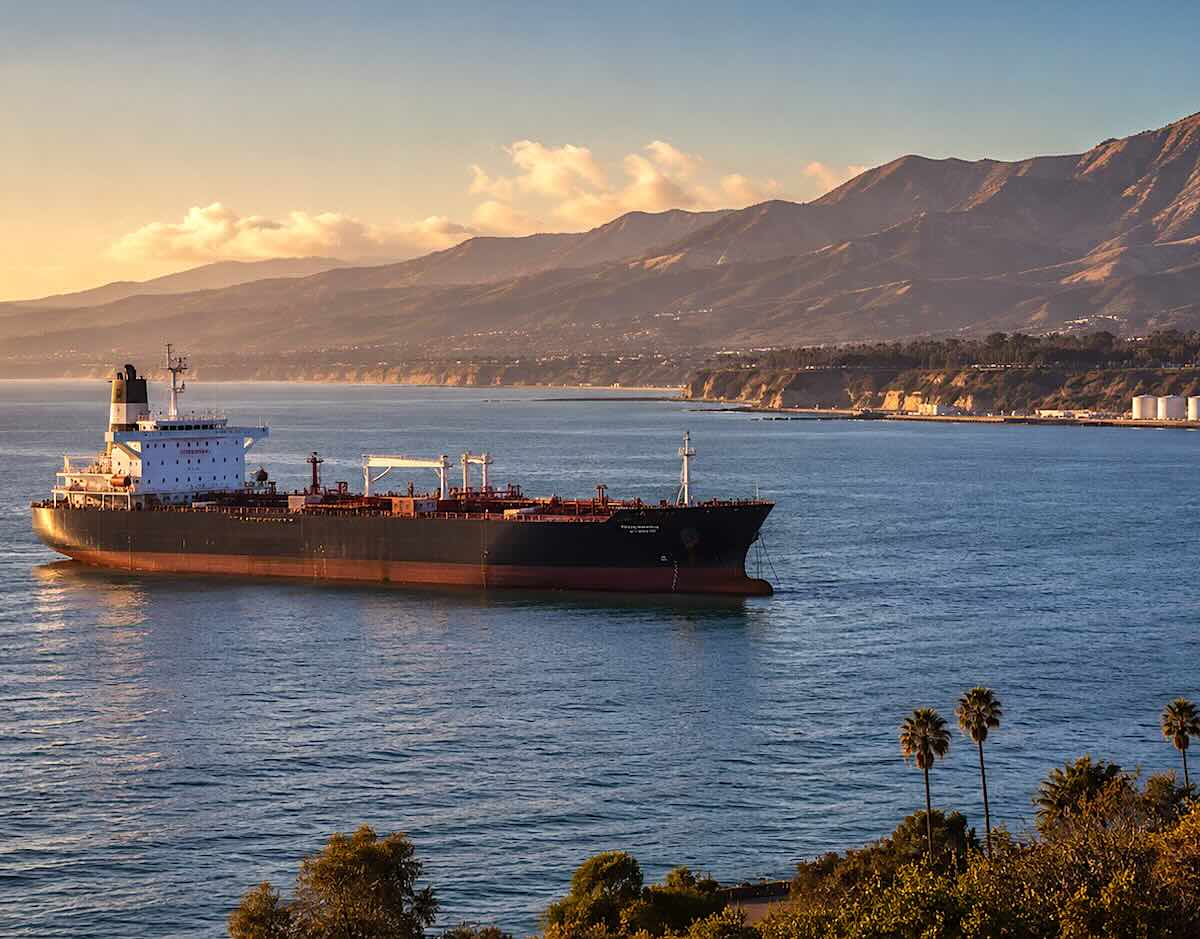
The self-imposed energy crisis that I recently warned was looming in California arrived at the Golden State’s doorstep this week as the final Middle East oil tanker destined for its ports docked in Long Beach. [some emphasis, links added]
Amid ongoing global supply disruptions, average gasoline prices in the state surged past $6 per gallon — more than two dollars above the national average.
For a state that sits atop the fifth-largest oil proven reserves in the United States, this is not merely an inconvenience: It is a self-inflicted wound that the White House believes poses a genuine threat to national security.
Wright Slams Newsom For State’s Energy Crisis
Energy Secretary Chris Wright slammed Governor Gavin Newsom and the state’s leadership on Tuesday in pointed remarks. Wright highlighted the high national risk stemming from the situation, calling it “an untenable threat to our national security, especially in a time of military conflict.”
He went further, noting that because it is home to more than 30 military installations, California’s policies have left U.S. forces and a massive chunk of the national economy “dependent on imported oil.”
As University of Southern California Prof. Michael Mische pointed out in my April 23 piece, this dependence did not simply happen by accident.
It is the direct result of years of deliberate policy choices by a series of governors, the California Air Resources Board (CARB), and a Democratic supermajority in Sacramento that has waged an unrelenting war on the state’s domestic oil and gas sector.
In that story, Mische detailed how aggressive regulations, a state cap-and-trade system, Low Carbon Fuel Standards, EV mandates, and permitting delays had turned the state into an energy island, vulnerable to exactly the sort of global shocks now materializing.
The numbers tell the story.
Despite its enormous reserves, California’s in-state oil production has plummeted by roughly 75 percent since its peak in the 1980s.
Today, the state imports more than 60 percent of its crude from foreign sources and has become an isolated “oil island” with no pipelines linking it to the broader U.S. supply network.
Two major refineries, Phillips 66’s Carson/Wilmington facility and Valero’s Benicia operation, shuttered in the past year alone, slashing refining capacity by 17-18 percent.
All the while, Californians labor under the nation’s highest state gas tax of 61.2 cents per gallon, layering additional pain onto already elevated pump prices.
California maintains only about a 10-day fuel inventory and relies on CARB-compliant gasoline from Asian refiners for roughly 20 percent of its supply.
With tanker transit times across the Pacific stretching 25 to 45 days, the state is now feeling the full brunt of disrupted imports from the Middle East. As Prof. Mische warned, “We’re running out of fuel as we speak.”
Sacramento Doubles Down On Crisis Policies
Rather than confront these realities by changing course, Sacramento has doubled down.
When the Trump administration moved to restart the Santa Ynez pipeline system off Santa Barbara County — invoking the Defense Production Act to boost in-state production by approximately 15 percent and displace nearly 1.5 million barrels of foreign crude per month — the state government’s response was predictable: Attorney General Rob Bonta filed a lawsuit to block the project and attempted to impose an $18 million fine on the operator.
Secretary Wright’s office issued a similarly predictable response:
“Instead of correcting these self-inflicted vulnerabilities, California leaders are attempting to block the Secretary’s efforts to restart critical infrastructure and strengthen domestic energy production. California leaders should stop prioritizing political agendas over America’s energy security.”
But that seems unlikely to happen under Gov. Newsom, who is term-limited out of office at the end of this year. None of the Democratic candidates running to replace him appears any more likely to seek change.
Every Democrat who participated in Tuesday night’s televised debate tried to shift blame to President Donald Trump when asked what they would do to ease the burden of California drivers having to bear gas prices that are $2.00 per gallon above the national average.
Republican Steve Hilton called them out, saying, “It’s not Donald Trump who has given us gas prices $2 higher than the rest of the country. It is Democrat policies that all Democrats here support.”
But Hilton and his party face an uphill battle in November’s general election in a state that has been so overwhelmingly Democratic in recent decades.
Top: An oil tanker off California’s coast underscores the state’s growing reliance on foreign crude supplies. AI-generated.
Read rest at Forbes




simply switching to domestic sources would likely not lower California’s gas prices by a full dollar per gallon on its own.
The state’s “California premium”—which can exceed $2.00 per gallon more than the national average—is primarily driven by a combination of high taxes, unique environmental regulations, and geographical isolation