The San Francisco Chronicle claims that California is suffering from the impacts of climate change, and oil companies should “pick up the tab” instead of taxpayers because they are supposedly the cause. [some emphasis, links added]
This is nonsense.
Wildfires are not getting worse in California due to climate change, and it makes no sense for California to sue local “big oil” companies when they are not responsible for more than a drop in the bucket of global carbon dioxide (CO2) emissions, even if one accepts the alarmist positions on anthropogenic climate change.
The op-ed, “Climate change is hitting Californians hard. The state should make Big Oil pick up the tab,” is written by Dave Jones, a former insurance commissioner and “director of Climate Risk Initiative at the UC Berkeley Center for Law, Energy & the Environment.”

Jones claims that a changing climate is driving “higher taxes, electricity costs, and insurance premiums,” while “oil companies whose products are driving the climate crisis continue to profit while making it worse.”
In his op-ed, Jones complains that a report by the California Earthquake Authority does not point a finger at oil companies for climate change-induced damages.
He argues oil companies should pay for damages because he claims those companies are “substantially responsible for the warming climate driving California’s wildfires, but not paying a cent of the financial costs.”
Jones specifically blamed the Palisades fire on climate change. But that is flat-out false; the Palisades fire was not caused by climate change.
Wildfires are natural for California, and while it is true that conditions were “unusually” dry in the immediate lead-up to the fire outbreak, it was not part of any long-term trend that can be associated with global climate change.
The particular conditions that led to the fires —hot, dry winds—are so common for Los Angeles that they have a nickname: Santa Ana winds.
As discussed in previous Climate Realism posts on the subject, they aren’t new, aren’t impacted by climate change, and are certainly not unprecedented.
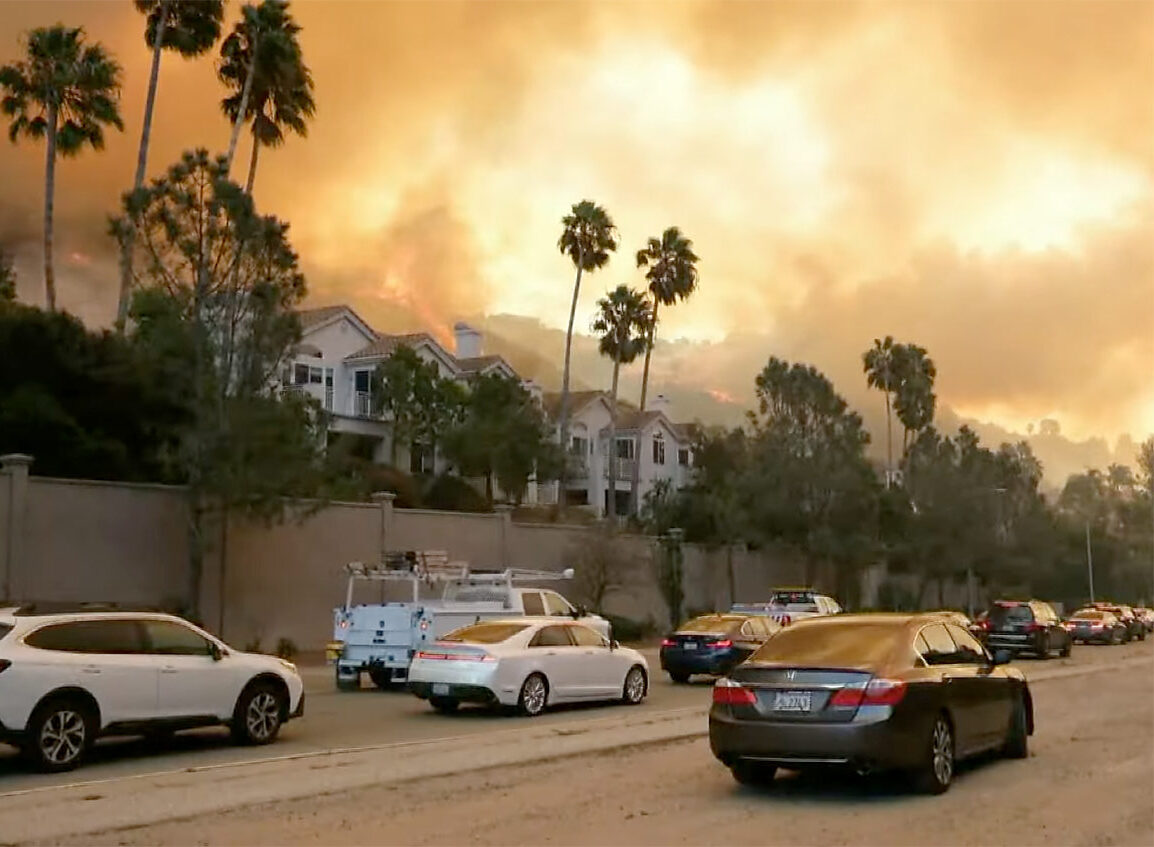
The fire was set by an arsonist, and spread by those dry conditions and strong winds, perfect for aiding devastating fires by drying out existing brush and grasses.
It also didn’t help that California had failed to keep up with the clearing of brush that fuels large fires, in the name of environmentalism.
Incredibly, firefighters on the scene were prevented by state officials from completely extinguishing areas on state land that were still smoldering out of concern for the environment! The fire flared up in areas that firefighters were prevented from fully putting out. It’s all on tape.
How does Jones prove the fire was climate-driven, while data and evidence do not? He points at an attribution study that claimed: “fossil fuel-driven climate change made the disaster 35% more likely.”
Here, Jones is not relying on actual science, but rather the distinctly unscientific method of single-event attribution, which Climate Realism has taken to task on many occasions.
Attribution studies are not evidence because they compare two counterfactual scenarios: one where humans never emitted fossil fuels and one where we have, but it’s assumed our emissions impact the weather in certain ways.
Both of those scenarios have assumptions built in; neither of them accurately models weather systems.
But attribution models are convenient when real-world data does not support alarmists’ assertions. In fact, global wildfire data show that wildfires are becoming less severe over time, even as modest warming has occurred.
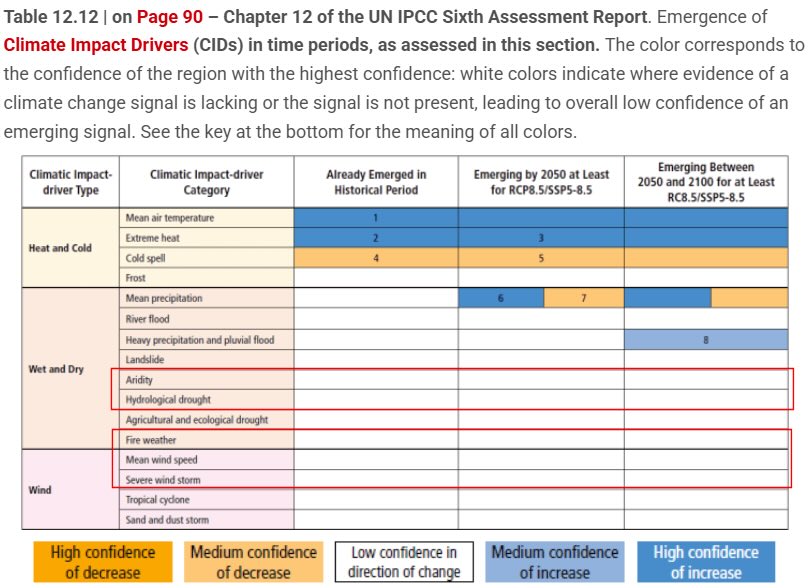
The United Nations IPCC likewise confirms that fire weather is not becoming more common. (See figure below)
Even without data contradicting Jones’ claims, trying to pin oil companies with the cost of damages is absurd. For one thing, downstream emissions from the oil and gas produced by a handful of American oil majors cannot possibly be connected to any given severe weather event; the accounting of such a thing would be ridiculous.
Also, it’s not the oil companies, but rather consumers, that create emissions. Try suing every single California driver, including state and local government agencies like the police and hospital emergency crews.
CO2 emissions, which Jones fallaciously asserts are ultimately behind California’s wildfires, don’t solely come from using oil from the energy companies that California can sue.
One need only look at Asia to see that U.S.-related emissions are swamped by other countries, even if one argues that U.S. oil companies sell their product abroad. The largest single oil company by production is Saudi Aramco. The largest producer and user of coal is China.
California is not expensive because of climate change; it is expensive in part because of the climate and energy policies that the state has imposed on its residents.
High electricity costs are due to the state trying to phase out fossil fuels, relying more and more on expensive and unreliable wind and solar.
California has the highest gas prices in the country on purpose, higher than Hawaii, due to taxes and environmental program costs, which were levied to stop people from using gasoline. Refineries and gas stations have closed or left the state.
Climate Realism has discussed the true causes of California’s recent wildfires and rising insurance costs, while putting them in historical context, on dozens of occasions.

Inflation and rising property values, and also the higher cost of repairs (due in part to California’s environmentally focused building codes and policies), have also led to higher insurance costs.
It costs money to process claims, especially when that process is backed up during a major natural disaster or when states have certain consumer protection laws, all of which Jones knows—he must know, as a former insurance commissioner—but for some reason chose to downplay for this article.
Blaming climate change is an easy out for insurance profiteers and their enablers, and it’s even better if the costs of weather damage can be passed off onto oil companies that have nothing to do with the weather.
This entire San Francisco Chronicle piece reads far more like a cynical attempt to offload responsibility from the state and insurance companies onto oil majors than it does a piece reflecting a realistic understanding of climate issues.
Wildfires are not increasing or more severe than they have been in history, and they aren’t being caused by energy companies, or by people using their products – except in those cases where arsonists use gasoline to start a fire, and that’s not the fault of oil companies either.
Read more at Climate Realism