

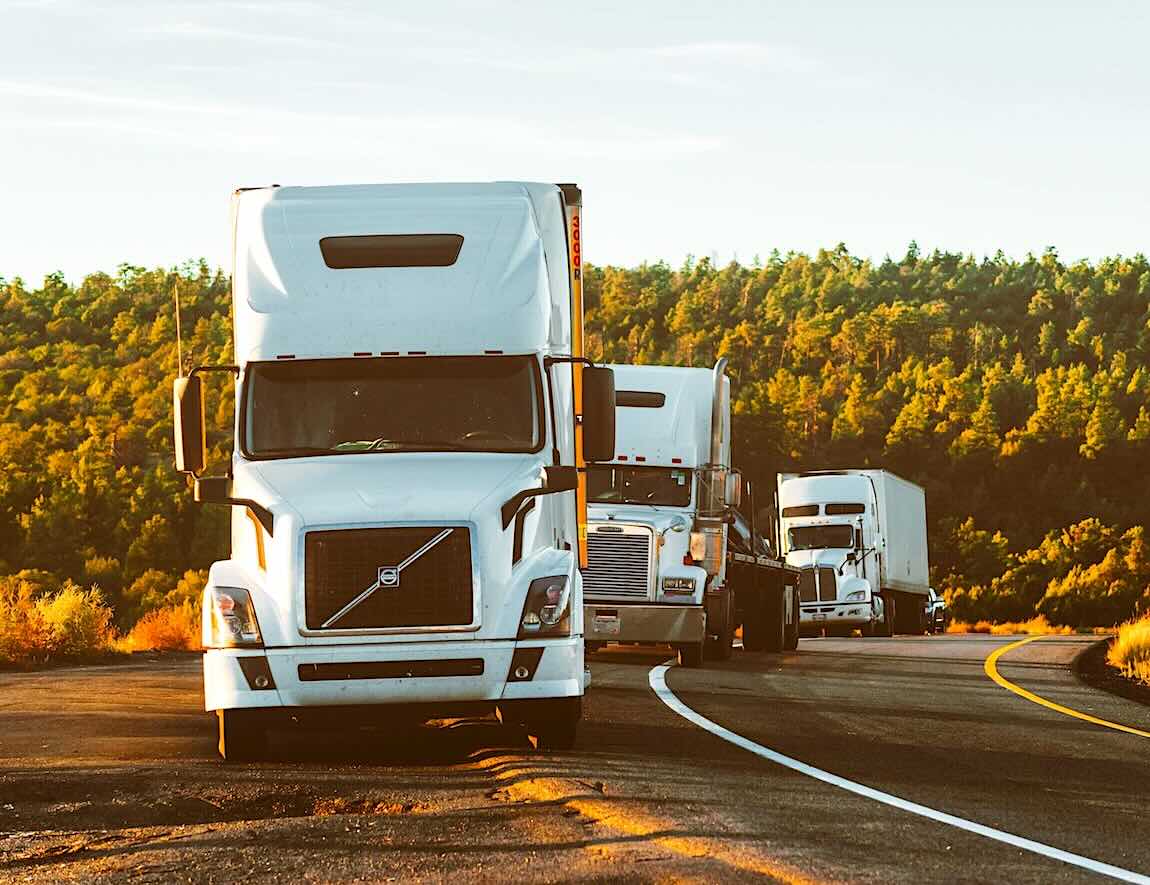
An EPA rule issued during former President Joe Biden’s administration has forced a top U.S. truck manufacturer to halt production and delay the release of new diesel trucks, according to a letter exclusively obtained by the Daily Caller. [some emphasis, links added]
Isuzu Commercial Truck of America, Inc., a subsidiary of Japanese automobile manufacturer Isuzu Motors Ltd., has been the top-selling low-cab forward commercial truck brand in the U.S. since 1986, with several models including the N-Series Diesel and N-Series Gas, as well as the F-Series, which runs on a Cummins B6.7L diesel engine.
But a 2022 Biden-era EPA emissions regulation, which requires heavy-duty commercial vehicles to limit nitrogen oxide (NOx) emissions to 0.035 grams for model year (MY) 2027, is still in effect, forcing Isuzu to pause production of its F-Series and N-Series diesel trucks.
“With respect to the F-Series, we would like to clarify an update to previously communicated timing and specifications. The 2028 model-year F-Series truck (2027 calendar-year production) is currently planned to continue utilizing the Cummins B6.7 engine. This update follows Cummins’ notification that the B7.2 engine is not expected to be available until the 2028 calendar year. As a result, the launch timing for the new F- Series cab—previously anticipated for 2027—will be delayed,” Isuzu Commercial Truck of America President Shaun Skinner wrote in a letter to U.S. Isuzu truck dealers.
“Regarding the N-Series diesel product,” the letter goes on, “we do not anticipate offering an N-Series diesel configuration that meets the 2027 NOx requirements during the 2027 calendar year.
Isuzu engineers are actively developing a compliant solution. Based on current planning assumptions, readiness is being targeted for early 2028; however, timing remains subject to final regulatory requirements, engineering validation, and other factors.”
In March 2025, EPA Administrator Lee Zeldin announced that the regulatory agency would revisit the Biden-era rule and propose changes by the spring of 2026. However, the EPA later said it was sticking to the MY 2027 timeline laid out by the previous administration, but would try to finalize the new change to take effect for MY 2028.
“If finalized, the action will make major changes to the program requirements while maintaining the Model Year 2027 start of the standards, which can significantly reduce the cost of new heavy-duty vehicles, while still protecting human health and the environment, and avoiding regulatory distortions of the heavy-duty vehicle market,” the EPA said in a statement in November 2025.
But there are fears within the trucking industry that the 2027 NOx rule will trigger inflationary pressures that lead to higher production costs — costs that could, hypothetically, get passed down to consumers.
In an August 2025 letter, the American Trucking Associations, National Tank Truck Carriers, Truckload Carriers Association, and 49 state trucking associations asked the EPA to delay the rule’s implementation to 2031, citing “substantial compliance costs and operational burdens at a time when the trucking industry is already contending with historically difficult market conditions.”
A more recent April 20 Truck News article laid out how the rule might trigger “a sharp spike in equipment costs” that could eventually “rapidly erode margins,” using the Class 8 tractor truck as an example.
“The transition to Model Year 2028 equipment, which must meet the new standards starting Jan. 1, 2027, represents one of the most significant cost escalations in recent industry history,” the article said.
“Forecasts indicate that once the required technology, including advanced emissions components and updated warranty requirements, becomes standard, the cost per Class 8 tractor will increase by approximately $8,000 to $15,000.”
The article continues:
“This is not just a projection of inflationary pressure; it is a fundamental shift in the Total Cost of Ownership (TCO). As an example, for a private fleet replacing 100 power units, a delayed approach could result in as much as $2.5 million in unforced capital expenditure increase. Current market data suggests that while the economy is improving from a business balance sheets perspective, such a sharp spike in equipment costs can rapidly erode margins.”
In addition to the regulatory costs, the American trucking industry is also facing a massive surge in diesel prices amid the Iran War.
Read rest at Daily Caller







The 2027 NOx Rule, officially part of the EPA’s Clean Trucks Plan, requires a massive 80–90% reduction in nitrogen oxide (NOx) emissions for all new medium- and heavy-duty trucks sold in the U.S. starting January 1, 2027.
A major driver of the upfront price increase is the extension of emissions warranties.
The EPA originally mandated extending warranties from 100,000 miles to 450,000 miles, and increasing “useful life” limits to 650,000 miles.
The mandatory emissions warranty, originally set to jump to 450,000 may be scaled back toward current standards to lower the upfront purchase price.
Requirements for how long an engine must remain clean (originally 650,000) may also be adjusted.
It seems to me the extra cost for these new engines will cause truckers to keep their old engines going much longer than they originally planned, causing more pollution than ever
I agree Richard… A new industry to rebuild old engines will soon crop up and for many, that will be a lot cheaper than buying a new rig.
Richard, I also agree and the concept also applies to personal cars. Whereas that EV mandate no longer exists on the federal level, California, Colorado, Connecticut, Maine, Maryland, Massachusetts, New Jersey, New York, Oregon, Rhode Island, Vermont, and the District of Columbia still require all new vehicles to be zero emission by 2035. Washington State has a target of 2030. My guess is some states will rescind the requirement. For those that retain it, the auto repair industry will take a whole new form. When ever possible cars will be kept running forever. Washington State has a lot of old non-running cars in people’s yards and these will be purchase and restored. Getting the parts for repair of older vehicles can be a problem today, but I expect the auto parts industry to respond to the demand created by the mandates. We already have an example of keeping existing cars running. Consider the Cuba syndrome.