

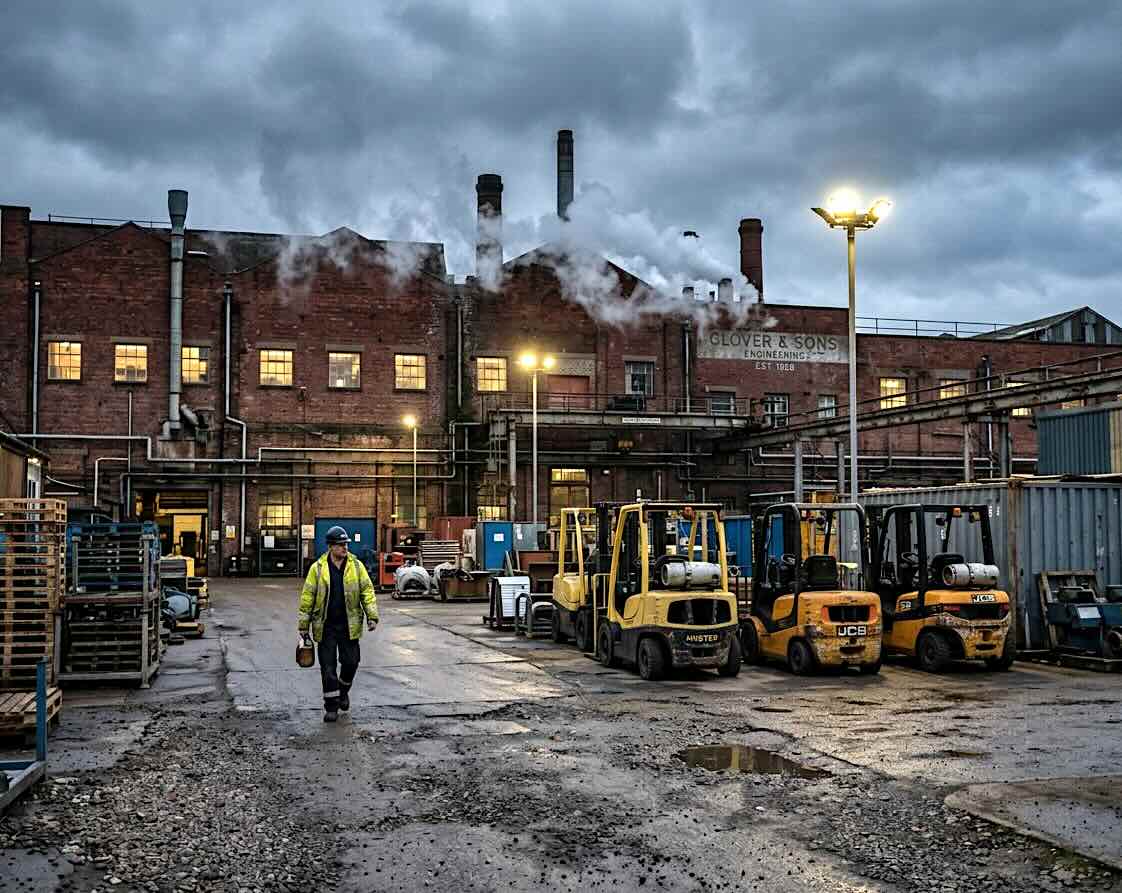
Soaring energy bills funding Ed Miliband’s net zero push risk triggering factory shutdowns and job losses, warns a new industry report. [some emphasis, links added]
Make UK, which represents 20,000 manufacturing firms, says that the cost of energy is destroying profits, sending many companies to the wall and risking an £85bn hit to the economy.
Stephen Phipson, the Make UK chief executive, said: “High energy costs are one of the biggest threats to the future of manufacturing in the UK.”
He added:
“UK companies want to invest, innovate, and decarbonise, but they cannot do so while electricity prices remain internationally uncompetitive.
“We are not asking for a subsidy. We are asking for an energy system that allows them to compete … Without urgent action, we risk losing industrial capacity that will be extremely difficult to rebuild.”
According to the study, 90% of manufacturers have seen sharp increases in energy bills since 2022, and 13% fear that further increases will destroy their business.
Since UK manufacturing adds about £650bn to the UK economy annually, the loss of that 13% would cut that wealth generation by £85bn.
This would be a devastating blow, given that the share of GDP from manufacturing has shrunk from 17% in 1990 to just 8% now.
Make UK says a key cause of the UK’s high energy costs is the way Mr Miliband and his predecessors have loaded the cost of subsidies for renewables onto energy bills – known as policy costs.
These are used to give wind, solar, and nuclear plants a guaranteed minimum price for the power they produce.
It says manufacturers support the UK’s move to low-carbon energy but calls for policy costs to be removed from energy bills and shifted to general taxation.
It also criticises Mr Miliband’s failure to revise the way UK electricity is priced.
Electricity produced by burning gas has lower running costs than most other forms of generation, but the final price is much higher because of government carbon levies.
Those levies, the UK emissions trading scheme, and the carbon price support system typically account for 40% of the final cost of electricity [generated from gas, turning it from one of the cheapest to one of the most expensive forms of generation].
Read rest at The Telegraph







UK companies want to invest, innovate, and decarbonise, but they cannot do so while electricity prices remain internationally uncompetitive.
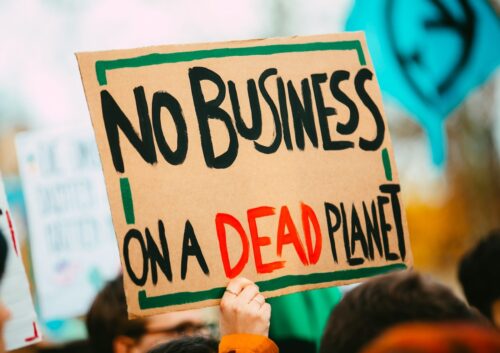
You can’t both “decarbonize” (burn less fossil fuels) and have low electricity costs. This Manufacturing group has to decide which one they want but you cannot have both.
It is amazing that Britain and Germany bet the farm on offshore wind, because regular and prolonged wind droughts were recorded on oil and gas platforms in the North Sea for sixty years.
https://www.conservativewoman.co.uk/a-curious-tale-of-the-north-sea-winds/
It’s part of a wroldwide pattern of blndness to wind droughts, AND especially windless nights.
EVERYONE NEEDS TO KNOW THAT WIND AND SOLAR CAPACITY AIN’T REAL CAPACITY!
https://rafechampion.substack.com/p/wind-and-solar-aint-capacity
As for batteries, see Bill Gates😊
https://youtu.be/VjgDvG13Hgs
On top of all that, wind and solar don’t generate enough energy to reproduce themselves so they are parasites and a net drain on the energy economy at large. 😊
https://rafechampion.substack.com/p/wind-and-solar-are-parasites-on-the
FOR WANT OF CHECKING THE WIND SUPPLY, KINGDOMS ARE BEING LOST.
https://rafechampion.substack.com/p/criminal-failure-of-due-diligence
Put a stop to the unspeakable decarbonisation cult and the plant food derangement syndrome!
https://rafechampion.substack.com/p/enough-of-the-decarbonisation-cult
One of the three goals that got the global warming movement started was to force deindustrialization by making energy scarce and expensive. This has been successful in the UK and continued success is expected. However, on the world wide scale there is no deindustrialization. Manufacturing and the associated jobs are just moved to China.