As NATO leaders debate the alliance’s future, a quiet strategic transformation deserves attention. In the 20th century, petroleum was the indispensable fuel of military power. [some emphasis, links added]
In the 21st century, artificial intelligence (AI), advanced manufacturing, and digital command systems depend on something equally fundamental: abundant, reliable electricity.
The race to build AI infrastructure is often framed as a competition for semiconductors and computing power. Yet they cannot exist without resilient electrical grids capable of supporting energy-intensive data centers, advanced manufacturing, and military command systems.
Energy security has become national security.
Having served as principal deputy assistant secretary for policy and international affairs at the Department of Energy, I have long argued that American energy policy should reinforce America’s broader strategic objectives.
President Trump’s emphasis on allied burden-sharing reflects that principle. A stronger alliance requires more than increased defense spending. It also requires allies capable of sustaining the energy systems necessary for modern defense.
The Strategic Weakness Inside Europe’s Nuclear Fleet
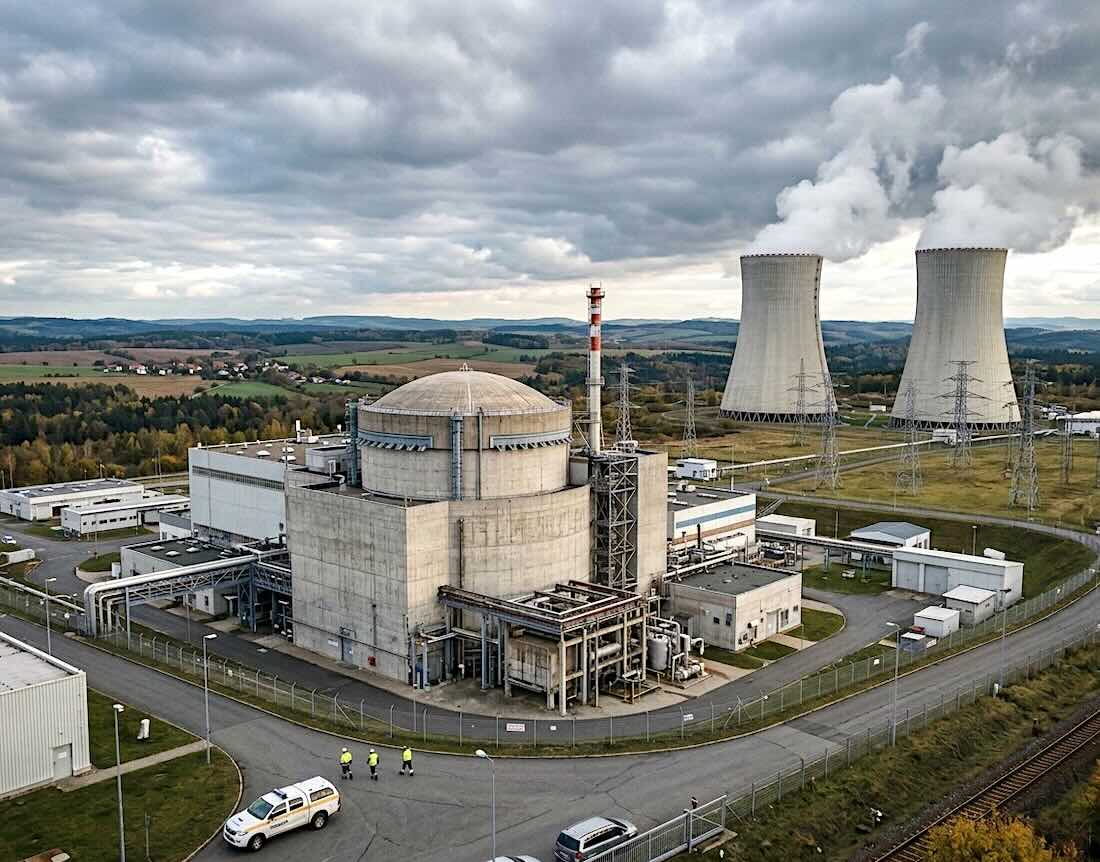
One of NATO’s least-discussed vulnerabilities lies within Europe’s existing nuclear infrastructure. Many nuclear power plants use the Soviet-designed water-water energetic reactor, or VVER.
Approximately 40 VVER reactors continue to operate across Europe, supplying a significant share of electricity in several NATO and partner countries.
While many operators are diversifying nuclear fuel supplies, decades of reliance on Russian-designed maintenance and engineering support continue to pose a strategic challenge.
This dependence is no longer just a geopolitical concern. It has become an operational one.
In conversations with executives responsible for operating VVER reactors, a consistent message has emerged: maintaining reliable, long-term technical support through legacy Russian supply chains has become increasingly difficult.
A senior executive in European energy who requested anonymity observed that Rosatom’s technical support has become less reliable since Russia invaded Ukraine:
“Since Russia’s full-scale invasion of Ukraine, we’ve observed a gradual deterioration in the quality and responsiveness of Rosatom’s technical support. For operators of VVER reactors, long-term reliability depends not only on the hardware itself but also on timely engineering support, documentation, and access to qualified expertise. As those capabilities become less dependable, operators naturally look for stable, long-term alternatives.”
Declining support for critical nuclear infrastructure introduces unnecessary operational risk. For NATO, reducing these dependencies is not simply a matter of geopolitics.
It is a matter of strengthening the resilience of the alliance’s electric grid.
The Missing Piece: Institutional Modernization
The engineering capability to support and modernize VVER reactors already exists across Europe. The greater challenge is institutional.
Replacing decades-old supplier relationships requires transparent ownership structures, modern governance, regulatory certainty, and financing mechanisms that attract long-term Western investment.
Without those foundations, engineering solutions alone are insufficient.
That conclusion was reinforced during discussions with Czech restructuring specialist Jan Čermák, who argues that Europe’s nuclear transition should be viewed as much as an institutional transformation as a technical one.
“You cannot replace a legacy supply chain simply by deciding to do so. The engineering capability already exists in Europe. The greater challenge is creating transparent corporate structures, credible governance, and bankable financing that give Western companies the confidence to invest. Once those foundations are in place, competition, modernization, and long-term investment can follow.”
Čermák’s central insight is that resilient supply chains are built on resilient institutions.
Western companies are far more willing to commit capital, technology, and long-term engineering support when ownership structures are transparent, governance standards are robust, and commercial risks are clearly understood.
Financial modernization is, therefore, not separate from energy security—it is a prerequisite.
Read rest at American Greatness