

Not long ago, Japan stood before the world pledging to become a paragon of decarbonization. Government papers were filled with talk of hydrogen corridors, offshore wind farms, and electric vehicle subsidies. [some emphasis, links added]
To satisfy international climate lobbies, Japan planned for years to phase out coal. Operations at coal-fired power plants were restricted to only 50% capacity.
Political leaders spoke solemnly of a “moral duty” to achieve “carbon neutrality” by 2050, pledging a 60% cut in greenhouse gas emissions by 2035 and a 73% cut by 2040, both measured from 2013 levels.
But as geopolitical reality intruded, this stance dissipated.
More Oil for Japan and Its Neighbors
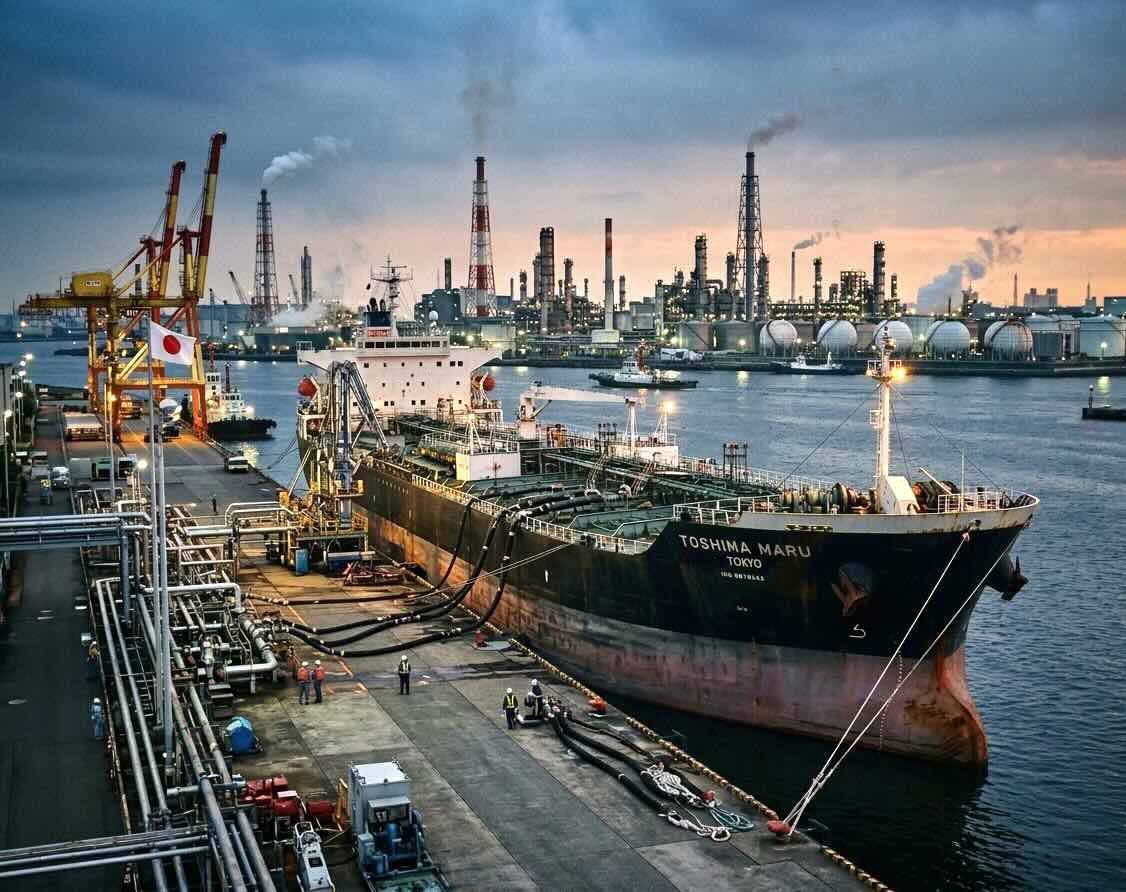
Japan is among the world’s top five oil importers, importing more than 94% of its crude oil from the Middle East. When transit through the Strait of Hormuz was interrupted, the impact was immediate.
Officials introduced subsidies to keep regular gasoline prices from climbing beyond tolerable levels. Prime Minister Sanae Takaichi quickly ordered the release of 80 million barrels from oil stockpiles, equivalent to about 45 days of domestic demand.
Releases began in mid-March from sites across the country. A fuel once portrayed as the enemy in net-zero rhetoric now receives protection to prevent economic disruption.
Japan is preparing to formalize a new energy‑first posture in a revised strategy to be unveiled in August. Greater weight will be given to the security of fossil fuel supplies.
Imports are already increasing from the United States, Canada, Mexico, Central and South America, Africa, and other parts of Asia. The prime minister anticipates avoiding shipping altogether through the Strait of Hormuz.
For the first time, crude oil from the United States has arrived directly in Japan: Cosmo Oil recently brought 910,000 barrels of U.S. crude into Tokyo Bay.
Japan Petroleum Exploration plans to quadruple its oil and gas output over the next decade—up to 180,000 barrels of oil equivalent per day by 2035—backed by $7.3 billion in exploration and production spending, with over 50% that money going towards U.S. assets.
Tokyo has also refused to abandon fossil fuel supplies that are politically awkward but strategically valuable. Despite being a U.S. ally, Japan’s Economy, Trade and Industry Minister Ryosei Akazawa describes even Russian crude as “extremely important” to Japanese security.
There’s a reason why Tokyo is putting its money into procuring crude: Oil is built into everything.
Japan’s vast petrochemical industry, anchored by giants such as Idemitsu Kosan, JXTG Nippon Oil & Energy, and Mitsui Chemicals, converts crude into synthetic fibers, fertilizers, resins, paints, and electronic components.
These products form the largely unseen foundation of modern manufacturing. Every smartphone, car dashboard, and solar panel relies on petrochemicals. Without them, Japan’s export engine would grind to a halt.
Substances much demonized by net-zero enthusiasts are used to make semiconductors, ship coatings, and electric-vehicle batteries.
Beyond its borders, Japan is supporting the development of oil resources through the new Partnership on Wide Energy and Resources Resilience (POWERR) Asia framework.
Tokyo has committed $10 billion to support crude procurement, bolster strategic reserves, and shore up logistics for import‑dependent countries across Southeast Asia.
Coal is Not Forgotten
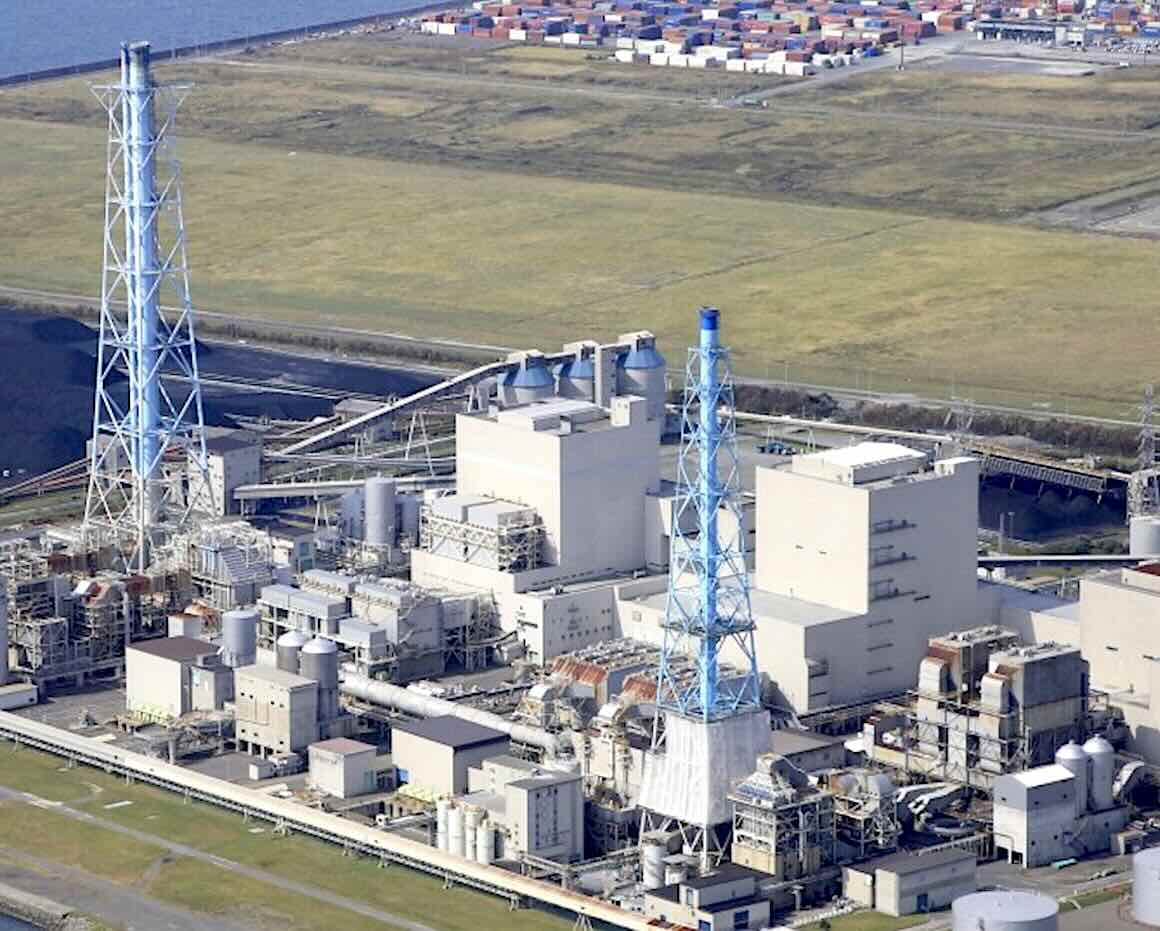
Japan, like its neighbor South Korea, is reopening coal-fired power plants once condemned as relics of a dirtier era. Energy officials cited “extraordinary supply uncertainty” as justification for using the same fuel they had promised to eliminate.
Representatives from Japan’s Ministry of Economy, Trade, and Industry (METI) stated that increasing coal operations serves as an immediate solution to conserve natural gas.
The agency noted that increasing uncertainty regarding the future availability of LNG forces the government to develop emergency response plans.
Prime Minister Takaichi said expanded coal use, combined with the restart of nuclear plants, would offset about 40% of the LNG imports Japan previously received through the Strait of Hormuz.
By simply allowing older coal plants to operate without political handicaps, METI projects massive savings of 500,000 tons of LNG over the fiscal year.
Japan’s thousands of factories, chemical plants, and data centers cannot pause for cloudy or windless days that make solar and wind energy so unreliable, and dependency on imports leaves no margin for experimentation.
Taken together, the decisions supporting the use of oil, gas, and coal exhibit an unwavering commitment to proven, reliable energy sources. Japan is refusing to sacrifice security for climate diplomacy.
The Japanese people have a legacy of resilience, engineering brilliance, and industrial mastery. Today, the country stands firm against climate dogma to secure its industrial future with the hydrocarbons that built its greatness in the first place.
Read more at CO2 Coalition





Don’t you love it when reality smacks these governments in the face!? They only focus on the use of petroleum and coal for transportation and generating electricity. But as this article states there are so many other uses for fossil fuels besides that and for Japan’s export business the loss of them is critical.
This is the feel-good story of the day. I love reading them.