

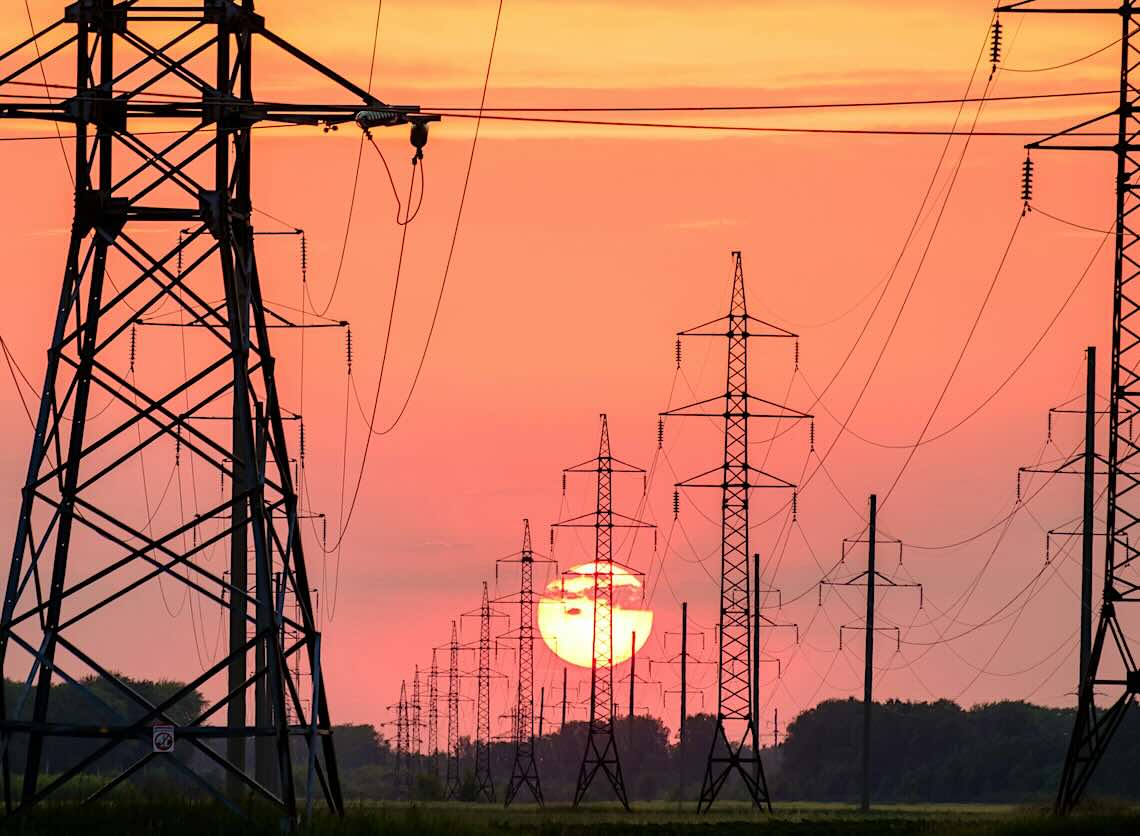
It was supposed to be a quiet time of year for the people who oversee Britain’s energy network. Instead, a surprise heatwave, geopolitical turmoil, and sheer bad luck have exposed the cracks in the country’s power system. [some emphasis, links added]
Before Friday evening, grid chiefs issued their second electricity margin notice of the week – an alert that effectively signals things are becoming a little too close for comfort.
The notice urges generators to squeeze every last bit of capacity they can out of their plants.
It followed a similar warning on Tuesday evening, as sweltering temperatures prompted households and businesses to turn on fans and air conditioners to keep cool.
To bolster supplies, the National Energy System Operator (Neso) was eventually forced to call upon gas-fired power stations and European neighbours – at significant costs.
That’s despite that less than a month ago, Ed Miliband, the Energy Secretary, boasted that the country was producing “more clean power than ever before.”
He has repeatedly argued that shifting away from oil and gas would get Britain off the “roller coaster” of fossil fuel prices that drives up costs.
So what went wrong?
Normally, the summer months are seen as quiet because warm weather means people use less electricity and gas for heating.
But this week, grid operators have been grappling with a cocktail of misfortunes – not least the exceptionally hot weather.
Extreme heat batters Britain’s electricity system from two directions because it pushes up demand while also squeezing supply, explains Tom Edwards, of energy consultancy Cornwall Insight.
What also makes things harder are the consumption patterns. Electricity usage usually peaks reliably at breakfast time and then again in the evenings as people get home from work.
But when it is this hot, households and businesses turn on fans and air conditioners to keep cool throughout the day. Some also keep them on through the evening and night, when there’s less solar power being generated.
At the same time, high temperatures make all kinds of equipment throughout the network less efficient: from gas plants to electricity transmission lines and even solar panels.
“We’ve actually seen a lot of gas plants issue unavailability notices, saying they can’t do full output,” explains Edwards. “It’s just too hot for them to run at full efficiency.”
Similarly – and perhaps more ironically – solar farms also become less efficient. A typical panel’s efficiency drops by 0.3pc to 0.5pc for every degree that the temperature rises above 25°C.
Transmission lines are not immune either. These cables – which act as high-voltage motorways, moving electricity up and down the country – heat up when in use. High ambient temperatures reduce the amount of power they can safely carry, forcing grid controllers to dial it down.
The final bit of bad luck this week is nuclear outages. Power station bosses usually take advantage of the summer months to refuel reactors, with Heysham in Britain and French plants across the Channel currently offline.
All these things combine to squeeze the system further, as plants produce less power and the amount that can be moved around also shrinks.
Read rest at The Telegraph






LOL! How in the world can a Telegraph article say “through the evening and night, when there’s less solar power being generated”? Does no one there edit ridiculous statements?