

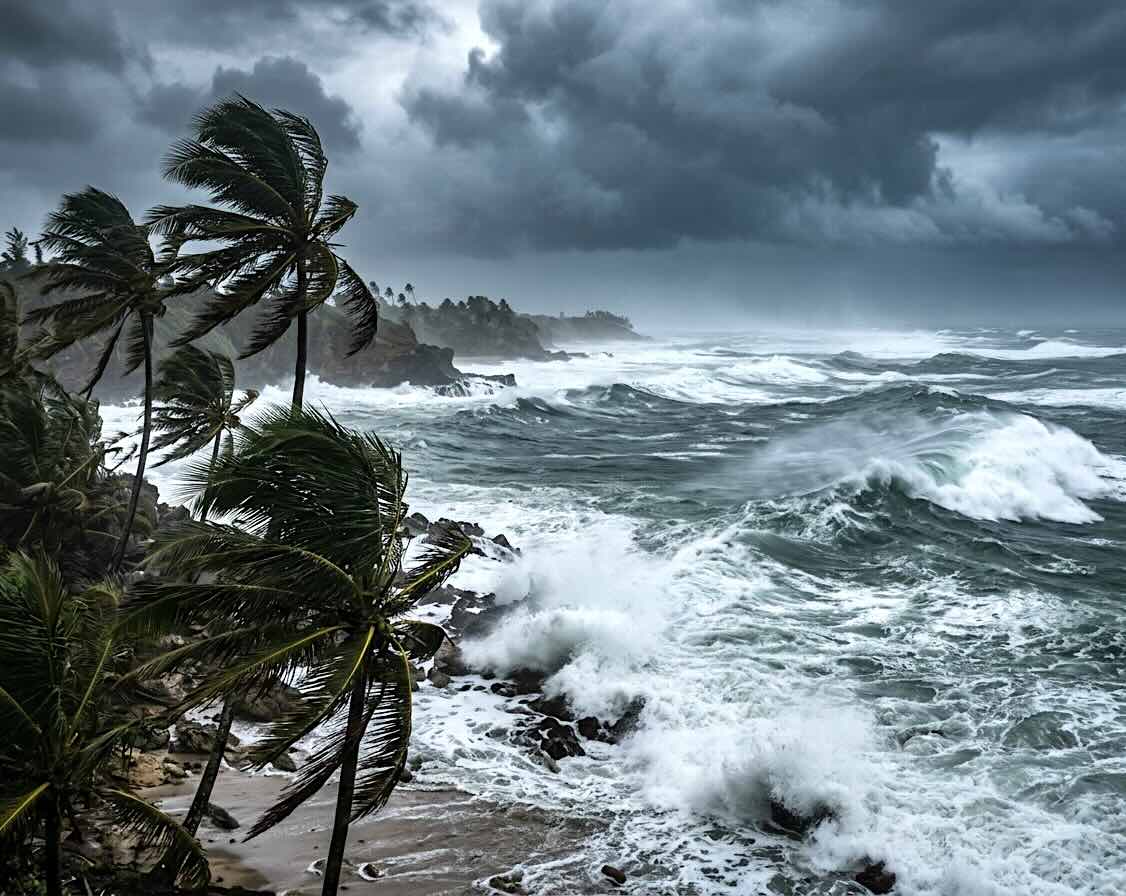
The El Niño-Southern Oscillation (ENSO) drives the largest year-to-year climate variability on Earth. This deep dive updates my past analyses of the relationship of (a) ENSO and U.S. hurricane damage and (b) ENSO and global disaster losses. [some emphasis, links added]
First, more than 25 years ago, Chris Landsea and I published a paper showing that U.S. hurricane damage varies with ENSO: La Niña years in general have larger U.S. hurricane losses than El Niño years.
The update shows that the original 1999 finding holds with almost 30 years of additional data.
The La Niña-to-El Niño ratio of median normalized CONUS damage was 4.0× in the 1925-1997 period covered by the original paper; in the 1998-2025 period, the ratio was 7.5×.
Second, global disaster losses over 1990-2024 show a strong La Niña signal at the aggregate level: median global losses total $270 billion in La Niña years versus ~$155 billion in El Niño years (2024 dollars). U.S. hurricane losses likely dominate the global aggregate in any year with a major U.S. landfall.
Global weather-disaster death rates (annual median) are ~1.3x higher during La Niña than El Niño, dominated by a handful of catastrophic events.
Third, as of 22 June 2026, NOAA carries an El Niño Advisory: El Niño conditions are present and expected to strengthen into the Northern Hemisphere winter 2026-27.
Forecasters predict a 63% chance of a “very strong” El Niño (SST anomalies exceeding 2.0°C) developing this fall. The base-rate expectation for the 2026 Atlantic hurricane season favors below-average U.S. losses, but tail risk remains.
The policy implications are clear: ENSO information has economic value for decision-makers who can act on probabilistic knowledge.
ENSO shifts where and when the risks of extremes occur. This report quantifies some of the better-known consequences of this important mode of climate variability.
The full report is available for paid THB subscribers.
The Honest Broker is written by climate expert Roger Pielke Jr and is reader-supported. If you value what you have read here, please consider subscribing and supporting the work that goes into it.
Read more at The Honest Broker


the enso cycle affects the weather
and hurricanes are one example of weather
the enso cycle does not affect the climate
when you look at the 50 year average of weather
Did the author make such a claim? Or is your reading comprehension lacking. His point is that the ENSO cycle’s effects are well known that El Nino’s result in fewer Atlantic hurricanes while La Ninas result in more and a higher cost from the destruction from the hurricanes. Not that difficult to understand.
The El Niño-Southern Oscillation (ENSO) cycle
does not affect the long-term, 50-year trend
or total number of hurricanes.
That is an important point
not made in the article
So because he didn’t explicitly state that ENSO doesn’t affect long-term climate trends you felt the need to point it out? The cycles between El Nino and La Nina happen naturally and those natural occurrences affects the frequency of hurricanes in the Atlantic basin and easter Pacific. Nothing more and nothing less.