

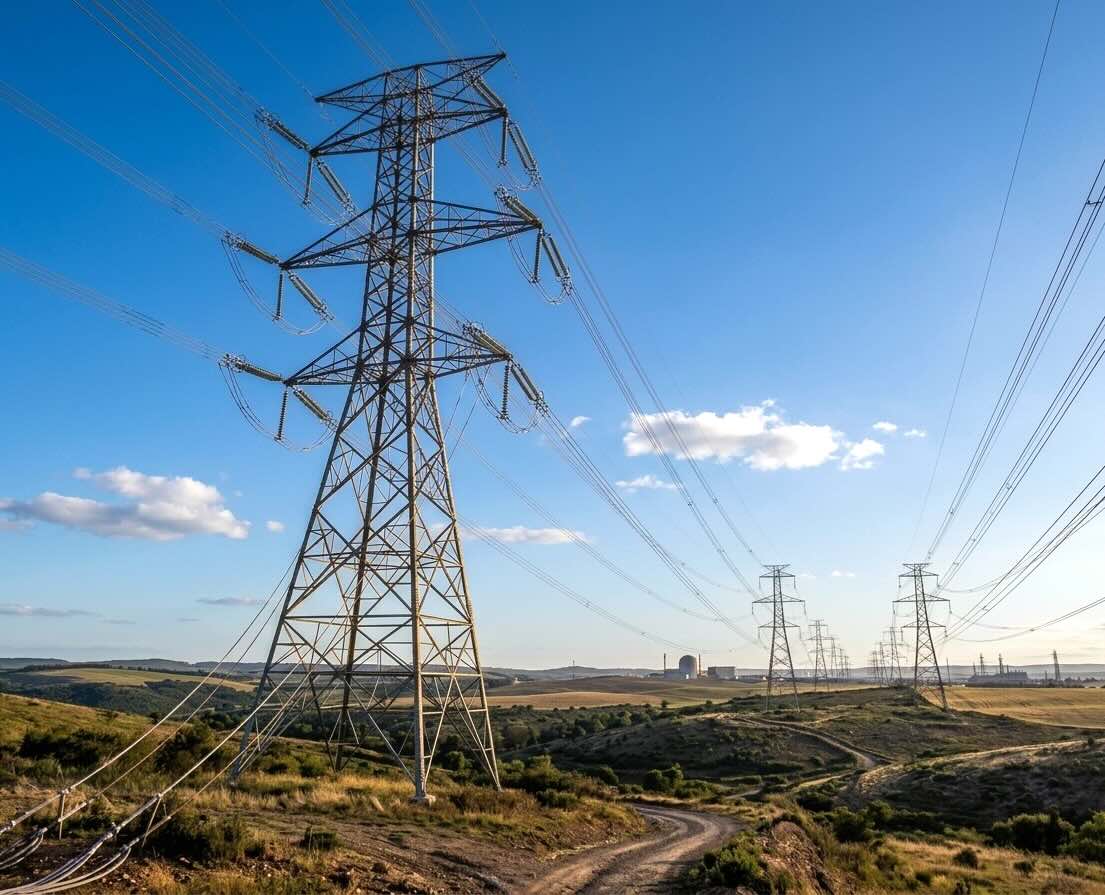
On May 23, 2025, President Trump, via Executive Order 14301, took multiple actions to jumpstart the nation’s long-dormant nuclear energy industry. [some emphasis, links added]
Besides “expeditiously” processing applications for qualified test reactors and revising agency policies to expedite review, approval, and deployment of advanced reactors under Energy Department supervision.
The goal was to enable operational testing of microreactors within two years following a completed application. Toward that end, the DOE created a pilot program to construct and have operational at least three reactors outside the National Laboratories (but under a DOE contract) to achieve “criticality” by July 4, 2026 – the nation’s 250th birthday.
Last August, the DOE selected 11 reactor projects for the pilot program and offered them land and support from the national laboratories system – every effort to fast-track success.
Four of them – Antares Nuclear Inc., Valar Atomics, and Aalo Atomics (which got there the morning of July 4), all founded in 2023, made the President’s first deadline.
But so did one-year-old Deployable Energy, whose test reactor was the first to reach criticality under the DOE’s Nuclear Energy Launch Pad, a joint project of the Idaho National Laboratory and the National Reactor Innovation Center in June 2025.
The Launch Pad, which builds on the success of the Reactor Pilot Program and the Fuel Line Pilot Program, assists advanced reactors, fuel fabrication, enrichment, reprocessing, and related innovations.
Criticality is a technical milestone that establishes a reactor can sustain a chain reaction – but that alone does not mean the reactor can provide electricity. Zero-power criticality can be achieved without meaningful engineering progress on fuel or design.
So what have these firms achieved – and how about the progress of the other eight grant recipients?
Antares Nuclear’s Mark-0 test reactor achieved criticality on June 4 at Idaho National Laboratory as the first privately funded non-light-water design to go critical there in four decades. The Mark-0 is a sodium heat-pipe-cooled design running NALEU TRISO fuel.
Antares had been testing at NASA’s Marshall Space Flight Center to provide 100 kW of nuclear energy to a future moon base. The firm already has an order to deliver its microreactors to Joint Base San Antonio in 2027.
Valar Atomics’ minivan-sized Ward 250 reached criticality on June 22 at its test site at the San Rafael Energy Lab in Utah, following a core-only test at Los Alamos National Laboratory that also reached criticality. The Ward 250 is a TRISO-fueled, helium-cooled, high-temperature gas reactor.
Aalo’s Critical Test Reactor (CTR) went from groundbreaking to criticality on July 4, eight months after startup, before an audience of all 200 company employees for what CEO Matt Loszak described as “a nuclear Burning Man.”
Aalo’s success has greenlit the construction of a 10-MWe reactor that can power an on-site data center and be deployed by 2027.
Deployable Energy’s test reactor is water-moderated and helium-cooled and runs on standard 4.95% enriched uranium dioxide using commercially available materials instead of HALEU or exotic components.
Founder Bobby Gallagher partnered with Texas A&M University’s nuclear engineering department on a 1-MW container reactor, the Unity Nuclear Battery.
The DOE says no other country had ever taken three – no, four – distinct advanced microreactor designs critical in a single 30-day period. Energy Secretary Chris Wright called the joint accomplishments “a significant milestone on a timeline many thought was unachievable.”
These firms meeting the July 4 deadline mark a major milestone for President Trump’s initiative to incentivize a nuclear energy renaissance, according to the DOE. In just one year, the nation has taken bold steps to remove excessive regulatory barriers, give new life to retired nuclear power plants, and secure a domestic nuclear fuel supply chain.
All of the other initial grant recipients are also making progress toward criticality and deployment.
Deep Fission is building a 15-MWe modular reactor prototype that will be placed in an optimized borehole 1 mile beneath the earth’s surface in Parsons, Kansas. The Gravity Nuclear Reactor design uses pressurized water reactor technology and low-enriched uranium fuel; the tiny footprint and dense power output enable multiple units on a single site.
Just this month, the factory-built, non-nuclear prototype canister was delivered to the Kansas site, a major step toward validating installation, infrastructure readiness, and operational sequencing before fuel loading. Deep Fission, whose project is beginning real-world installation and testing, anticipates achieving criticality very soon.
On July 1, Oklo Inc. announced that the DOE had approved the Documented Safety Analysis for its Isotopes’ Groves Isotope Test Reactor. As soon as Oklo passes the DOE’s readiness review and gains approval for startup, the facility will load nuclear fuel, conduct startup testing, and proceed towards criticality, which it hopes to achieve by the end of July.
Oklo also signed an Other Transaction Authority with the DOE to support the design, construction, and operation of a radioisotope pilot plant under the Reactor Pilot Program.
Atomic Alchemy Inc., an Oklo subsidiary, will use the Radioisotope Pilot Facility to lay the groundwork for future commercial plants that make medical and research radioisotopes.
In February, Radiant Energy’s Kaleidos 1-MWe portable microreactor received DOE approval to proceed with a full-power design test at Idaho National Laboratory.
Kaleidos, which uses fans and an air jacket to cool the core through natural convection (and no on-site water), is built for diverse environments and provides 1.9 MW of thermal power for facility heating or desalination. If all goes well, Radiant will build a larger reactor in Oak Ridge, Tennessee.
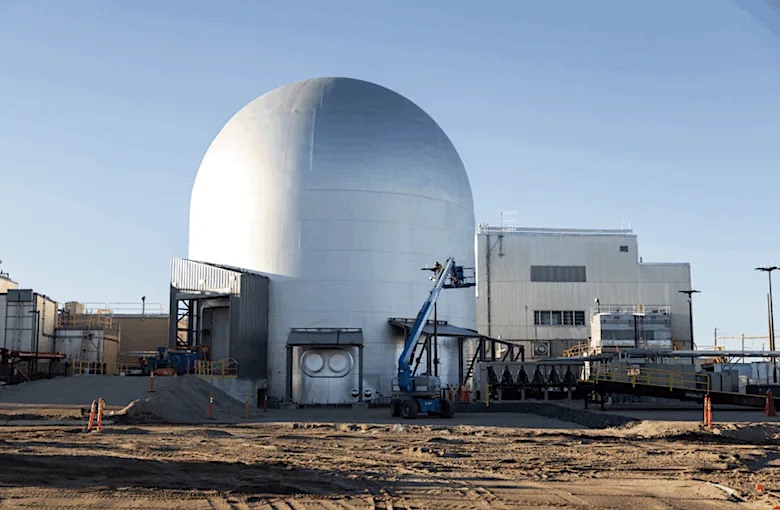
Also in February, Terrestrial Energy Inc. entered into an agreement with the DOE for a pilot reactor to support the design and safe operation of the TETRA reactor.
This molten salt-fueled, graphite-moderated reactor will use standard assay, low-enriched UF4-based fuel (SALEU) containing less than 5% uranium-235. Last September, Terrestrial Energy was also selected for the DOE’s Fuel Line Pilot Program.
In May, the DOE approved the Preliminary Documented Safety Analysis for Last Energy Inc.’s PWR-5 pressurized water pilot reactor, to be built at Texas A&M’s Rellis Campus.
The action clears the way for fuel receipt, criticality demonstration, and operations. The firm is also engaged with the NRC in pre-application activities for its planned PWR-20, a 20-MW pressurized water microreactor, to be built in Haskell, Texas.
Natura Resources LLC is on track to deploy its 1-MW high-temperature, low-pressure MSR-1 liquid-fuel Gen IV molten salt reactor later this year at its demonstration site on the campus of Abilene Christian University.
The NRC issued a construction permit for the reactor in September 2024, and Natura is now preparing for an operating license application. The project intends to advance Gen IV molten salt reactor technology with dual applications in energy and medicine.
Dozens of other nuclear energy startups – and older companies – are also working on reactors of various sizes, designs, and physics. The race is on – and there is a plethora of companies seeking to meet the nation’s fast-growing electricity demand.
The winners may or may not be the first to go operational, but will be the ones whose costs and timelines best fit customer needs.
Read more at RealClearEnergy






This article didn’t mention it but I hope at least one of these companies will use Th-232 as their seed for Uranium. Thorium is plentiful and the only isotope is Th-232 which when bombarded by neutrons will decay through two steps to U-233 in about 27 days. It is the only other fissile isotope of Uranium. It would reduce the need for the expensive task of enriching Uranium since U-235 is .72% of natural Uranium with the rest is U-238.
stop the nuclear cheerleading
not one new nuclear reactor or new nuclear SMR will be added to the US electric grid while trump is president
What’s your point Greene? Have you ever been involved in building a nuclear reactor? I did go through an initial installation and load of a reactor including taking it critical for the first time. And then went through the process of operating at different power levels to test the reactor design. This was a land-based reactor for testing a new reactor design in the Navy. This took us two years of testing and the reactor compartment, pressure vessel, primary coolant system had already been installed before I got there. So to expect a new plant would be built in 2 1/2 years and be operational would never happen. So again, what’s your point?