• Privacy Policy
  • About Us
  • Contact Us
Climate Change Dispatch
  • Home
  • Videos
  • Who We Are
  • Facts Vs. Fearmongering
    • Real science vs Junk Science
      • 1100-plus Peer-Reviewed Studies
      • Michael Crichton: Aliens Cause Global Warming
      • Climate change and its causes
      • Climate Science Primer
      • CO2 is not pollution
      • Deceptive Surface Temperature Records
      • Editorial: Great Global Warming Hoax
      • Rules for Climate Radicals: Part 1
      • Rules for Climate Radicals: Part 2
      • Rules for Climate Radicals: Part 3
      • Why CO2 Is A Minor Player In Global Climate
      • Why Politicized Science Is So Dangerous
    • Facts Not Fear
      • A Simple Question For Climate Alarmists
      • Climate Change – The Facts
      • Climate Change Fears Are Empirically Baseless
      • Global Warming 101
      • Global Warming Q&A
      • Understanding The Medieval Warm Period
      • Ocean Cycles and Climate
      • Overview of Plate Climatology Theory
      • Precautionary Principle
      • Should We Celebrate Carbon Dioxide?
      • The Skeptics Handbook
      • Weather Versus Climate
      • Why I’m a GW skeptic
      • Winning the climate debate with facts
      • Why Aliens Cause Global Warming
    • Greenhouse FAQs
      • CO2, Plants, & Industry
      • How much have temps changed?
      • How much have temps changed?
      • How much have temps changed?
      • Is global warming real?
      • Measuring temperature
      • Swimming in CO2?
      • Scientists urge caution?
      • Today’s warming trend
      • Variations in temperature
    • Gore’s Greatest Goofs
      • Deconstructing the Truth
      • Fact-Checking Al Gore’s Latest Predictions
      • How Gore Created The Global Warming Hoax
    • Inside Real Climate
      • Closer look at the 97% Consensus
      • GW’s Amazing Story
      • IPCC gets failing grade
      • Real Climate Exposed!
      • Truth about Real Climate
      • We’ve Been Conned
      • What is there a 97% consensus about?
    • Behind the IPCC
      • 1,000 Scientists Dissent
      • Climategate: Caught Green-Handed!
      • Climategate Inquiries
      • Climategate Inquiries 2
      • NIPCC Report Now Available
      • Understanding the Climategate Inquiries
  • Submissions
  • Contact Us
No Result
View All Result
  • Home
  • Videos
  • Who We Are
  • Facts Vs. Fearmongering
    • Real science vs Junk Science
      • 1100-plus Peer-Reviewed Studies
      • Michael Crichton: Aliens Cause Global Warming
      • Climate change and its causes
      • Climate Science Primer
      • CO2 is not pollution
      • Deceptive Surface Temperature Records
      • Editorial: Great Global Warming Hoax
      • Rules for Climate Radicals: Part 1
      • Rules for Climate Radicals: Part 2
      • Rules for Climate Radicals: Part 3
      • Why CO2 Is A Minor Player In Global Climate
      • Why Politicized Science Is So Dangerous
    • Facts Not Fear
      • A Simple Question For Climate Alarmists
      • Climate Change – The Facts
      • Climate Change Fears Are Empirically Baseless
      • Global Warming 101
      • Global Warming Q&A
      • Understanding The Medieval Warm Period
      • Ocean Cycles and Climate
      • Overview of Plate Climatology Theory
      • Precautionary Principle
      • Should We Celebrate Carbon Dioxide?
      • The Skeptics Handbook
      • Weather Versus Climate
      • Why I’m a GW skeptic
      • Winning the climate debate with facts
      • Why Aliens Cause Global Warming
    • Greenhouse FAQs
      • CO2, Plants, & Industry
      • How much have temps changed?
      • How much have temps changed?
      • How much have temps changed?
      • Is global warming real?
      • Measuring temperature
      • Swimming in CO2?
      • Scientists urge caution?
      • Today’s warming trend
      • Variations in temperature
    • Gore’s Greatest Goofs
      • Deconstructing the Truth
      • Fact-Checking Al Gore’s Latest Predictions
      • How Gore Created The Global Warming Hoax
    • Inside Real Climate
      • Closer look at the 97% Consensus
      • GW’s Amazing Story
      • IPCC gets failing grade
      • Real Climate Exposed!
      • Truth about Real Climate
      • We’ve Been Conned
      • What is there a 97% consensus about?
    • Behind the IPCC
      • 1,000 Scientists Dissent
      • Climategate: Caught Green-Handed!
      • Climategate Inquiries
      • Climategate Inquiries 2
      • NIPCC Report Now Available
      • Understanding the Climategate Inquiries
  • Submissions
  • Contact Us
No Result
View All Result
Climate Change Dispatch
No Result
View All Result

Recent Fire In UK Airport Parking Lot Highlights EV Fire Hazards

by Dr. Matthew Wielicki
October 13, 2023, 9:22 AM
in News and Opinion, Videos
Reading Time: 6 mins read
A A
3

luton airport ev fireFire potential for internal combustion engine (ICE) vehicle…

The potential for fire in an internal combustion engine vehicle largely depends on the fuel type and the conditions under which it’s exposed.

Let’s break down the combustion potential for gasoline (petrol) and diesel fuels [emphasis, links added]:

  1. Gasoline (Petrol) in ICE Vehicles:
  • Volatility: Gasoline is a relatively volatile fuel, which means it can easily vaporize. For combustion to occur, the fuel must be in a vapor state. The vapor-air mixture then becomes combustible within a certain range.
  • Flammable Range: For gasoline, this flammable range is approximately 1.4% to 7.6% by volume of gasoline vapor in the air.
  • Gasoline Tanks: While liquid gasoline itself isn’t directly ignitable, its vapors are. A significant threat can be a situation where gasoline vapor is allowed to accumulate in an enclosed space and then encounters an ignition source.
  1. Diesel in ICE Vehicles:
  • Volatility: Diesel is less volatile than gasoline. This means it doesn’t vaporize as easily, which is why diesel engines use compression to ignite the fuel instead of a spark.
  • Flammable Range: Diesel has a narrower flammable range in the air compared to gasoline.
  • Diesel Tanks: Due to its higher ignition temperature and lower volatility, diesel is generally considered safer from the perspective of unintended ignition compared to gasoline. However, in the right conditions (e.g., a mist or finely atomized spray), it can still ignite.

Gasoline and diesel tanks on vehicles are designed with safety in mind. They are typically constructed to resist rupture in the event of a collision. Modern vehicles also incorporate features like check valves to prevent fuel spillage if the vehicle rolls over.

In summary, both gasoline and diesel have the potential to ignite, but under different conditions. Gasoline is generally more prone to unintended ignition due to its volatility, while diesel, because of its higher ignition temperature and lower volatility, is less so.

Fire potential for electric vehicles (EVs)…

Electric vehicles (EVs) don’t use combustible fuels like gasoline or diesel, so they don’t have a “fire potential” in the traditional sense. However, there are other safety concerns associated with EVs, primarily related to their batteries:

  1. Lithium-ion Batteries:
  • Most modern EVs use lithium-ion batteries due to their high energy density and efficiency. While these batteries are generally safe, they can pose a fire risk under certain conditions.
  • Thermal Runaway: This is a self-sustaining reaction that can occur if a cell in the battery becomes damaged or defective. Once one cell goes into thermal runaway, it can produce heat that causes adjacent cells to also go into thermal runaway, creating a cascading effect. This can lead to a fire or even an explosion.
  • Overcharging: If a battery is charged beyond its safe limit, it can cause the battery to become unstable and could lead to thermal runaway.
  • Physical Damage: Physical damage to the battery, whether from a collision, puncture, or other forms of trauma, can lead to internal short circuits which might result in thermal runaway.
  1. Battery Management Systems (BMS):
  • Modern EVs are equipped with advanced BMSs that monitor the health, temperature, and state of charge of the battery. These systems help prevent overcharging and manage the cooling of the battery to prevent overheating.
  • Failures or defects in the BMS could potentially lead to unsafe conditions.
  1. Other Combustion Potential:
  • While the primary concern with EVs is the battery, other components in the vehicle could pose a fire risk, such as electrical systems or components, although these risks are generally comparable to or less than those found in traditional ICE vehicles.

Manufacturers of EVs invest heavily in safety measures to prevent battery-related incidents. This includes protective casings, cooling systems, and software controls.

However, in the event of an accident, are emergency responders trained to deal with potential risks associated with EV batteries?

Comparing ICE and EV fire potential…

Comparing the fire potential and fire intensity of an Electric Vehicle (EV) and an Internal Combustion Engine (ICE) vehicle requires examining a variety of factors:

  1. Combustion Potential:
  • EV: The primary combustion potential in EVs lies with the batteries. Lithium-ion batteries can undergo a process called thermal runaway if they’re damaged, defective, or subjected to extreme conditions. This can lead to intense fires.
  • ICE: The combustion potential in ICE vehicles lies with the fuel. Gasoline is volatile and can easily form a combustible mixture with air. Diesel is less volatile but can still ignite under certain conditions.
  1. Onset of Fire:
  • EV: Fires in EVs, especially those due to battery issues, can be slower to start. Thermal runaway might begin in one cell and can spread to others, but this process might not be immediate.
  • ICE: Fires, especially those resulting from fuel leaks in accidents, can ignite rapidly if an ignition source is present.
  1. Fire Intensity:
  • EV: Battery fires can be intense and difficult to extinguish. In certain conditions, battery fires can reignite even after they seem to have been put out.
  • ICE: Gasoline fires can also be intense, especially if there’s a significant amount of fuel involved. Diesel fires are less intense than gasoline fires but can still be formidable.
  1. Extinguishing the Fire:
  • EV: Battery fires require large amounts of water or specific types of extinguishers to cool down the batteries and prevent the spread of thermal runaway to other cells. There’s also the challenge of potential reignition.
  • ICE: Gasoline and diesel fires can typically be extinguished using regular firefighting foam or dry chemical extinguishers.
  1. Toxicity and Environmental Impact:
  • EV: Battery fires can release toxic fumes, including harmful metals and chemicals. The environmental impact can also be significant if the remnants of the battery enter the ecosystem.
  • ICE: Burning gasoline or diesel releases carbon monoxide, hydrocarbons, and other pollutants. Spilled or leaked fuels can also contaminate the environment.

In conclusion, both EVs and ICE vehicles present risks of fire, but the nature, intensity, and potential causes of these fires differ.

ICE fires, particularly those involving gasoline, tend to be less intense, whereas EV battery fires might develop more slowly but can be more intense and more challenging to extinguish.

Luton Airport fire…

On October 11, 2023, around 9:00 PM local time, Luton Airport’s new parking garage experienced a fire. The blaze rapidly moved through the facility, leading to a partial structural collapse.

Consequently, the airport halted all flight operations until at least 3:00 PM the following day, with firefighters actively combating the fire.
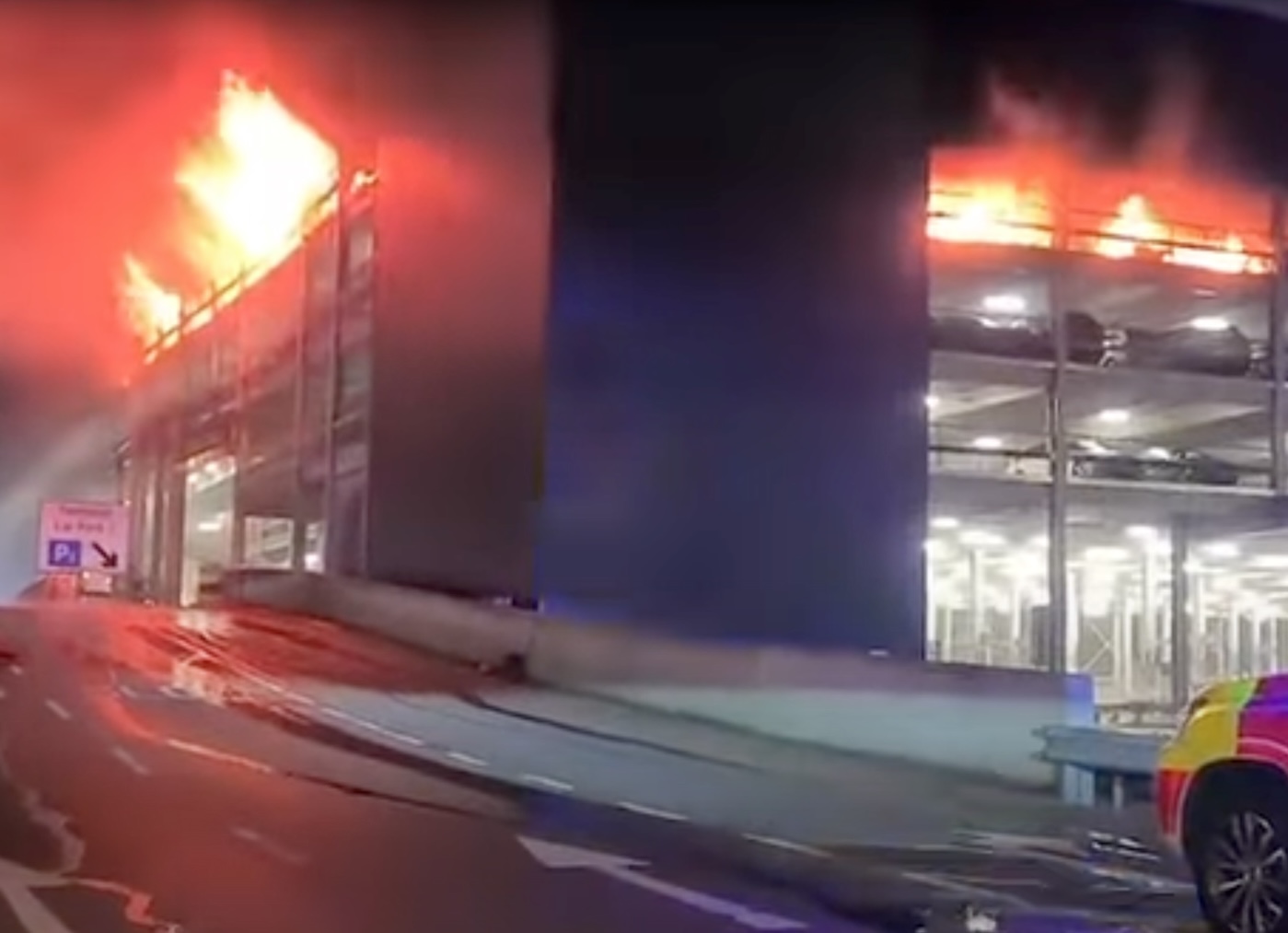
Luton Airport parking lot fire. Photo via YouTube screencap

Initial investigations suggest the fire accidentally started in a parked car, with conflicting reports if the car was an EV or an ICE. Bedfordshire Fire and Rescue Service chief fire officer, Andrew Hopkinson stated:

We don’t believe it was an electric vehicle. It’s believed to be diesel-powered, at this stage all subject to verification. And then that fire has quickly and rapidly spread.

Approximately 1,200 vehicles were destroyed in the inferno, and several firefighters required hospitalization. …

Although the initial reports—which need verification—state this as a diesel-powered vehicle, the video obtained appears to show a Land Rover Evoque.

The fire appears to be concentrated under the driver-side of the vehicle. When looking at a schematic of the Evoque, this is where the 48V lithium-ion battery resides.
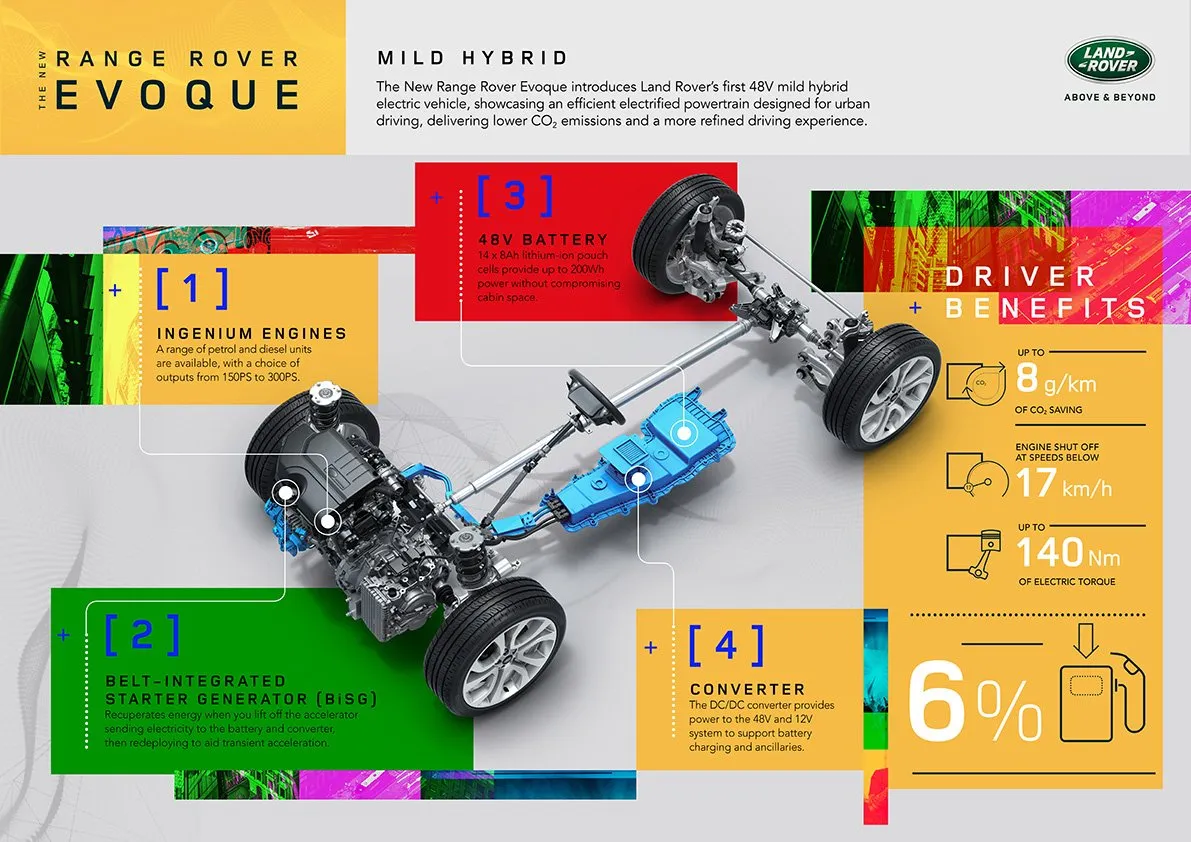
Although the cause of the fire at Luton Airport remains under investigation, the intensity and rapid spread of the blaze suggest that the thermal runaway of EV batteries played a major role.

What is the fire potential of backing up the electricity grid with even larger lithium-ion batteries?

Read more at Irrational Fear
  • Truth
  • Twitter
  • Facebook
  • LinkedIn
  • Gettr
  • Threads
  • gab-logo Gab
  • Mastodon
  • Buffer
  • Telegram
  • Email
  • Copy Link
  • Share Using More Networks…

Popular Posts

Bipolar

New Study: Ice Core Data Shows Modern Warming Is Statistically Unremarkable

Mar 05, 2026
Energy

Climate Science’s Biggest Shift In Decades: IPCC’s RCP8.5 Is Officially Dead

Apr 29, 2026
Electric Vehicles (EVs)

The ‘Green’ Scam Of The Century: How ‘Renewables’ Increase Fossil Fuel Demands

Oct 23, 2024

Comments 3

  1. SPURWING PLOVER says:
    3 years ago

    Just imagine a Apartment complex with only EV,s in its Underground parking then they catch fire and we have a fire far more deadly then the Coconut Grove Fire

    Reply
  2. Brian RL Catt says:
    3 years ago

    Aha, so it was probaly everything it was claimed AND appeared to be, then?
    A Hybrid Evoque with a diesel ICE, so they can call it a diesel but the electric bit was what caught fire, then. Need Poirot to figure this shit out. Just get the chassis/VIN number for crissakes….

    As a physicist/engineer I have never throught EVs a good idea on any joined up engineering or practical basis. BUT I was persuaded by the overtly superior energy use of hybrids…………. until now…..

    Reply
  3. Ken Irwin says:
    3 years ago

    One report said it started in a single vehicle – two fire tenders got to it – but the fire still spread ?
    I have personally watched the fire brigade extinguish two ICE vehicle fires and one fairly large flammable stores (50 x 200l drums of thinners involved) and in each case, once they hit it with foam and water spray the fire was out in seconds.
    What happened here that they couldn’t control it – sounds suspiciously like an EV fire to me.

    Reply

Comments are welcome! Those that add no discussion value may be removed.Cancel reply

Stay Connected!

gab-logo

Donate Today

Beating back the alarmist narrative takes time and money. Please donate today to help!

Subscribe To CCD Via Email!

Subscribe to receive a digest of daily stories, or get instant notifications. Check your Junk/Spam folder for a verification email.

Recent Posts

  • maryland import energyMaryland Electricity Prices Soar 50% As State Shutters Reliable Power, Pushes Wind And Solar
    Aug 31, 2026
    Maryland electricity prices have soared as state policies shutter reliable generation, increase dependence on imported power, and push wind and solar. […]
  • noaa hurricane news coverageMedia Pushes ‘Catastrophic Climate’ Narrative Despite IPCC’s Extreme Weather Findings
    Aug 31, 2026
    As climate change coverage declines, some media outlets still link worsening extreme weather to global warming despite the IPCC’s findings. […]
  • cartoon thunberg podium how dare you‘How Dare You?’ The Human Cost Of Greta Thunberg’s Climate-Policy Crusade
    Aug 31, 2026
    Greta Thunberg’s “How dare you?” comes full circle as costly climate policies undermine energy security, living standards and prosperity worldwide. […]
  • polar bear sea iceLate-Summer Arctic Sea Ice Extent Hasn’t Fallen In 20 Years, Satellite Data Show
    Aug 31, 2026
    Late-summer Arctic sea ice extent has barely changed in 20 years, as Europe sees low burned area and Atlantic cyclone activity remains well below normal. […]
  • chinese industrial parkWorld’s Worst Polluter China Mulls Hosting U.N. Climate Alarmist Summit COP33
    Aug 28, 2026
    China is reportedly considering a COP33 bid as the world’s largest carbon emitter seeks to burnish its reputation as a global climate leader. […]
  • nj industrial workersNJ’s $50B Climate Superfund Bill Faces Fresh Pushback From Business, Labor
    Aug 28, 2026
    NJ’s $50B climate superfund bill is drawing renewed opposition over warnings it could raise energy costs, threaten jobs, and deter investment. […]
  • french vineyard grapesAn Early Champagne Harvest Isn’t Proof Of Climate Change—Just Warm Weather
    Aug 28, 2026
    Reuters blames climate change for an early Champagne grape harvest, but unusually warm weather—not a long-term climate trend—offers a simpler explanation. […]
  • latin america oil gas extractionLatin America Returns To Oil And Gas As ‘Green’ Shackles Break
    Aug 28, 2026
    Latin America is reclaiming its energy resources as governments expand oil and gas development and abandon costly climate-driven restrictions. […]
  • nasem buildingState AGs Accuse NASEM Of Producing ‘Biased’ Report To Aid Climate Lawfare
    Aug 27, 2026
    State AGs allege a NASEM biased climate report was shaped by funders and advocates tied to climate litigation and designed to aid plaintiffs. […]
  • puppet media moneyFair Question: Who’s Really Paying For The Media’s Climate Reporting?
    Aug 27, 2026
    Green-advocacy groups are pouring millions into climate reporting grants, raising questions about media bias and claims of editorial independence. […]

Books You May Like

Cold Facts About the Great Global Warming Scam

Climate prn book

Sunset on Net Zero

Canary in a Climate World

Have a suggestion? Let us know! We swap out books based on your input. We participate in the Amazon Services LLC Associates Program. See here.

  • Privacy Policy
  • DMCA Policy
  • About Us
  • Contact Us

© Portions copyright Climate Change Dispatch

No Result
View All Result
  • Home
  • Videos
  • Who We Are
  • Facts Vs. Fearmongering
    • Real science vs Junk Science
      • 1100-plus Peer-Reviewed Studies
      • Michael Crichton: Aliens Cause Global Warming
      • Climate change and its causes
      • Climate Science Primer
      • CO2 is not pollution
      • Deceptive Surface Temperature Records
      • Editorial: Great Global Warming Hoax
      • Rules for Climate Radicals: Part 1
      • Rules for Climate Radicals: Part 2
      • Rules for Climate Radicals: Part 3
      • Why CO2 Is A Minor Player In Global Climate
      • Why Politicized Science Is So Dangerous
    • Facts Not Fear
      • A Simple Question For Climate Alarmists
      • Climate Change – The Facts
      • Climate Change Fears Are Empirically Baseless
      • Global Warming 101
      • Global Warming Q&A
      • Understanding The Medieval Warm Period
      • Ocean Cycles and Climate
      • Overview of Plate Climatology Theory
      • Precautionary Principle
      • Should We Celebrate Carbon Dioxide?
      • The Skeptics Handbook
      • Weather Versus Climate
      • Why I’m a GW skeptic
      • Winning the climate debate with facts
      • Why Aliens Cause Global Warming
    • Greenhouse FAQs
      • CO2, Plants, & Industry
      • How much have temps changed?
      • How much have temps changed?
      • How much have temps changed?
      • Is global warming real?
      • Measuring temperature
      • Swimming in CO2?
      • Scientists urge caution?
      • Today’s warming trend
      • Variations in temperature
    • Gore’s Greatest Goofs
      • Deconstructing the Truth
      • Fact-Checking Al Gore’s Latest Predictions
      • How Gore Created The Global Warming Hoax
    • Inside Real Climate
      • Closer look at the 97% Consensus
      • GW’s Amazing Story
      • IPCC gets failing grade
      • Real Climate Exposed!
      • Truth about Real Climate
      • We’ve Been Conned
      • What is there a 97% consensus about?
    • Behind the IPCC
      • 1,000 Scientists Dissent
      • Climategate: Caught Green-Handed!
      • Climategate Inquiries
      • Climategate Inquiries 2
      • NIPCC Report Now Available
      • Understanding the Climategate Inquiries
  • Submissions
  • Contact Us

© 2026 Climate Change Dispatch

 
Share via
  • Facebook
  • Twitter
  • Pinterest
  • LinkedIn
  • Digg
  • Tumblr
  • VKontakte
  • Print
  • Email
  • Reddit
  • Buffer
  • Love This
  • Weibo
  • Pocket
  • Xing
  • Odnoklassniki
  • WhatsApp
  • Meneame
  • Blogger
  • Amazon
  • Yahoo Mail
  • Gmail
  • AOL
  • Newsvine
  • HackerNews
  • Evernote
  • MySpace
  • Mail.ru
  • Viadeo
  • Line
  • Flipboard
  • Comments
  • SMS
  • Viber
  • Telegram
  • Subscribe
  • Facebook Messenger
  • Kakao
  • LiveJournal
  • Yammer
  • Edgar
  • Fintel
  • Mix
  • Instapaper
  • Copy Link
  • Truth
  • gab-logo Gab
  • Gettr
  • Baidu
  • Mastodon
  • Threads
  • Bluesky
Share via
  • Tumblr
  • VKontakte
  • Print
  • Email
  • Reddit
  • Buffer
  • Love This
  • Weibo
  • Pocket
  • Xing
  • Odnoklassniki
  • WhatsApp
  • Meneame
  • Blogger
  • Amazon
  • Yahoo Mail
  • Gmail
  • AOL
  • Newsvine
  • HackerNews
  • Evernote
  • MySpace
  • Mail.ru
  • Viadeo
  • Line
  • Flipboard
  • Comments
  • SMS
  • Viber
  • Telegram
  • Subscribe
  • Facebook Messenger
  • Kakao
  • LiveJournal
  • Yammer
  • Edgar
  • Fintel
  • Mix
  • Instapaper
  • Copy Link
  • Truth
  • gab-logo Gab
  • Gettr
  • Baidu
  • Mastodon
  • Threads
  • Bluesky