


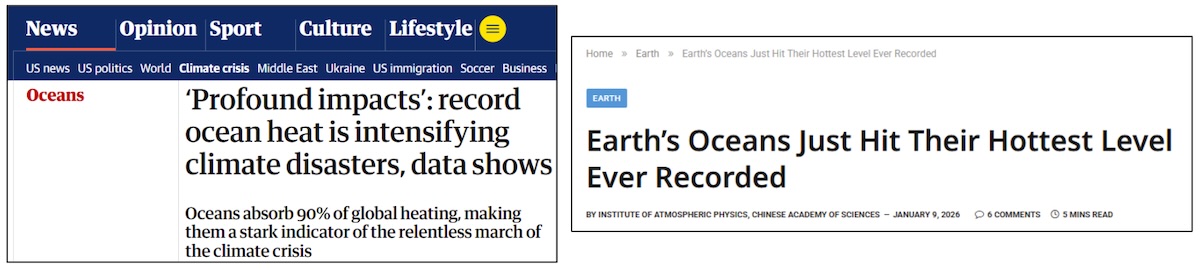
As we kick off 2026, the climate alarm machine is already in overdrive. A new paper published in Advances in Atmospheric Sciences claims that ocean heat content (OHC) reached another “record high” in 2025, with headlines screaming about “profound impacts” and “intensifying climate disasters.” [some emphasis, links added]
Outlets like The Guardian warn of record ocean heat fueling disasters, while SciTechDaily declares Earth’s oceans just hit their hottest level ever recorded.
It’s the same old song: blame every warm blip on human CO2 emissions, ignore the data that doesn’t fit, and crank up the fear to eleven.
But is this really the smoking gun for climate catastrophe? Or is it another example of cherry-picked stats and selective narratives designed to push an agenda?
In my past writings here on Irrational Fear, I’ve dissected how media and certain scientists hype ocean-related “crises” – from dead zones to hurricane “supercharging” – while conveniently overlooking inconvenient truths like natural variability, measurement limitations, and the oceans’ massive role in regulating CO2 levels.
If you’re a free reader, stick around for a quick overview of why this latest “record” might not be as alarming as it sounds. But for the full breakdown – including a deep dive into the new paper’s methodology, how it ties into my previous analyses on ocean heat sources and Henry’s Law, and why CO2 often follows temperature (not the other way around) – you’ll need to subscribe. Paid subscribers get the unfiltered truth, backed by data, to arm you against the irrational fear-mongering.
Let’s tease it: this “record” OHC increase? It’s tiny in context, dwarfed by natural processes, and contradicted by real-world observations like declining hurricane energy. Ready to see through the hype? Hit that subscribe button.
The Free Teaser: Why Ocean Heat “Records” Deserve Skepticism
Let’s start with the basics. The new paper, led by researchers from the Chinese Academy of Sciences and international collaborators, estimates that global upper 2000m OHC increased by about 23 ZJ (zettajoules… that’s 10^21 joules) from 2024 to 2025. That’s a big number, but context matters.
The Earth’s oceans hold an enormous amount of heat – we’re talking about a system that absorbs and releases energy on scales that make human influences look like a drop in the bucket (pun intended).
Media outlets are quick to link this to “intensifying disasters,” but the data tells a different story.
Take hurricanes: despite rising sea surface temperatures (SSTs), accumulated cyclone energy (ACE) – a far more reliable metric than cherry-picked storm counts – has been declining since 1990.

In my 2024 piece, “Hurricane Hype Busted: Data Disproves Climate Supercharging Claims,” I showed how storms like Helene and Milton were weaponized for alarmism, even as global ACE trends downward.
The IPCC itself admits high uncertainty in linking climate change to hurricane intensity (see #12 below), yet headlines ignore this for clicks.

Then there are ocean “dead zones” and fish kills, often blamed on warming-driven oxygen loss. In my 2023 article, “Dead Zones, Eutrophication, Henry’s Law, and Climate Change,” I explained how these are primarily caused by agricultural runoff – not CO2.
Claims that the oceans have taken up CO2 since 1960? It contradicts Henry’s Law basics: warming oceans release gases like O2 and CO2, but alarmists twist it to fit their narrative.
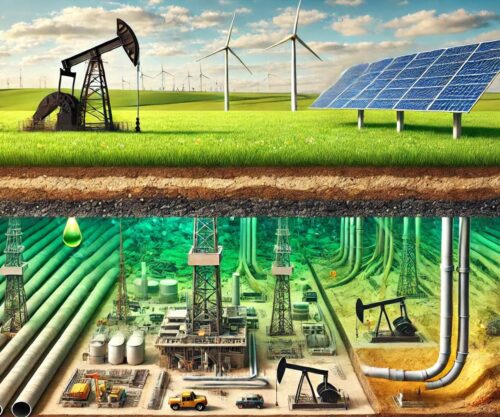
And don’t get me started on where ocean heat actually comes from. In “Where Does Ocean Heat Come From?”, I highlighted how crustal heat flow from hydrothermal vents adds ~40 terawatts annually – equivalent to 100,000 power plants – yet it’s barely mentioned in OHC discussions.
With less than 0.0001% of the ocean accurately measured for temperature (thanks to sparse Argo floats), how confident can we be in these “records”?
Statistical methods are the real villain here. Alarmists love long-term trends that mask natural cycles, like the Atlantic Multidecadal Overturning Circulation (AMOC) or the El Niño-Southern Oscillation (ENSO), which drives much of the recent warming.
They use models tuned to amplify CO2’s role while downplaying solar, volcanic, and oceanic variability.
The result? A narrative that every “record” proves impending doom, even as real-world impacts – fewer hurricane deaths, no surge in storm intensity – say otherwise.
This new paper fits the pattern: it acknowledges La Niña cooling SSTs in 2025 (down 0.12°C from 2024), yet hypes OHC as proof of unstoppable warming. But is it? Subscribers, let’s dive in…
Irrational Fear is written by climatologist Dr. Matthew Wielicki and is reader-supported. If you value what you have read here, please subscribe and support the work that goes into it.
Read rest at Irrational Fear



“Claims that the oceans have taken up CO2 since 1960? It contradicts Henry’s Law basics: warming oceans release gases like O2 and CO2, but alarmists twist it to fit their narrative.”
That is irrational junk science.
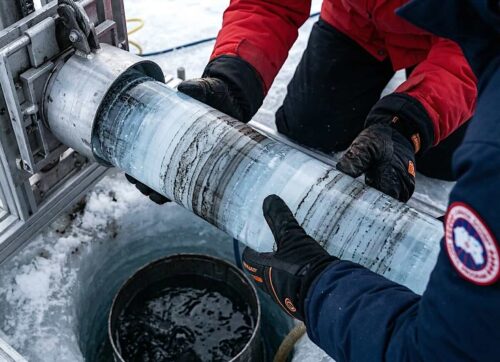
Oceans absorb a 30% of man made CO2 emissions. They are not outgassing CO2. Because oceans warm 0.6° C in the past 50 years, they absorb very slightly less CO2 then they would have absorbed if the temperature remained the same.
Here is an approximate example.
7 ppm =2024 man made CO2 emissions
(-3.5 ppm absorbed by nature.
— (1.05 ppm) absorbed by oceans.
(1.076 ppm) absorbed by oceans if they had not warmed 0.6° v. 2023.
“I highlighted how crustal heat flow from hydrothermal vents adds ~40 terawatts annually – equivalent to 100,000 power plants – yet it’s barely mentioned in OHC discussions.”
So what?
The sun is the overwhelming source of heat for the ocean, while the heat from hydrothermal vents and undersea volcanoes accounts for an extremely small, almost negligible, fraction of the total ocean heat budget. The total heat flow from the Earth’s interior (including all geothermal activity) to the surface is estimated to be approximately 0.03% of the Earth’s total heat budget when compared to the energy received from the Sun.
I am constantly amazed by how little conservatives know about basic climate science, even those with PhDs.
I’m constantly amazed at how someone without a PhD in sciences related to climate claims that those with PhDs and have views opposite of Mr. Greene are ignorant.