• Privacy Policy
  • About Us
  • Contact Us
Climate Change Dispatch
  • Home
  • Videos
  • Who We Are
  • Facts Vs. Fearmongering
    • Real science vs Junk Science
      • 1100-plus Peer-Reviewed Studies
      • Michael Crichton: Aliens Cause Global Warming
      • Climate change and its causes
      • Climate Science Primer
      • CO2 is not pollution
      • Deceptive Surface Temperature Records
      • Editorial: Great Global Warming Hoax
      • Rules for Climate Radicals: Part 1
      • Rules for Climate Radicals: Part 2
      • Rules for Climate Radicals: Part 3
      • Why CO2 Is A Minor Player In Global Climate
      • Why Politicized Science Is So Dangerous
    • Facts Not Fear
      • A Simple Question For Climate Alarmists
      • Climate Change – The Facts
      • Climate Change Fears Are Empirically Baseless
      • Global Warming 101
      • Global Warming Q&A
      • Understanding The Medieval Warm Period
      • Ocean Cycles and Climate
      • Overview of Plate Climatology Theory
      • Precautionary Principle
      • Should We Celebrate Carbon Dioxide?
      • The Skeptics Handbook
      • Weather Versus Climate
      • Why I’m a GW skeptic
      • Winning the climate debate with facts
      • Why Aliens Cause Global Warming
    • Greenhouse FAQs
      • CO2, Plants, & Industry
      • How much have temps changed?
      • How much have temps changed?
      • How much have temps changed?
      • Is global warming real?
      • Measuring temperature
      • Swimming in CO2?
      • Scientists urge caution?
      • Today’s warming trend
      • Variations in temperature
    • Gore’s Greatest Goofs
      • Deconstructing the Truth
      • Fact-Checking Al Gore’s Latest Predictions
      • How Gore Created The Global Warming Hoax
    • Inside Real Climate
      • Closer look at the 97% Consensus
      • GW’s Amazing Story
      • IPCC gets failing grade
      • Real Climate Exposed!
      • Truth about Real Climate
      • We’ve Been Conned
      • What is there a 97% consensus about?
    • Behind the IPCC
      • 1,000 Scientists Dissent
      • Climategate: Caught Green-Handed!
      • Climategate Inquiries
      • Climategate Inquiries 2
      • NIPCC Report Now Available
      • Understanding the Climategate Inquiries
  • Submissions
  • Contact Us
No Result
View All Result
  • Home
  • Videos
  • Who We Are
  • Facts Vs. Fearmongering
    • Real science vs Junk Science
      • 1100-plus Peer-Reviewed Studies
      • Michael Crichton: Aliens Cause Global Warming
      • Climate change and its causes
      • Climate Science Primer
      • CO2 is not pollution
      • Deceptive Surface Temperature Records
      • Editorial: Great Global Warming Hoax
      • Rules for Climate Radicals: Part 1
      • Rules for Climate Radicals: Part 2
      • Rules for Climate Radicals: Part 3
      • Why CO2 Is A Minor Player In Global Climate
      • Why Politicized Science Is So Dangerous
    • Facts Not Fear
      • A Simple Question For Climate Alarmists
      • Climate Change – The Facts
      • Climate Change Fears Are Empirically Baseless
      • Global Warming 101
      • Global Warming Q&A
      • Understanding The Medieval Warm Period
      • Ocean Cycles and Climate
      • Overview of Plate Climatology Theory
      • Precautionary Principle
      • Should We Celebrate Carbon Dioxide?
      • The Skeptics Handbook
      • Weather Versus Climate
      • Why I’m a GW skeptic
      • Winning the climate debate with facts
      • Why Aliens Cause Global Warming
    • Greenhouse FAQs
      • CO2, Plants, & Industry
      • How much have temps changed?
      • How much have temps changed?
      • How much have temps changed?
      • Is global warming real?
      • Measuring temperature
      • Swimming in CO2?
      • Scientists urge caution?
      • Today’s warming trend
      • Variations in temperature
    • Gore’s Greatest Goofs
      • Deconstructing the Truth
      • Fact-Checking Al Gore’s Latest Predictions
      • How Gore Created The Global Warming Hoax
    • Inside Real Climate
      • Closer look at the 97% Consensus
      • GW’s Amazing Story
      • IPCC gets failing grade
      • Real Climate Exposed!
      • Truth about Real Climate
      • We’ve Been Conned
      • What is there a 97% consensus about?
    • Behind the IPCC
      • 1,000 Scientists Dissent
      • Climategate: Caught Green-Handed!
      • Climategate Inquiries
      • Climategate Inquiries 2
      • NIPCC Report Now Available
      • Understanding the Climategate Inquiries
  • Submissions
  • Contact Us
No Result
View All Result
Climate Change Dispatch
No Result
View All Result

How Capitalism Saved The Honeybees

by Shawn Regan
July 20, 2017, 9:00 AM
in News and Opinion
Reading Time: 6 mins read
A A
4

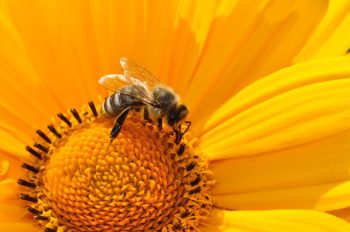
You’ve heard the story: Honeybees are disappearing. Beginning in 2006, beekeepers began reporting mysteriously large losses to their honeybee hives over the winter. The bees weren’t just dying—they were abandoning their hives altogether. The strange phenomenon, dubbed colony collapse disorder, soon became widespread. Ever since, beekeepers have reported higher-than-normal honeybee deaths, raising concerns about a coming silent spring.

The media swiftly declared a disaster. Time called it a “bee-apocalypse”; Quartz went with “beemageddon.” By 2013, National Public Radio was declaring “a crisis point for crops” and a Time cover was foretelling “a world without bees.” A share of the blame has gone to everything from genetically modified crops, pesticides, and global warming to cell phones and high-voltage electric transmission lines. The Obama administration created a task force to develop a “national strategy” to promote honeybees and other pollinators, calling for $82 million in federal funding to address pollinator health and enhance 7 million acres of land. This year both Cheerios and Patagonia have rolled out save-the-bees campaigns; the latter is circulating a petition calling on the feds to “protect honeybee populations” by imposing stricter regulations on pesticide use.

A threat to honeybees should certainly raise concerns. They pollinate a wide variety of important food crops—about a third of what we eat—and add about $15 billion in annual value to the economy, according to the U.S. Department of Agriculture. And beekeepers are still reporting above-average bee deaths. In 2016, U.S. beekeepers lost 44 percent of their colonies over the previous year, the second-highest annual loss reported in the past decade.

But here’s what you might not have heard. Despite the increased mortality rates, there has been no downward trend in the total number of honeybee colonies in the United States over the past 10 years. Indeed, there are more honeybee colonies in the country today than when colony collapse disorder began.

Beekeepers have proven incredibly adept at responding to this challenge. Thanks to a robust market for pollination services, they have addressed the increasing mortality rates by rapidly rebuilding their hives, and they have done so with virtually no economic effects passed on to consumers. It’s a remarkable story of adaptation and resilience, and the media has almost entirely ignored it.

The Bee Business

The chief reason commercial beekeeping exists is to help plants have sex. Some crops, such as corn and wheat, can rely on the wind to transfer pollen from stamen to pistil. But others, including a variety of fruits and nuts, need assistance. And since farmers can’t always depend solely on bats, birds, and other wild pollinators to get the job done, they turn to honeybees for help with artificial insemination.

Unleashed by the thousands, the bees improve the quality and quantity of the farms’ yields; in return, the plants provide nectar, which the bees use to produce honey.

Honeybees are essentially livestock. Their owners breed them, rear them, and provide proper nutrition and veterinary care to them. Unlike bumblebees and wasps, honeybees are not native to North America; the primary commercial species, the European honeybee, is thought to have been introduced by English settlers in the 17th century.

Commercial beekeepers are migratory. They truck their hives across the country in tractor trailers on a journey to “follow the bloom,” stacking their hives on semis and moving at night while the bees are at rest. Most travel to California in the early spring to pollinate almonds. After that, they take their own routes. Some go to Oregon and Washington for apples, pears, and cherries; others to the apple orchards of New York. Some pollinate fruits and vegetables in Florida in the early spring, followed by blueberries in Maine.

Like any such transit project, accidents happen—as when one beekeeper, Lane Miller, crashed his truck in a canyon near Bozeman, Montana, in 2014. More than 500 hives—about 9 million sleepy, angry bees—spilled onto the roadway. “The bees were so agitated you could barely see the beekeepers or the wreckage itself,” said the local fire chief at the time. After 14 hours, hundreds of stings, and a crew of emergency beekeepers, the road finally reopened.

Still, the migration is mostly uneventful. After blooming season, beekeepers shift their focus from pollinating crops to making honey. Many commercial crops that require honeybee pollination, such as almonds and apples, do not provide enough nectar for the bees to produce surplus honey. So in the summer, beekeepers often head to the Midwest, where they essentially pasture the bees, turning their hives loose in fields near sunflower, clover, or wildflowers, which supply large amounts of nectar and allow the bees to make plenty of honey. When summer ends, the beekeepers truck their bees back south to spend the winter in warmer climates.

Some observers claim that this annual migration is contributing to colony collapse. As the food writer Michael Pollan put it in The New York Times in 2007, “the lifestyle of the modern honeybee leaves the insects so stressed out and their immune systems so compromised that, much like livestock on factory farms, they’ve become vulnerable to whatever new infectious agent happens to come along.” But it is precisely this modern-livestock lifestyle and the active markets for pollination services that have allowed non-native honeybees to flourish on our continent. They are the reason honeybee populations have remained steady even in the face of disease and other afflictions.

The Fable of the Bees

Before the 1970s, it was widely believed among academics that the pollination industry’s very existence was a problem. In a 1952 paper, the appropriately named economist J.E. Meade argued that honeybee pollination was an “unpaid factor” in apple farming since orchard owners and beekeepers did not coordinate their production decisions. Both produce what economists call “positive externalities,” or spillover benefits for the other, causing inefficiencies. Since “the apple-farmer cannot charge the beekeeper for the bee’s food, which the former produces for the latter,” Meade believed that certain “subsidies and taxes must be imposed.” (Indeed, Washington established a honey price-support program in 1952 with the goal of promoting pollination. The program was briefly eliminated in 1996, but has since been resurrected.)

But then another economist, Steven Cheung, investigated how the honeybee pollination market actually worked. In a 1973 study, he found plenty of contracting between beekeepers and orchard owners to overcome the problem Meade had identified. All he had to do was open the yellow pages of the phone book to find listings for pollination services. “The fable of the bees,” as Cheung called it, was blackboard theorizing. Real-life farmers and beekeepers were solving this problem on their own.

Sometimes the farmers paid the beekeepers to pollinate their crops; other times the beekeepers paid the farmers for the right to place hives in their orchards. It all depended on which activity—pollination or honey production—generated more value in that instance. Sometimes the exchange involved both money and honey. Meade, meanwhile, had gotten his central example backward: Apple pollination does not yield much honey, so the beekeeper charges the apple farmer, not the other way around.

The details differ, but markets for pollination services clearly exist and work quite well. Today, commercial beekeeping is a $600–$700 million industry that spans all regions of the country. And now the beekeepers and farmers are working together to overcome another apiary challenge: dead bees. […]

A Cautionary Tale — for Journalists

If a beepocalypse was really upon us, colony numbers and honey production would be declining, the costs associated with rebuilding lost hives would be rising sharply, and the prices of the crops most reliant on honeybees would be rapidly increasing. Yet none of these appear to be the case.

Modern commercial beekeeping practices create real stresses on beekeepers and honeybees alike. But we shouldn’t exaggerate their plight or overlook how successfully they’ve adapted to a changing world. In the words of Hannah Nordhaus, author of the 2011 book The Beekeeper’s Lament, the scare stories surrounding colony collapse disorder “should serve as a cautionary tale to environmental journalists eager to write the next blockbuster story of environmental decline.”

Indeed, our obsession with honeybees may have distracted us from other, more important environmental concerns. Wild pollinators such as bumblebees, butterflies, and other native insects really do appear to be in decline, thanks to habitat loss and agricultural development. After all, unlike honeybees, there is no commercially minded beekeeper to look after them.

Earlier this year, one of those wild pollinators, the rusty patched bumblebee, was listed as an endangered species in the United States. Monarch butterflies appear to be getting more scarce as well.

But while the media declares a disaster and the federal government attempts to create a “national pollination strategy,” commercial beekeepers have quietly rebuilt their honeybee colonies to even greater numbers than before colony collapse disorder began a decade ago. Instead of standing idly by while their colonies vanish in the face of disease or pests, these migratory beekeepers, with their trucks full of bees and honey, continue to ply the roads between various crops to provide the pollination services our modern agricultural economy demands—busy as, well, you know.

Read more at Reason
  • Truth
  • Twitter
  • Facebook
  • LinkedIn
  • Gettr
  • Threads
  • gab-logo Gab
  • Mastodon
  • Buffer
  • Telegram
  • Email
  • Copy Link
  • Share Using More Networks…

Popular Posts

Bipolar

New Study: Ice Core Data Shows Modern Warming Is Statistically Unremarkable

Mar 05, 2026
Electric Vehicles (EVs)

The ‘Green’ Scam Of The Century: How ‘Renewables’ Increase Fossil Fuel Demands

Oct 23, 2024
News and Opinion

Antarctica Is Colder, Icier Today Than At Any Time In 5,000 Years

Apr 15, 2024

Comments 4

  1. Spurwing Plover says:
    9 years ago

    Free Market is good for the enviroment communims not a news shocker for all those socialists scum suckers to showed by during the Useful Idiots Climate March in Sept 2014 who marched through NYC carrying stupid signs and banners with stupid slogans on them. THE FREE MARKET WILL SAVE THE BIRDS AND THE BEES

  2. rakooi says:
    9 years ago

    USUALLY TRUE.
    ….but many times it can be the cause of Harm…and economic collapse etc.

    • Sonnyhill says:
      9 years ago

      I have always sympathized with the honey bees. They work for the colony. No choice. They were born into a system. Leave them enough incentive (honey) to bee healthy. I felt the same way about the maple syrup business. Dying trees was blamed on acid rain, but I wondered if the syrup boys weren’t leaving enough food for the maple trees.
      Good managers win. Bureaucracy and groupthink can and will suck the life out of everything. DO NOT ASK THE GOVERNMENT FOR HELP!

  3. G says:
    9 years ago

    Free market capitalism is an amazing self-correcting phenomenon. Crisis creates incentive. Creativity and innovation really do pay off. And worst of all for the left, none of this requires endless bureaucratic committees of “eco-experts” followed by dubious tax-and-spend policies driven by ever more centralized governmental power that churns out endless new laws and regulations.

    Yes, the left will always argue that not all free market solutions are immediate, completely successful, or “fair” as they wish to define it. But the fact is, that more often than not, it just works.

Stay Connected!

gab-logo

Donate Today

Beating back the alarmist narrative takes time and money. Please donate today to help!

Get notified when new posts are published!

Subscribe to receive a digest of daily stories, or get emailed once they're published. Check your Junk/Spam folder for a verification email.

Recent Posts

  • electric car chargingTrump Moves To Cut Billions From Biden-Era EV Charging Program
    Apr 3, 2026
    Trump targets $4.2 billion in federal EV charging funding as states struggle to implement the Biden-era NEVI program. […]
  • calif housingNewsom’s Climate Obsession Is Making California Housing Even More Expensive
    Apr 3, 2026
    AB 130 forces new California homes to pay costly “VMT mitigation” fees, driving up prices while claiming to fight climate change. […]
  • gas stove natural gasDOJ Sues New Jersey Township Over Natural Gas Ban
    Apr 3, 2026
    DOJ sues Morris Township over gas ban, claiming it raises costs and violates federal energy law. […]
  • ocean plastic pollutionTrump Admin Declares War On Microplastics In Drinking Water
    Apr 3, 2026
    Trump admin adds microplastics and pharmaceuticals to drinking water list, launching STOMP program to protect public health. […]
  • tornado solar farm aftermathIndiana Solar Farm Reduced To Toxic Debris By Tornado, Coal Plant Spared
    Apr 3, 2026
    An EF1 tornado tore through an Indiana solar farm, destroying a billion-dollar facility and leaving a hazardous debris field. […]
  • british factoryConservatives Pledge To Axe Carbon Taxes As UK Industry Faces Soaring Energy Costs
    Apr 2, 2026
    Tories pledge to scrap carbon taxes as industry faces soaring costs, with Sir Jim Ratcliffe backing plans to cut energy bills and boost competitiveness. […]
  • chocolate bunniesNo, Euronews, Climate Change Isn’t Behind Soaring Chocolate Prices Or ‘Easter Eggflation’
    Apr 2, 2026
    Euronews blames climate change for chocolate price hikes, but data shows West Africa’s cocoa production remains strong. […]
  • wildfire forestWhy Deep-Pocketed Defendants Face The Highest Liability After Disasters
    Apr 2, 2026
    Courts increasingly assign disaster liability to deep-pocketed defendants, even when natural forces and policy choices drive the damage. […]
  • james talaricoJames Talarico Links Christian Duty To Climate Action in Senate Bid
    Apr 2, 2026
    James Talarico, a former teacher and Dem nominee for Texas's senate seat, challenges critics on greenhouse gases, energy policy, and immigration. […]
  • calif rail transitGolden State High-Speed Rail Dreams Collide With A Growing Transit Crisis
    Apr 2, 2026
    California’s high-speed rail troubles reflect a broader transit crisis, with rising costs, falling ridership, and systems facing fiscal strain. […]

Submit a tip

Please enter your email, so we know you're human.

Books You May Like

Cold Facts About the Great Global Warming Scam

Climate prn book

Have a suggestion? Let us know! We swap out books based on your input. We participate in the Amazon Services LLC Associates Program. See here.

  • Privacy Policy
  • DMCA Policy
  • About Us
  • Contact Us

© Portions copyright Climate Change Dispatch

No Result
View All Result
  • Home
  • Videos
  • Who We Are
  • Facts Vs. Fearmongering
    • Real science vs Junk Science
      • 1100-plus Peer-Reviewed Studies
      • Michael Crichton: Aliens Cause Global Warming
      • Climate change and its causes
      • Climate Science Primer
      • CO2 is not pollution
      • Deceptive Surface Temperature Records
      • Editorial: Great Global Warming Hoax
      • Rules for Climate Radicals: Part 1
      • Rules for Climate Radicals: Part 2
      • Rules for Climate Radicals: Part 3
      • Why CO2 Is A Minor Player In Global Climate
      • Why Politicized Science Is So Dangerous
    • Facts Not Fear
      • A Simple Question For Climate Alarmists
      • Climate Change – The Facts
      • Climate Change Fears Are Empirically Baseless
      • Global Warming 101
      • Global Warming Q&A
      • Understanding The Medieval Warm Period
      • Ocean Cycles and Climate
      • Overview of Plate Climatology Theory
      • Precautionary Principle
      • Should We Celebrate Carbon Dioxide?
      • The Skeptics Handbook
      • Weather Versus Climate
      • Why I’m a GW skeptic
      • Winning the climate debate with facts
      • Why Aliens Cause Global Warming
    • Greenhouse FAQs
      • CO2, Plants, & Industry
      • How much have temps changed?
      • How much have temps changed?
      • How much have temps changed?
      • Is global warming real?
      • Measuring temperature
      • Swimming in CO2?
      • Scientists urge caution?
      • Today’s warming trend
      • Variations in temperature
    • Gore’s Greatest Goofs
      • Deconstructing the Truth
      • Fact-Checking Al Gore’s Latest Predictions
      • How Gore Created The Global Warming Hoax
    • Inside Real Climate
      • Closer look at the 97% Consensus
      • GW’s Amazing Story
      • IPCC gets failing grade
      • Real Climate Exposed!
      • Truth about Real Climate
      • We’ve Been Conned
      • What is there a 97% consensus about?
    • Behind the IPCC
      • 1,000 Scientists Dissent
      • Climategate: Caught Green-Handed!
      • Climategate Inquiries
      • Climategate Inquiries 2
      • NIPCC Report Now Available
      • Understanding the Climategate Inquiries
  • Submissions
  • Contact Us

© 2026 Climate Change Dispatch

 
Share via
  • Facebook
  • Like
  • Twitter
  • Pinterest
  • LinkedIn
  • Digg
  • Tumblr
  • VKontakte
  • Print
  • Email
  • Reddit
  • Buffer
  • Love This
  • Weibo
  • Pocket
  • Xing
  • Odnoklassniki
  • WhatsApp
  • Meneame
  • Blogger
  • Amazon
  • Yahoo Mail
  • Gmail
  • AOL
  • Newsvine
  • HackerNews
  • Evernote
  • MySpace
  • Mail.ru
  • Viadeo
  • Line
  • Flipboard
  • Comments
  • SMS
  • Viber
  • Telegram
  • Subscribe
  • Facebook Messenger
  • Kakao
  • LiveJournal
  • Yammer
  • Edgar
  • Fintel
  • Mix
  • Instapaper
  • Copy Link
  • Truth
  • gab-logo Gab
  • Gettr
  • Baidu
  • Mastodon
  • Threads
  • Bluesky
Share via
  • Digg
  • Tumblr
  • VKontakte
  • Print
  • Email
  • Reddit
  • Buffer
  • Love This
  • Weibo
  • Pocket
  • Xing
  • Odnoklassniki
  • WhatsApp
  • Meneame
  • Blogger
  • Amazon
  • Yahoo Mail
  • Gmail
  • AOL
  • Newsvine
  • HackerNews
  • Evernote
  • MySpace
  • Mail.ru
  • Viadeo
  • Line
  • Flipboard
  • Comments
  • SMS
  • Viber
  • Telegram
  • Subscribe
  • Facebook Messenger
  • Kakao
  • LiveJournal
  • Yammer
  • Edgar
  • Fintel
  • Mix
  • Instapaper
  • Copy Link
  • Truth
  • gab-logo Gab
  • Gettr
  • Baidu
  • Mastodon
  • Threads
  • Bluesky