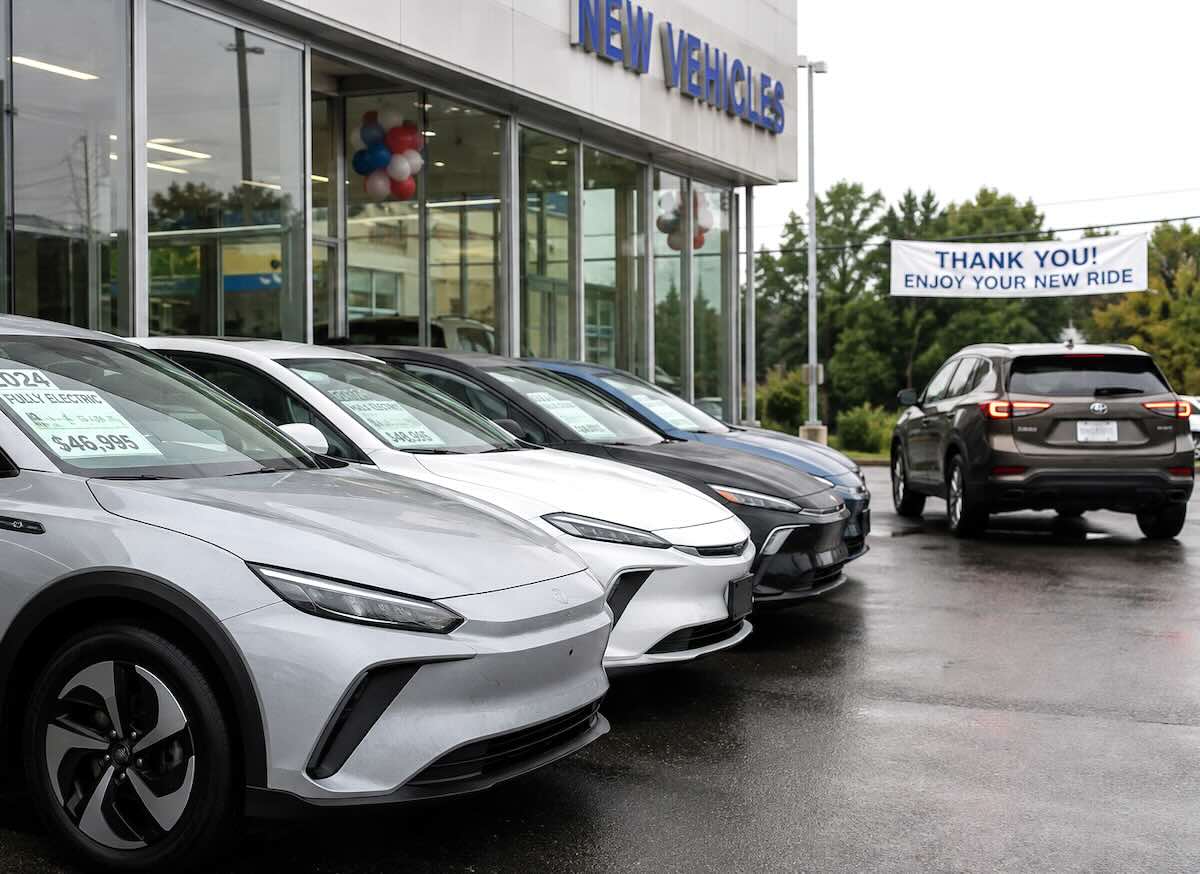
Just weeks after announcing that it will lose up to $4.5 billion this year making electric cars, Ford unveiled its next plug-in attempt: the Ford Fathom truck. [some emphasis, links added]
So it goes with EVs.
No matter how loudly consumers say they don’t want them, those “in the know” keep telling us that the future is electric and that success is just around the corner.
Last month, for example, the mainstream press was giddy over a slight rebound in EV sales in the second quarter compared with the first. As Business Insider put it, “The U.S. EV market comes back from the dead. Thank high gas prices.”
Yahoo Autos ran a piece declaring that “The EV comeback is already happening in the US — most people just don’t see it yet.”
The New York Times recently claimed that “interest in EVs is surging in the United States.”
Um. Not exactly. The National Automobile Dealers Association reports that EV sales are still down 20% from last year, and that their share of all cars sold declined by almost two percentage points.
And, despite what the New York Times claims, interest in EVs is hardly “surging.” In fact, Kelley Blue Book reports that just 10% of car buyers said they were considering an EV in the first half of 2026, which is down from 11% the year before.
Instead, people are more drawn to hybrids, which are gas-powered cars that use batteries as range extenders. Hybrids now account for 15.4% of all new-vehicle sales, up 2.9 percentage points from a year ago.
KBB found that interest in hybrids climbed to 22% in the first six months of this year, up from 20% in 2025.
But wait, there’s more. Interest in SUVs hit a record high of 71% in the first half of the year.
So, no, interest in EVs is not “surging,” and the EV market isn’t showing signs of a big “comeback.” They continue to be a niche product.
Want more evidence of consumers’ general disinterest in EVs?
Just about every automaker has pulled back from their bold plans to go all-electric after suffering massive losses.
Read rest at Issues & Insights