Big Tech’s energy needs are clashing headlong with years of onerous green pledges they love to talk about at far-flung climate summits. But AI and data centers demand enormous amounts of reliable electricity that wind and solar can’t provide. Amazon, Meta, Microsoft, and others are increasingly turning to natural gas and other hydrocarbons to meet the realities of keeping their servers running. –CCD ed.
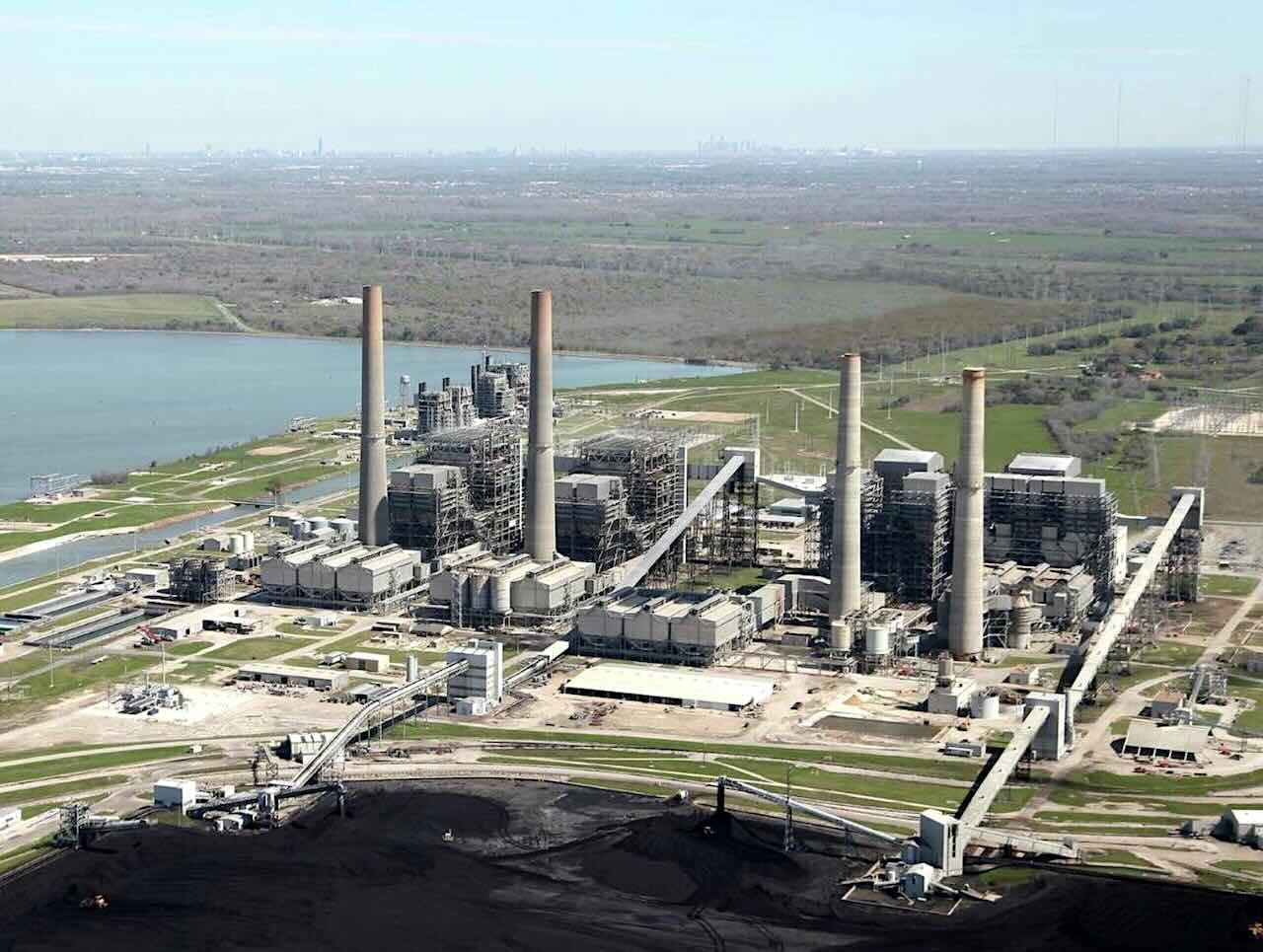
In Pecos County, Texas, crews are clearing scrubland for a power plant that will burn natural gas and answer to no one but Amazon. With 35 turbines and a generating capacity of more than 7 gigawatts, the plant would produce more electricity than the Grand Coulee Dam. [some emphasis, links added]
A state permit allows the facility to emit 33 million tons of greenhouse gases a year, roughly double what comes from an Alabama coal-fired generator that has topped America’s emissions tables for years.
Now recall who founded the company building the gas behemoth. That would be Amazon’s Jeff Bezos, who merely five years ago told delegates at a U.N. climate summit that a rocket ride had shown him a planet that was finite and fragile, prompting a pledge of $2 billion to “restore” nature.
The applause was warm. Critics noted the carbon-intensive private jet Bezos took to the Scotland meeting—and then forgotten by everyone else.
Now, his company is financing what may become the largest point source of carbon dioxide in the United States, whose contribution to the greening of ecosystems should be welcome.
You are watching a conversion, and it deserves your attention because of what forced it.
The Template, Not the Exception
Amazon did not stumble into natural gas. It joined a queue. Enverus Intelligence Research projects that user-owned turbines will account for about 40% of new data center capacity through 2030.
Microsoft has signed a 20-year-long deal for power from a Chevron gas plant in neighboring Reeves County.
Interconnection subscriptions are full, transformers are backordered, and the only metric that matters is the time it takes to get a power plant online.
In 2021, Facebook’s parent company Meta declared climate change one of the most pressing challenges facing the world and positioned itself among the largest corporate buyers of clean electricity.
Then came its Hyperion data center in Louisiana. Regulators approved three combined-cycle gas plants for it in August 2025.
In March 2026, Meta tripled the order, funding seven more, bringing the total to 10 gas plants and nearly $11 billion in investment.
Meta will underwrite 15 years of revenue, while the turbines will run for 30—a mismatch that had a dissenting Public Service Commission member warn that households may inherit the balance.
Elon Musk built an empire on the premise that combustion belongs to the past. In 2024, he said that a carbon tax was the only action needed to solve climate change.
More recently, addressing G20 ministers, Musk warned of a significant power shortfall next year and defended data center construction against negative public sentiment.
In the same meeting, Meta’s Mark Zuckerberg asked governments for more electricians and more electricity.
Neither man requested more wind and solar installations.
Energy Physics Forces a Hard Reset
Big Tech’s turn toward dedicated gas power does not settle the climate debate, but it exposes the distance between a political narrative and a power grid capable of supporting industries.
When servers must run, physics gets a vote, and realities are acknowledged.
For example, at the start of 2026, every grid-scale battery in the United States combined could meet national demand for only 15 minutes.
Modeling the PJM regional power system through 2045, Jonathan Lesser and Mitchell Rolling found that a grid of wind, solar, and batteries would need 10 times the generating capacity of gas and nuclear power.
It would also cost about seven times as much, and cover a land area larger than the PJM service area, which comprises most of the Mid-Atlantic and parts of the Midwest.
Yet, despite these facts, pseudo-scientists, grifters, and demagogues lectured for 20 years that coal is immoral, natural gas is a bridge to nowhere, and so-called green technologies are the planet’s salvation.
Banks denied financing for hydrocarbon projects in developing countries where surgeons operate under lights powered by unreliable generators and where hundreds of millions cook with sooty wood and dung.
The lesson is the same for data centers and households: Prosperity requires electricity that is available when needed. Dependable, conventional energy sources will continue to power the tech revolution and human progress for decades.
Read more at CO2 Coalition