


The elegantly dressed businesswoman at the Schachter Catch the Energy conference in Calgary first purchased a copy of my new book (on the failures of Net Zero CO2), then asked if I was relieved that the new prime minister of Canada was at least a financially literate and successful businessman. [emphasis, links added]
My reply caused her to step back and pause for several seconds, but she eventually agreed.
Mark Carney is not a businessman because he has no product, no brand. Business people dedicate their careers and risk their own money to making a brand succeed, such as Ford, Apple, or Levi’s.
Mark Carney is an investment banker who invests other people’s money in brands for potential profit and then dumps them when they are no longer useful.
Business people will go down with their ship if they fail. Investment bankers are the first ones into the lifeboats.
Mark Carney got behind the rising net-zero CO2 brand to assist his career transition from banker to politician.
He was the United Nations Special Envoy on Climate Action and Finance and embarrassingly gushed all over Greta Thunberg. It served him well, but now the international net-zero ship is sinking fast (the subject of my new book).
On November 27, Prime Minister Carney gave the order for Canada to abandon that ship with a Memorandum of Understanding (MOU) between his federal government and the provincial government of oil-producing Alberta.
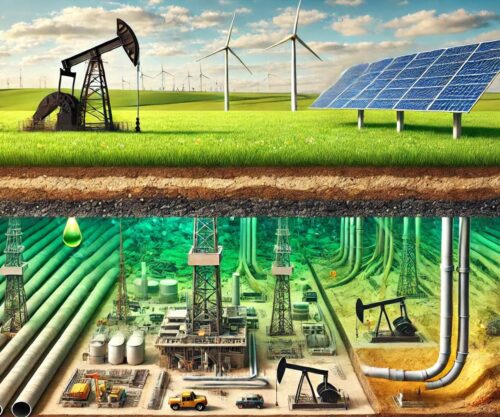
Ostensibly, the MOU was that Canada would politically facilitate the building of a new one-million-barrel-per-day oil pipeline from landlocked Alberta to the Pacific Ocean, and Alberta would facilitate the building of the world’s largest carbon capture and storage (CCS) project to reduce CO2 emissions from that oil.
Both projects have a very low probability of going ahead, but that’s not the point of the MOU.
The recently built Trans Mountain pipeline from Alberta to the port of Vancouver started as a private venture but faced insurmountable political obstacles.
The federal government took over the project, but it ended up costing over four times as much as the private company had predicted.
Since there has never been a detailed public accounting of how the government spent those extra tens of billions of dollars, private investors will be discouraged from investing in a similar pipeline project with a similar risk of cost overruns.
They will initially invest in cheaper and lower-risk export pipeline alternatives, such as the Trump-supported Keystone XL. The CCS project, known as Pathways, will not be constructed using private funds due to its exorbitant cost.

Alberta already hosts Quest, the world’s premier state-of-the-art CCS project. Public records reveal that it costs US$100 per ton of CO2 disposed of. This translates to an additional cost of US$6.50 per barrel of Alberta’s oil.
The supply costs of new oil production require a breakeven price of US$58 per barrel of West Texas Intermediate (WTI) grade oil.
WTI oil is currently trading at US$58.50 per barrel. If a new oil supply were introduced at these prices and subjected to the US$6.50 cost of CCS, oil companies would incur a loss of US$6 per barrel.
This translates to a yearly loss of US$2.2 billion for the proposed pipeline volumes. Consequently, taxpayer funding would be required.
Prime Minister Carney is appealing to the majority of Canadians who agree the pipeline is in the national interest. By linking it to the Pathways project, he aims to reassure his Liberal Party base that he is not abandoning the climate change movement that he once championed.
With each project contingent on the other, neither will happen until Carney faces the electorate once more.
To right-of-center voters, he will argue that he provided the opportunity to construct their much-desired pipeline, while to left-of-center voters, he will say that the much-hated pipeline lacks private backers to build it.
The real message of the MOU is that it suspends many of Trudeau’s net-zero 2050 laws that drove away private investment from Canada.
Carney believes his voter base will be ready to accept repealing those laws entirely, a significant step in the right direction. Indeed, the prime minister has even dropped the term “net zero” and now uses “carbon competitiveness.”
Canada would be ‘carbon competitive’ as long as its CO2 emissions performance matches that of the rest of the world, which is growing at a rate of 1% annually.
The details in the MOU bear this out. The Trudeau era’s proposed oil and gas emissions cap, which in reality was a production cap, will not be implemented, allowing oil production to increase.
The regulations to decarbonize Alberta’s fossil fuel electricity generation are suspended, allowing electricity generation from natural gas. The oil tanker ban on the Pacific coast will be lifted for those tankers carrying Alberta crude.
A law exposing oil companies to onerous lawsuits based on perceived greenwashing will be rewritten.
The duplication of both levels of government conducting separate project impact assessments will be adjusted to a single assessment, where each government stays within its own jurisdiction.
And there is a small detail that recognizes the Pathways CCS project may become an enormous tax sink; the obligation can be met by other engineering methods if they also reduce CO2 emissions.
This is quite feasible given that net zero is now “Carbon Competitive”.
Previous to the MOU, Carney had already canceled Trudeau’s consumer carbon tax on fossil fuels and suspended the mandate to phase in compulsory electric vehicle sales.

What’s left of Trudeau’s net-zero CO2 strategy? Very little, and its architect, Steven Guilbeault, immediately resigned from Mark Carney’s cabinet. He preferred to go down with the ship.
Carney’s new political brand is exactly how an investment banker would run a country. He will handpick winners and losers for project funding so the economy can recover from the lost Trudeau decade.
He will also decide which laws are to be enforced or suspended to facilitate those chosen projects. A business person would level the playing field for all and let market forces pick winners and losers.
But the good news is that net-zero CO2 is on its way out in Canada. Thank you, Premier Danielle Smith, you helped make that happen.
I wish I had remembered to tell the elegantly dressed book buyer at the Schachter conference that, prior to being Premier, Danielle Smith was already a financially literate and successful small business owner.
Top photo shows President Trump meeting with Canadian Prime Minister Mark Carney (center-left). Official White House Photo by Daniel Torok.
Ron Barmby (www.ronaldbarmby.ca) is a Professional Engineer with a Master’s degree, whose 40+ year career in the energy sector has taken him to over 40 countries on five continents. His latest book, Sunset on Net Zero: A Heretic’s Guide to the Futile CO2 Target (Amazon, Barnes & Noble), explains in layman’s terms why Net Zero is pointless, unachievable, and unfair.


Excellent commentary Ron, I have often wondered why governments over the last several decades have not consulted scientists who are knowledgeable in climate studies instead of following the UN’s ridiculous Summary for Policy Makers which from my understanding is basically derived from computer models which have failed to accurately predict future states of climate. I am amazed how much of our population still believe that this tiny trace gas was capable of causing the warming during the latter part of the last century. Most scientists that I have followed state very clearly that CO2 has never been responsible for heating the planet. In the past few years the study by Will Happer and William van Wijngaarden have identified why global CO2 emissions haven’t had much effect on temperature because of the fact that it is nearly totally saturated as is H20. Willy Soon’s 2023 study which included the issues with Urban Heat Island Effect ( also Anthony Watts years ago) which falsely increased temperature data plus he showed direct correlation between Solar variation and temperature variation over the last century. This should have surely woke up mainstream media but they persist in talking about climate change as a major problem, despite nearly no temperature increase since 1998 followed by no trend in warming despite massive increases in CO2 into the atmosphere. Also I have never seen an explanation for the sharp drop in temperature from 1950 -1975 ( before Soon’s study) while CO2 was increasing significantly during this period after WW2. To me this was a clue that CO2 did little if anything to affect temperature. You and others continue to make sense of the climate issue while governments and mainstream media continue to be inspired by the UN’s hoax.