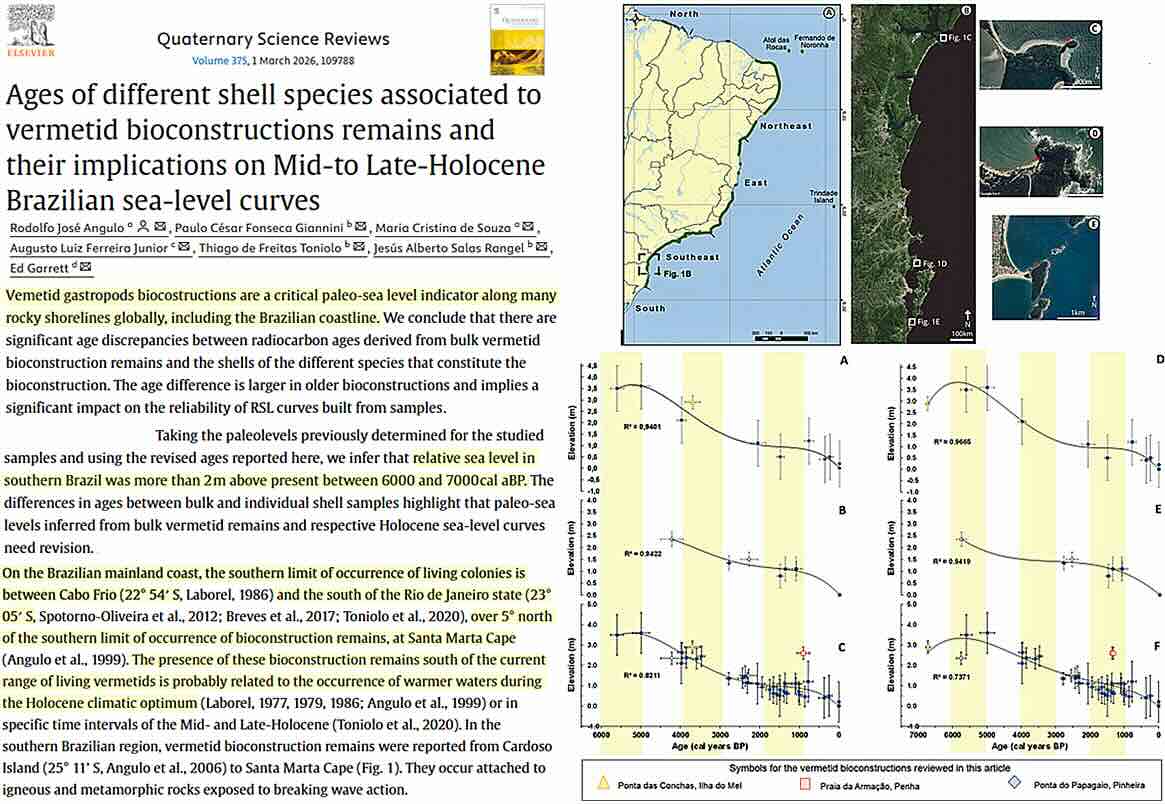
Across the globe, vermetid gastropods (shelled snails, or mollusks) are a “critical paleo-sea level indicator” for ancient coastline reconstructions (Angulo et al., 2026). [links added]
Along the Brazilian coast, vermetid shell radiocarbon ages indicate the relative sea level (RSL) was “more than 2 m above present” between 6,000 and 7,000 years ago. (The charts shown in the study suggest RSL was 3 to 3.5 meters higher than today during this period.)
Today’s latitudinal warmth threshold for living vermetid gastropod colonies along the coasts of Brazil is 22-23°S.
This is over 5° (550-600 km) north of this species’ warmth threshold (28-29°S) throughout the period when there were “warmer waters during the Holocene climatic optimum.”
Since it is well established that sea surface temperatures decrease by approximately 0.5°C to 1°C for every degree of latitude moving poleward from the tropics, carbon-dated vermetid gastropod presence informs us that this region’s sea surface temperatures were about 3-4°C warmer than today throughout this Early- to Mid-Holocene period.
Read more at No Tricks Zone