


As affordability remains a key issue ahead of the midterms, a new scorecard from energy nonprofit Power the Future (PTF) shows how Congress performed on energy policy. [some emphasis, links added]
While Democratic policies that choke energy supply and mandate specific portfolios have been linked to higher electricity costs, Republicans are not immune to advancing policies that burden taxpayers.
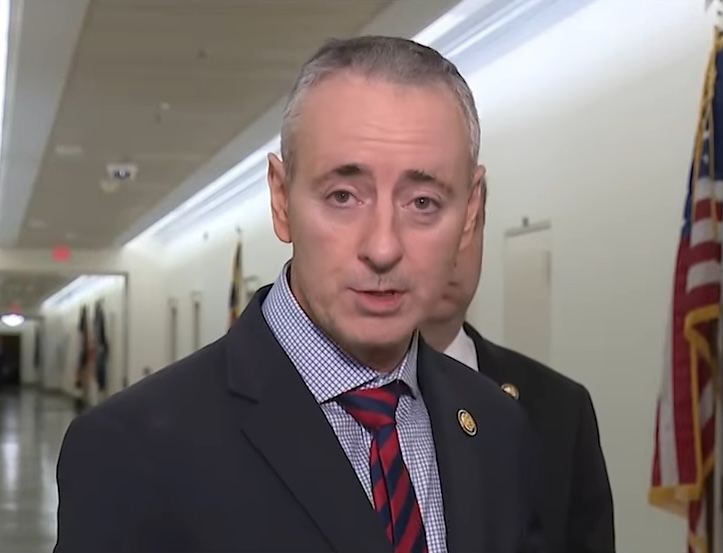
PTF’s analysis, first shared with the Daily Caller News Foundation, showed that Congressional Republicans, including Rep. Brian Fitzpatrick of Pennsylvania, Sen. Thom Tillis of North Carolina, and Sen. Susan Collins of Maine, earned some of the lowest scores on the “Federal Energy Scorecard” for GOP members.
“I think people who are in purple states or purple districts are petrified of their left, and so you do find some who have been a little bit weak because they are worried about getting primaried, challenged, or losing on the left,” PTF Founder and President Daniel Turner told the DCNF. “It’s the easiest way for people who call themselves on the right to acquiesce, because you talk about the children and the future and the planet … It’s the easiest way to get Republicans to start to slip.”
“I’ve always called the Green Movement the slippery slope to socialism,” Turner continued. “No one caves initially on life issues or national defense, but it’s kind of easy to cave on legislation to support ‘climate awareness.’ That’s how they get you.”
The Republican lawmakers received various scores, with Fitzpatrick at -25/100, Tillis at 40/100, and Collins at 40/100. Other Republicans with lower scores, like Tennessee Rep. Matt Van Epps, were marked down due only to being recently elected.
“In our PTF Energy Policy Scorecard, Votes are assigned a score of 5 or -5 based on whether the bill helps or harms America’s energy workers,” PTF’s website notes. “In order to differentiate the most effective champions and dedicated adversaries of American energy dominance, we also added point bonuses for sponsoring and cosponsoring legislation, with legislation’s primary sponsor gaining +5 or -5, and cosponsors gaining +3 or -3 additional points depending on the bill.”
Turner told the DCNF that in the scorecard, PTF focused “exclusively on energy votes — votes that are for the American energy industry, American energy workers, and expanding energy.”
“We only score votes that have made it through the entire chamber,” Turner told the DCNF. “We don’t score committee votes — they’re not fair.”
Lawmakers were knocked down for voting against the One Big Beautiful Bill Act (OBBBA), which Trump has touted as a major victory for “energy dominance.”
The OBBBA allocated billions for critical mineral spending, called for drilling opportunities across the country, and essentially cut subsidies for green energy projects.
Splitting from their party to oppose the OBBBA counted against Tillis, Collins, and Fitzpatrick’s final score. All three argued that they voted against the legislation over health care program cuts to better serve their constituents.
Failure to support other legislation like H.J.Res.104, H.J.Res.106, and H.J.Res.131 counted against several Republicans as well, including Fitzpatrick, who voted against all three, and Collins, who voted against H.J.Res.131.
Tillis did vote in favor of the resolutions, but was marked absent for other key energy votes, according to PTF.
All three were Congressional Review Acts used to undo Biden-era rules the leading lawmakers considered harmful to American energy, as they blocked future mining in a key U.S. region and locked up vital Alaskan resources.
Fitzpatrick was the lowest-ranked Republican in the House and Senate. The Pennsylvania lawmaker has argued that strong energy policy is vital for the economy and national security, but urged the Senate to improve the clean energy tax credits left in the OBBBA on June 6.
Critics of the green energy tax credits argue that they distort markets and favor less reliable resources at the taxpayer’s expense.
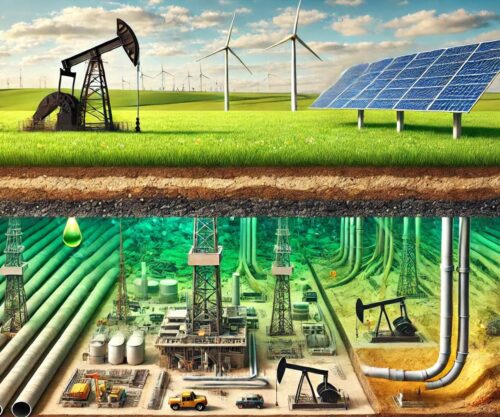
Top: Rep. Brian Fitzpatrick and Sens. Thom Tillis and Susan Collins ranked lowest in a new energy affordability scorecard. Image via DALL/E.
Read rest at Daily Caller



If they would rather rub elbows with the enemy(China)or Greenpeace then they should consider a all new job