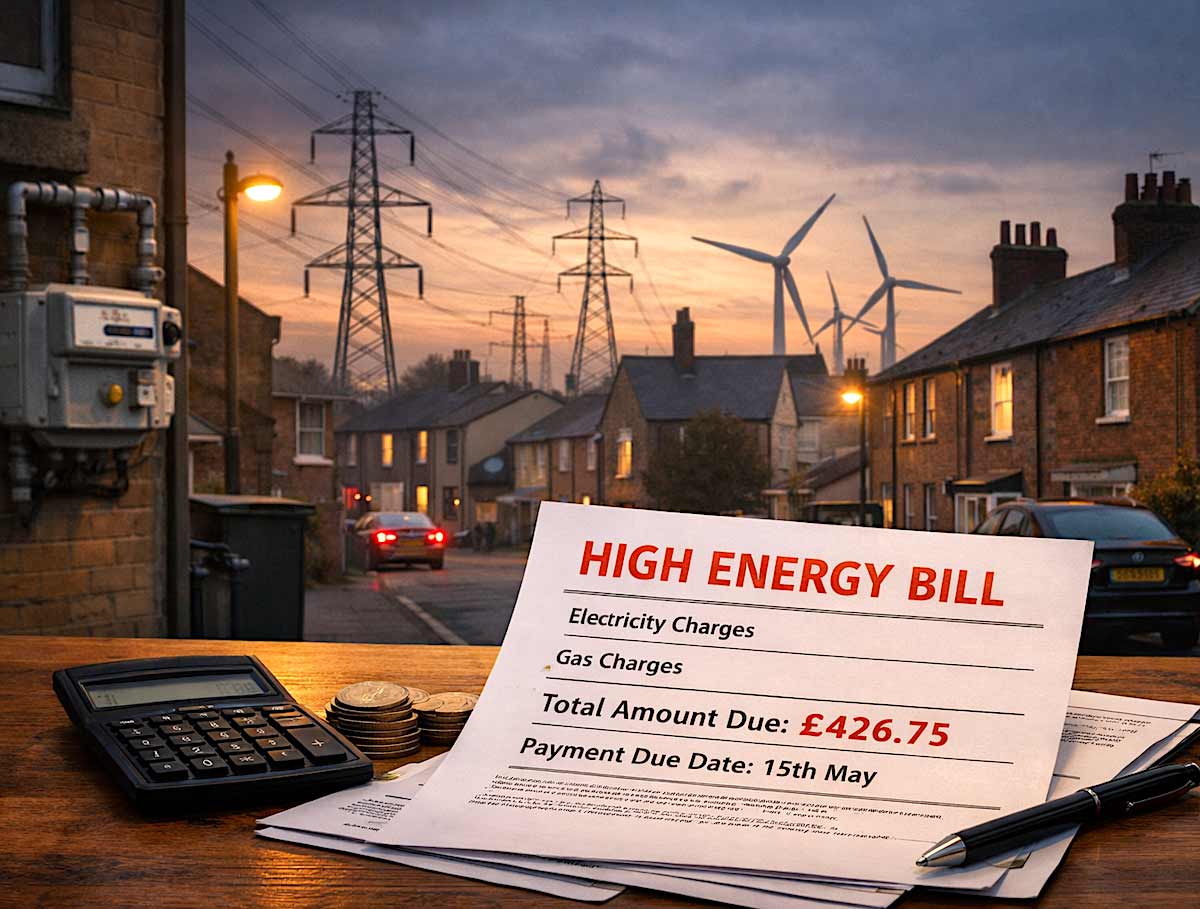
Scrapping green levies on household bills and fuel would save the average family £250 a year, research has found. [Some emphasis links added]
A leading think tank has said that a range of green taxes, designed to reduce carbon emissions in the UK, have added £7.3bn to the cost of using energy and increased household bills by around £250 a year through additional costs being passed to consumers.
The Prosperity Institute warned that the levies had also slowed the economy and made British businesses less competitive on the international stage.
The centre-Right think tank analysed the impact of the Climate Change Levy, which is charged on non-domestic energy users, carbon price support, which is levied on energy producers, the emissions trading scheme (ETS), which affects industrial producers, and fuel duty, which is paid by motorists.
It found that the higher energy prices had “played their part” in reducing total energy consumption in the UK by more than a fifth since 2005.
However, it concluded that much of the shift had been driven by lower industrial energy usage because firms with high power needs had moved their operations out of the UK.
Britain is experiencing weaker per-capita economic growth than other major developed economies, which researchers said was likely to be driven by the high cost of energy.
Andy Burnham, the Prime Minister, has continued a plan by Sir Keir Starmer to align the UK’s carbon-trading scheme with a similar system used by the EU, which could send bills even higher.
The new deal is expected to be signed off at the UK-EU summit on Friday.
The Prosperity Institute argued that aligning with the EU’s ETS “could make these problems even worse” because the cost of carbon credits required to use large amounts of power is higher in Europe.
Mr Burnham is also planning to introduce a new mechanism to tax imports of products that are energy-intensive to manufacture, including aluminium, steel, cement, fertiliser and hydrogen.
The UK does not produce much of those products, partly because of the high cost of energy, and the additional taxes are likely to be passed on to consumers.
Mr Burnham is under pressure to scrap more green levies or abandon the drive for net zero altogether because of rising energy bills.
Ministers are already considering slowing the government-mandated move towards electric vehicles and have removed some taxes from energy bills.
John Healey, the Chancellor, announced plans to scrap green levies worth around £180 a year from the average household energy bill at last month’s Budget.
However, the cost of the taxes will still be borne by the public from other levies, and ministers will continue to charge companies tax on their power usage, driving up the cost of goods.
Read rest at The Telegraph