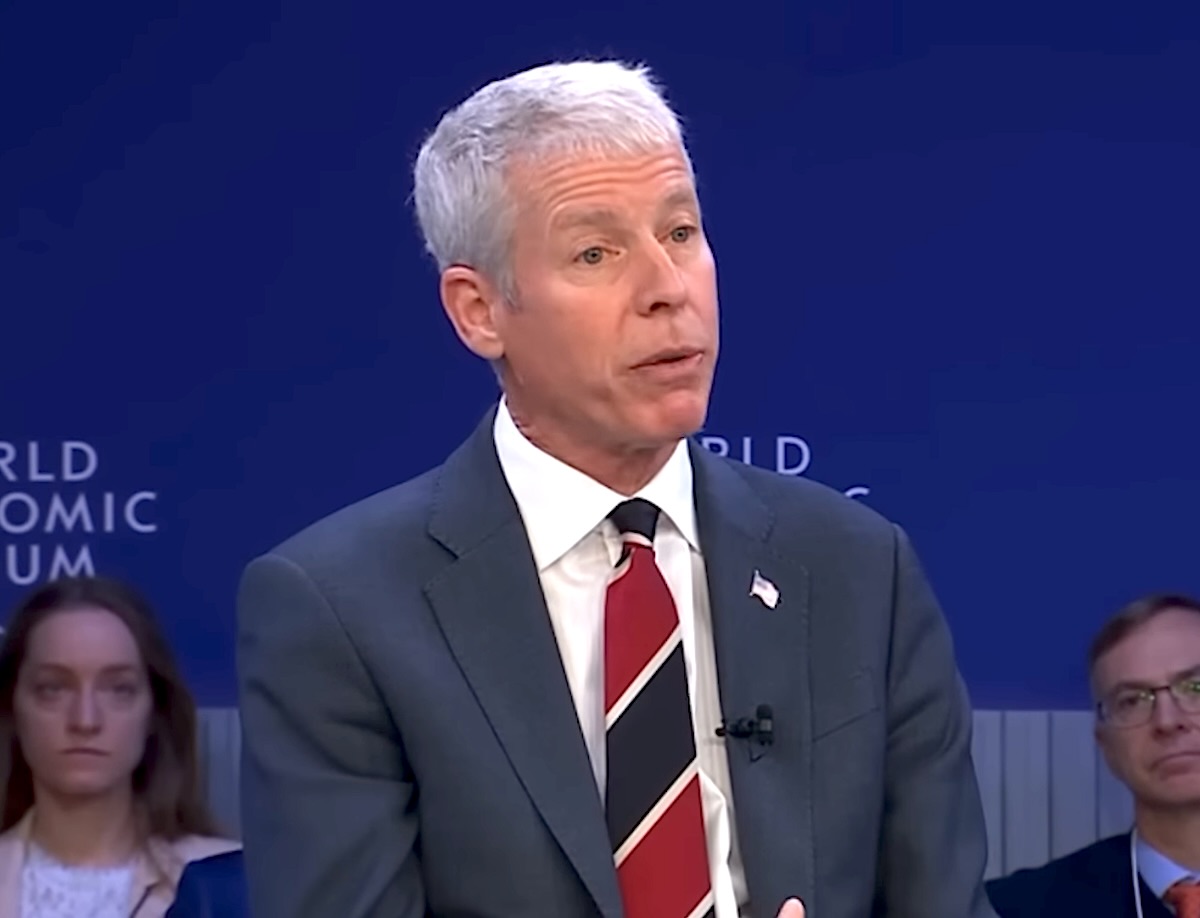
Energy Secretary Chris Wright says high electricity costs are a political choice in the United States today. The evidence at hand indicates the Secretary isn’t wrong. [some emphasis, links added]
“If you have expensive energy in your state…it’s because politicians and regulators chose to do that,” Wright said in a recent interview with the Wall Street Journal.
“It is not bad luck, it is not marketplace…there is no reason to have these rapid increases in electricity prices – no reason, but politics.”
This is correct, and the disparity that exists in electricity bills in red states and blue states can be easily seen in a national map published by the U.S. Energy Information Agency (EIA), along with its supporting data.
Blue states charge DOUBLE for electricity.
Green mandates aren’t free. Residents pay the price.
Red states like Florida & Louisiana show affordable power is a choice. pic.twitter.com/C2yFFQs8sP
— Stephen Moore (@StephenMoore) December 10, 2025
EIA’s data shows the states with the highest rates include Democratic strongholds like California, New York, Hawaii, and the New England states.
Meanwhile, the states with the lowest utility bills include the reddest of red states like Louisiana, Arkansas, Oklahoma, Texas, Nebraska, Wyoming, Idaho, North Dakota, and Iowa.
This all ties directly in with the findings in a recent study by the Institute for Energy Research that I wrote about in January.
There is no real mystery here: Democrats seek to exploit the “affordability” issue in the upcoming midterm elections, but the truth is their policies created that issue to begin with. In his interview, Wright provides the proof points:
- Electricity prices were up 6.7% year over year in December, nearly 40% since 2020. That is due to the United States adopting “UK-style” energy policies under the Biden and Obama presidencies, like forcing coal plant closures and wind/solar mandates.
- Utility rates rose two times the rate of inflation in Democrat-governed states over the last five years, but in GOP states, only half the inflation rate.
- States with Renewable Portfolio Standards (RPS) have 50% higher prices than those without; 28 states enforce them, driving costs up.
- Biden’s $5 trillion stimulus (for a $1.5T GDP gap) fueled inflation across the board but is now fixable via policy reversals like the ones Wright and other Trump officials are now pursuing.
“We’ve had a tailwind of these things to drive up our own energy prices,” Wright says, “And so that’s a battleship we’re stopping and turning back.”
Turning a policy battleship in the middle of an ocean takes time, but Wright’s efforts produced results during the recent major winter storm.
In several regions, coal-fired power plants for which Wright acted to delay scheduled premature retirements generated needed baseload power to avoid blackout conditions as wind and solar failed to perform.
Keeping many of those coal plants – and natural gas plants also scheduled for premature retirements under absurd RPS mandates – running will be crucial to maintaining integrity and reliability on grids from coast to coast in the years to come.
The good news for Americans is that this country enjoys an incredible abundance of all the natural resources and raw materials needed to restore sanity and reliability to our power grid.
All that’s really needed is the political will to get it done while keeping electricity bills affordable.
Wright and the red states on EIA’s map have shown us the way. That’s true even in Texas, one of the few red states that maintains an RPS of its own.
There, policymakers fell asleep at the wheel about the need to maintain a needed fleet of dispatchable reserve capacity, a mistake for which Texans dearly paid during 2021’s Winter Storm Uri.
But, in contrast to their peers in many blue states, Texas policymakers showed a capacity to learn from their mistakes, enacting a series of effective reforms over the last five years that vastly improved grid reliability.
In the recent Winter Storm Fern, the ERCOT-managed Texas grid, which proved to be the national poster child for grid failure in 2021, came through as a shining object lesson on how to fix past mistakes while remaining one of the 10 states with the lowest utility rates.
If you live in a state where power bills are too high, that is a choice your political leaders have made for you to endure.
You should factor that reality into your thinking next time those politicians are up for re-election.
Read more at Daily Caller