Alex Epstein was not exaggerating when he wrote recently that we are all indebted to the politicians who have cut solar and wind subsidies and saved our grid by incentivizing reliable generation, which was having its operating revenue looted by subsidized, unreliable solar and wind. [some emphasis, links added]
Of course, more work to preserve reliable generation is required at the state level, but at least sanity has returned to federal energy policy.
However, the political sphere is only one arena in which the struggle to preserve reliable generation plays out. The other sphere that influences the direction of future energy policy is the corporate.
In a prior article, I wrote about the long odyssey that British Petroleum embarked upon to discover its true self. Rebranding itself with the catchy slogan, “Beyond Petroleum,” British Petroleum went on a two-decade destructive binge, showing undisguised disdain for its product, petroleum.
The BP ship was ultimately righted with management changing course and ending its ill-conceived transition away from its core competency of oil production, but the damage to its reputation had been done.
Over the last decade, other energy companies, including many electric utilities, have embarked on a similar soul-searching quest. Notable amongst them is Xcel Energy.
In 2018, its leadership had a vision of the company as one of the first to make deep carbon emissions reductions in its electric business by 2030 and attain a carbon-free electric system by 2050.
At the time, its commitment to chart a path to a clean energy future was applauded by environmental advocacy groups, policymakers, and many in the public who believed that climate change posed an existential threat to humanity.
Assurances were given by Xcel management that reliable and affordable electricity would be maintained in the process of transitioning. Claims voiced by energy experts, like Alex Epstein, that reliability might be in jeopardy, were largely dismissed by company officials as alarmist.
Starting in 2018, the company implemented a plan for the wanton destruction of assets required for the firm’s capacity to preserve generation reliability. It planned to retire coal plants in favor of wind, solar, and gas plants.
However, as its plan went into effect and coal plants were shut down, the environmental interest groups that Xcel had found favor with in 2018 proceeded to block the new gas plants.
That left Xcel with a dilemma. It now had loads of intermittent capacity from renewables, but not enough firm capacity to ensure reliability.
Now the company will be lucky to make it through the next few years without blackouts, as detailed in a report that Xcel filed with the Colorado Public Utilities Commission.
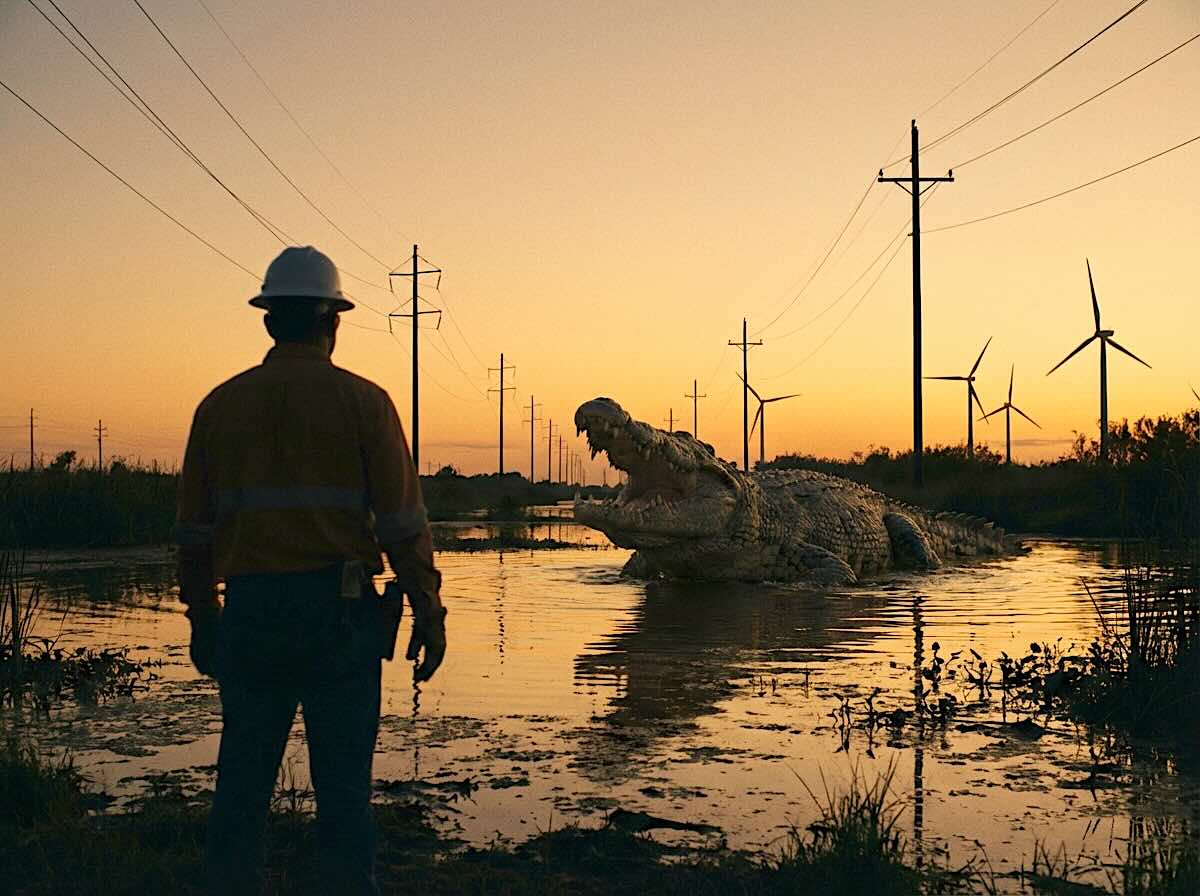
Xcel learned the hard lesson that if you feed the crocodiles, do not be surprised when they bite you.
Xcel deserved the self-inflicted wound that it received for believing that environmental groups have any interest in ensuring that electricity is reliable and affordable.
Read more at American Thinker