


A landmark study published in Cell Reports Sustainability has cast serious doubt on the ambitious targets set for offshore wind energy. [some emphasis, links added]
Researchers found that offshore wind farms worldwide may be unable to deliver the energy output promised by national governments.
Led by Carlos Simao Ferreira of Delft University of Technology, the research analysed data from 72 wind farms across Europe, showing that current policy targets often overestimate actual energy production by up to 50 percent.
The team developed a model to define the “physical upper limit” of offshore wind farm output, highlighting how large, densely packed turbines can reach a point of diminishing returns—where adding more turbines does not proportionally increase energy yield.
As wind farms become more crowded, turbines compete for the same wind resource, reducing the overall efficiency of the farm. The study calls this the “wind shadow” or “wake effect,” where upstream turbines slow the wind for those downstream.

Leveraging this validated model, the researchers evaluated offshore wind policy targets from several countries, including the UK, France, Germany, the US, the Netherlands, and Belgium.
Their analysis identified between national policy projections and realistic aerodynamic limits.
Notably, the Dutch offshore wind program exhibited the most significant overestimation, predicting capacity factors nearly 50 percent above feasible limits.
Similar, though less extreme, overestimations were observed for France (up to 22 percent), Belgium (24 percent), and the US (13 percent–20 percent).
Such widespread discrepancies underscore a , potentially leading to misguided investments, infrastructure planning failures, and energy supply shortfalls, the study warned.
As countries race to expand offshore wind capacity, the study warns that overcrowding turbines in limited sea space reduces overall efficiency.
Current Dutch plans to increase turbine density in the North Sea could result in a capacity factor as low as 34.6 per cent, far below what is needed to meet climate goals.
This shortfall risks leaving a 20 per cent gap in expected carbon-free electricity by 2040, according to the researchers.
Read rest at Brussels Signal


I worked for 27 years as an engineer and a total of 37 years in technical jobs. If the development of off shore wind energy had followed standard practices, wind shadow would have been evaluated. However, the climate change movement seems to make assumptions and run with them without adequate consideration of what could happen.
One thing I have wondered is what happens to the winds when we keep sucking energy off of them. Can it cause any global weather pattern changes? Taking energy out of the winds will cause them to slow down so what will happen?
How come nobody told them about the wind droughts observed for 60 years on oil and gas platforms in the North Sea. The punchline is in the last paras of this post.
https://www.conservativewoman.co.uk/a-curious-tale-of-the-north-sea-winds/
See also the pioneer wind watchers in Australia.
https://rafechampion.substack.com/p/watching-the-wind-watchers
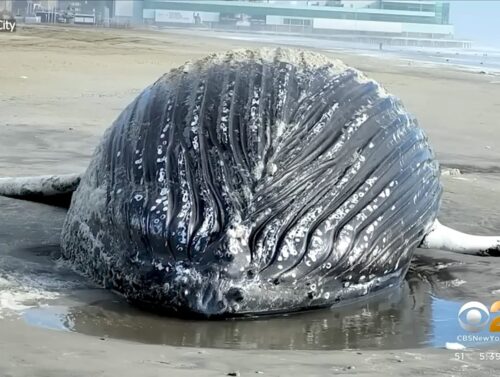
No one needs those eyesores spoiling their Views of the Oceans causing harm to Birds and Whales